- A synbiotic combines prebiotics (fibre that feeds gut bacteria) and probiotics (live bacteria) — the two work together to deliver bigger results than either alone.
- Research shows synbiotics outperform separate prebiotic or probiotic supplements for microbiome diversity, regularity and inflammation markers.
- Look for chicory root inulin (a clinically researched prebiotic), Bacillus coagulans (a resilient probiotic strain), and bonus digestive enzymes.
- Synbiotics are most useful for persistent bloating, post-antibiotic recovery, dietary transitions, and anyone aiming for steadier energy and clearer skin.
- Take daily, ideally with breakfast or lunch. Start with half a scoop if your fibre intake is low. Most people feel a difference within 2–4 weeks.
If you’ve ever stood in front of the supplement shelf trying to choose between a probiotic and a prebiotic — or wondered why some products combine both — you’re looking at a synbiotic. It’s a single supplement that includes prebiotic fibre (food for your gut bacteria), live cultures (the bacteria themselves), and, in the better formulations, digestive enzymes. Done right, it does the job of three supplements at once. Here’s why that matters, and what to look for.
What Is a Synbiotic?
A synbiotic is the combination of prebiotics (specific fibres that beneficial gut bacteria feed on) and probiotics (live bacteria added to your gut). The two work together — the prebiotic gives the probiotic something to eat the moment it arrives. Research consistently shows synbiotics outperform either ingredient on its own.
The term was coined in the 1990s by scientists who realised that adding live bacteria to a gut starved of fibre was a bit like introducing fish to an empty pond. Without the right environment, the bacteria don’t survive long enough to do their job. With prebiotic fibre on board, they thrive.
For a side-by-side breakdown of how each ingredient works individually, see our guide to prebiotics vs probiotics.
Why Combining Both Beats Taking Them Separately
You can buy a separate prebiotic and a separate probiotic. Most people don’t, because the practical reality is:
- Timing matters. Probiotics colonise better when prebiotic fibre is already in the gut. Taking them at different times of day reduces effectiveness.
- Compliance drops. Two daily supplements is two opportunities to forget. One scoop or one capsule is easier to stick with.
- Cost stacks up. A dedicated quality prebiotic plus a dedicated quality probiotic often costs more than a combined synbiotic.
- Synergy is real. Studies of synbiotic formulations show improvements in microbiome diversity, bowel regularity and inflammatory markers that single-ingredient supplements don’t always achieve.

What’s in a Good Synbiotic
Not all synbiotics are created equal. Some throw a few generic ingredients together and call it a day. The better ones cover three layers.
1. The Prebiotic Fibre
This is the foundation. Look for clinically researched prebiotic fibres at meaningful doses (at least 3–5g per serving). The best-studied options include:
- Chicory root inulin (FOS) — one of the most researched prebiotic fibres, with strong evidence for feeding Bifidobacteria and improving regularity
- Galacto-oligosaccharides (GOS) — found in some specialised supplements; well tolerated
- Resistant starch — emerging research is strong; often from green bananas or specially treated grains
Steer clear of products that list “fibre blend” without specifying the source or quantity.
2. The Probiotic Strain
“Probiotic” is too generic — what matters is the strain, and how many live organisms (CFUs) it delivers. Look for:
- Bacillus coagulans — spore-forming, survives stomach acid and stable at room temperature. One of the most resilient probiotic strains for everyday use.
- Lactobacillus and Bifidobacterium species — classic gut-supporting genera, often combined
- Saccharomyces boulardii — a beneficial yeast used for digestive recovery
Aim for at least 1 billion CFU per serving. More isn’t always better — the strain matters more than the count, but anything under that threshold is unlikely to do much.
3. Digestive Enzymes (The Bonus Layer)
Most synbiotics stop at prebiotic + probiotic. The best ones add digestive enzymes to help your body break down food more efficiently — meaning less bloating, less gas, and better nutrient absorption. Look for:
- Amylase — breaks down starches and carbohydrates
- Lipase — breaks down fats
- Lactase — breaks down lactose (helpful if you’re sensitive to dairy)
- Protease — breaks down protein
- Cellulase — breaks down plant cell walls (useful as you increase fibre)
The cellulase enzyme is particularly relevant if you’re moving toward a higher-fibre diet — it helps your body extract more from the vegetables and pulses you’re eating.
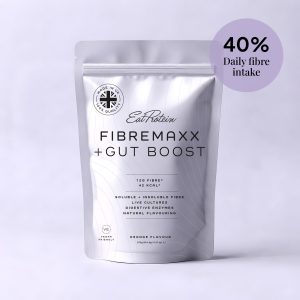
EatProtein FibreMaxx + Gut Boost covers all three layers in a single scoop: chicory root inulin (72.5%), live Bacillus coagulans cultures, and five digestive enzymes (amylase, cellulase, lactase, lipase, protease). It’s a synbiotic-plus, designed as a one-step gut foundation.
Who Benefits Most from a Synbiotic?
Almost anyone can use one, but the gains are most noticeable for:
- People with persistent bloating or irregular digestion — when the cause isn’t clearly identifiable, a synbiotic addresses the most common contributors at once.
- Those recovering from a course of antibiotics — antibiotics flatten gut diversity; a synbiotic helps rebuild it.
- People making dietary changes — a higher-fibre diet, a plant-shift, or perimenopause-related changes all stress the gut. A synbiotic eases the transition.
- Anyone aiming for steadier energy, calmer skin, or better mood regulation — all three trace back to gut health.
- Frequent travellers — disrupted sleep, new foods and different water all unsettle the microbiome.
How to Take a Synbiotic for Best Results
- Take it daily, consistently. Synbiotics work cumulatively — one missed day doesn’t matter, but stop-start usage delivers stop-start results.
- Morning or with a meal. Most people get the smoothest experience taking it with breakfast or lunch, with water or a soft drink.
- Start with half a scoop. If your current fibre intake is low, easing in for the first week minimises any bloating as your gut adjusts.
- Keep going through any initial bloating. Mild gas in the first 3–5 days is your bacteria fermenting — settle within a week. If it persists past two weeks, halve the dose temporarily.
- Pair with food-based fibre and fermented foods. A synbiotic is a foundation, not a replacement for a varied diet.
What Results to Expect (and When)
- Week 1: Some adjustment — mild bloating or change in bowel habits as your gut adapts.
- Week 2: Smoother digestion, more regular bowel habits, less afternoon energy crash.
- Weeks 3–4: Skin tends to settle, cravings drop, mood lifts. Most people start to notice the difference others see in them before they feel it themselves.
- Months 2–3: Microbiome diversity gains compound. The benefits that started as “noticeable” become “baseline.”
Common Synbiotic Mistakes
- Going too hard, too fast. Full dose from day one in an unprepared gut can trigger uncomfortable bloating that puts people off.
- Inconsistent use. Probiotics need daily intake to maintain a presence — they don’t permanently colonise.
- Pairing with poor diet. A synbiotic isn’t a magic bullet. If you’re still eating mostly ultra-processed foods, the gains will be modest.
- Ignoring water. Prebiotic fibre needs hydration. Aim for 6–8 glasses a day.
- Expecting instant results. Synbiotics work on biological timelines — most benefits show by week 3 to 4, not day 3 to 4.
The Bottom Line
A synbiotic is the simplest, most efficient way to support your gut. Prebiotic fibre feeds your bacteria. Live cultures add new ones. Digestive enzymes help your body process everything more smoothly. In one supplement, you cover the three foundations most people otherwise take separately — or skip entirely.
If you want a structured way to put the rest of the gut-health picture in place around it, our 4-week gut reset plan walks through the food, lifestyle and habit changes that compound with a daily synbiotic.
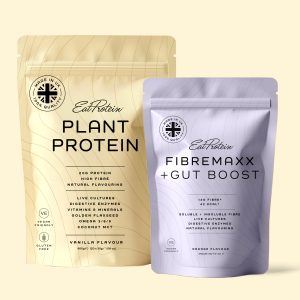
Want a one-step synbiotic foundation? Explore EatProtein FibreMaxx + Gut Boost — chicory root inulin, live Bacillus coagulans, and five digestive enzymes. Or browse our full Fibre range.
References
- Swanson, K.S., Gibson, G.R., Hutkins, R., et al. (2020). The International Scientific Association for Probiotics and Prebiotics (ISAPP) consensus statement on the definition and scope of synbiotics. Nature Reviews Gastroenterology & Hepatology, 17(11):687–701. View source
- Hill, C., Guarner, F., Reid, G., et al. (2014). The ISAPP consensus statement on the scope and appropriate use of the term probiotic. Nature Reviews Gastroenterology & Hepatology, 11(8):506–514. View source
- Gibson, G.R., Hutkins, R., Sanders, M.E., et al. (2017). Expert consensus document: The ISAPP consensus statement on the definition and scope of prebiotics. Nature Reviews Gastroenterology & Hepatology, 14(8):491–502. View source
- Konuray, G., & Erginkaya, Z. (2018). Potential use of Bacillus coagulans in the food industry. Foods, 7(6):92. View source
- Slavin, J.L. (2013). Fiber and prebiotics: mechanisms and health benefits. Nutrients, 5(4):1417–1435. View source
- Roberfroid, M., Gibson, G.R., Hoyles, L., et al. (2010). Prebiotic effects: metabolic and health benefits. British Journal of Nutrition, 104 Suppl 2:S1–63. View source