- Most UK adults eat 18g of fibre a day against the NHS target of 30g — a 12g gap that quietly drives bloating, cravings and low energy.
- Low-fibre meals digest fast, spike blood sugar and crash energy. Add fibre to every meal to steady focus and reduce the 3pm slump.
- Skin breakouts, dull complexion and mood dips often trace back to underfed gut bacteria. Fibre is the first lever to pull before adjusting anything else.
- Add fibre gradually — 3–5g extra per day, weekly — and drink water with every meal. This avoids the bloating that turns most people off fibre changes.
- A daily prebiotic fibre supplement (chicory root inulin) acts as a safety net on days when meals fall short — most signs ease within 7–14 days.
If you’ve ever wondered whether you’re getting enough fibre, the answer is almost certainly no — most UK adults eat around 18g a day against an NHS recommendation of 30g. The trouble is, low fibre rarely shows up as a single dramatic symptom. It creeps in through bloating, cravings, energy slumps and skin changes that most of us blame on something else. Here are the seven signs to watch for — and how to fix them quickly.
1. You’re Constipated More Often Than You’d Like
This is the most obvious sign — and the one most people miss because we don’t talk about it. “Regular” varies from person to person, but if you’re going less than three times a week, straining when you go, or passing hard, dry stools, fibre is usually the missing link.
Fibre adds bulk and softness to stools. Insoluble fibre (in wholemeal bread, vegetable skins, nuts) speeds transit. Soluble fibre (in oats, beans, chia, chicory) draws water into the gut and softens what’s there. You need both.
Quick fix: Add a tablespoon of chia seeds to breakfast, switch to wholemeal bread, and drink an extra glass of water with each meal. You’ll usually notice a difference within 3–5 days.
2. You Bloat After Most Meals
Bloating after eating sounds counterintuitive — surely more fibre would make it worse? In fact, low-fibre diets often lead to bloating because food sits in the gut longer, gut bacteria diversity drops, and the bacteria that remain ferment what they can find inefficiently.
When you increase fibre gradually, your microbiome rebalances, transit improves, and bloating settles. The key word is gradually — jumping from 18g to 35g in a day will bloat anyone.
Quick fix: Add 3–5g of fibre per day, week by week. Drink water. If you suspect digestive enzymes might help, our guide to digestive enzymes covers when they’re worth taking.
3. You’re Hungry Again Two Hours After Eating
If meals aren’t keeping you full, fibre is often the reason. Soluble fibre forms a gel in your gut that slows digestion and the absorption of carbohydrates — meaning slower, steadier release of energy and a longer gap before you feel hungry again.
Low-fibre meals (white bread, refined cereal, no veg) digest quickly. Your blood sugar spikes and crashes. Within an hour or two, you’re hungry again — and usually craving something sweet.
Quick fix: Add fibre to every meal. A handful of beans or lentils on a salad, oats instead of refined cereal, an apple with peanut butter as a snack. Aim for 8–10g of fibre per main meal.

4. Your 3pm Energy Slump Is Brutal
The classic afternoon crash is usually a blood sugar issue — and fibre is one of the most effective levers for fixing it. By slowing the absorption of carbohydrates, soluble fibre flattens the spike-and-crash pattern that drives energy slumps and sugar cravings.
If you can’t get through 4pm without a biscuit or a coffee, your lunch is probably under-fibred. White bread sandwiches, pasta-based salads with no pulses, sushi without seaweed — all common culprits.
Quick fix: Add fibre at lunch specifically. Mixed beans on a wholemeal wrap, lentil soup with a wholegrain roll, salad with chickpeas and seeds. You’ll feel the difference by the second day.
5. Your Cholesterol Has Crept Up
If your last GP visit flagged higher-than-ideal cholesterol, fibre is one of the most reliably effective interventions — particularly soluble fibre from oats (beta-glucan), beans, chia and chicory inulin. It binds to cholesterol in the gut and helps remove it from the body.
Meta-analyses of clinical trials consistently show that adding 3g of oat beta-glucan a day lowers LDL (“bad”) cholesterol by around 5%. That’s the difference between borderline and healthy for many people — without medication.
Quick fix: Daily porridge (with 40g+ oats), a serving of beans most days, and consider a prebiotic fibre supplement to add chicory root inulin into the mix.
6. Your Mood Feels Off and Brain Fog Is Creeping In
The gut-brain connection is no longer hypothetical. Around 90% of your serotonin is produced in the gut, and the bacteria living there influence mood, motivation and cognition. When fibre is low, those bacteria are underfed — and the downstream effects show up as low mood, irritability, anxiety, and brain fog.
This isn’t a substitute for proper mental health care, but it’s a foundational layer most people overlook. Feed the gut, and the brain often quietly responds.
Quick fix: Diverse plant intake — aim for 25–30 different plants a week (counting herbs, spices, nuts and seeds). Daily fermented food. A daily fibre supplement to fill any prebiotic gaps.
7. Your Skin Is Breaking Out or Looking Dull
The skin is one of the last places people connect to gut health, but it’s one of the most responsive. Inflammation in the gut shows up as inflammation on the skin — breakouts, redness, eczema flares, dullness. Fibre supports the gut lining, feeds beneficial bacteria, and reduces low-grade systemic inflammation.
Our guide to the gut-skin connection covers the mechanisms in detail, but the practical takeaway is simple: more fibre, more fermented foods, less ultra-processed snacking — and skin usually follows.
Quick fix: Three small habits stacked. A prebiotic fibre at breakfast, a fermented food (yoghurt, kefir, kimchi) at lunch or dinner, and a daily 30g fibre target. Give it 4 weeks.
How to Fix a Fibre Deficit Without Bloating
The most common mistake is going too fast. If you’re currently eating 18g of fibre and try to jump to 35g overnight, you’ll bloat. Here’s the comfortable way:
- Add 3–5g per day, weekly. Move from 18g to 21g, then 24g, then 27g, then 30g across four weeks.
- Drink water with every meal. Fibre needs hydration to work properly.
- Choose prebiotic fibres. Chicory root inulin tends to be gentler than wheat bran for most people, and feeds gut bacteria directly.
- Spread it across the day. Not a 30g fibre dinner — a 7–10g breakfast, 8–10g lunch, 8–10g dinner, with snacks bridging the rest.
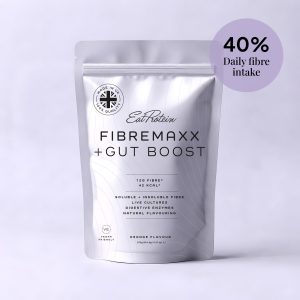
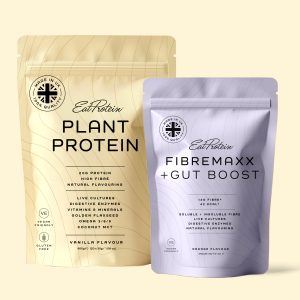
- Use a supplement as a safety net. A daily scoop of EatProtein FibreMaxx + Gut Boost adds 6g of fibre (soluble and insoluble) alongside live cultures and digestive enzymes — closing the gap on days when meals don’t go to plan.
Most UK adults can close the 12g daily fibre gap in 2–3 weeks with a handful of small changes — porridge, a prebiotic supplement, beans at lunch, water with meals. The signs above usually start improving within the first 7 days.
When to See Your GP
Most of the signs above are diet-related and respond quickly to fibre changes. But a few warrant a conversation with your GP:
- Persistent constipation lasting more than three weeks despite increased fibre and water
- Blood in stools, or unexplained weight loss
- Severe bloating that doesn’t improve with gradual fibre changes
- Chronic fatigue or low mood that persists once your diet is on track
Fibre is foundational — but it isn’t a substitute for proper medical advice when symptoms don’t respond.
The Bottom Line
Most fibre deficiencies show up quietly. Bloating, cravings, low energy, dull skin, mood dips — all things we tend to chalk up to stress or lack of sleep. The fix is unfashionable and slow-burn: 30g of fibre a day, mostly from food, occasionally topped up with a supplement. For most people, that’s 4 weeks of small changes — and a body that quietly starts working better.
If you want the full plan, start with our 4-week gut reset or our practical guide to getting more fibre in your UK diet.
Need a simple top-up? Explore EatProtein FibreMaxx + Gut Boost — 6g of fibre per serving from chicory root inulin and flaxseed, plus live Bacillus coagulans cultures and five digestive enzymes. Or browse our full Fibre range.
References
- NHS. (2022). How to get more fibre into your diet. NHS.uk. View source
- Public Health England. (2019). National Diet and Nutrition Survey: Years 9 to 11. View source
- Whitehead, A., Beck, E.J., Tosh, S., et al. (2014). Cholesterol-lowering effects of oat β-glucan: a meta-analysis of randomized controlled trials. American Journal of Clinical Nutrition, 100(6):1413–1421. View source
- Cryan, J.F., O’Riordan, K.J., Cowan, C.S.M., et al. (2019). The microbiota-gut-brain axis. Physiological Reviews, 99(4):1877–2013. View source
- Salem, I., Ramser, A., Isham, N., & Ghannoum, M.A. (2018). The gut microbiome as a major regulator of the gut-skin axis. Frontiers in Microbiology, 9:1459. View source
- Wastyk, H.C., Fragiadakis, G.K., Perelman, D., et al. (2021). Gut-microbiota-targeted diets modulate human immune status. Cell, 184(16):4137–4153. View source