- Pea protein contains all nine essential amino acids — technically a complete protein, but lower in methionine than ideal.
- The methionine gap is small — roughly 1.1g per 100g of protein vs an ideal 1.5g — and easily closed with other foods or rice protein.
- Pea + rice protein blends match whey on PDCAAS (1.0) and perform comparably for muscle growth and recovery in clinical trials.
- Beyond amino acids, pea-rice blends have better texture, gentler digestion and lower environmental impact than pea alone.
- Choose a pea-rice blend if you rely on protein powder for a meaningful share of daily protein. Look for added prebiotic fibre and live cultures for gut support.
It’s one of the first questions anyone considering plant-based protein asks: is pea protein a complete protein? Short answer — yes, technically. Slightly longer answer — it contains all nine essential amino acids, but it’s lower in one specific amino acid called methionine. The good news: that gap is smaller than the internet makes it sound, and for everyday use it closes itself effortlessly. Here’s the full picture, plus what we add to ours to make it work even harder.
What “Complete Protein” Actually Means
A complete protein contains all nine of the essential amino acids — the ones your body can’t make on its own and has to get from food. They are: histidine, isoleucine, leucine, lysine, methionine, phenylalanine, threonine, tryptophan and valine.
If a protein source contains all nine in usable amounts, it’s complete. If one or more are missing or extremely low, it’s incomplete. Animal proteins (meat, fish, eggs, dairy) are typically complete. Most individual plant proteins fall short on at least one amino acid — but usually not by much, and the gap is easy to close.
Pea Protein’s Amino Acid Profile
Pea protein is made from yellow split peas. It contains all nine essential amino acids — which technically qualifies it as a complete protein. But the amounts of each amino acid aren’t perfectly balanced for human needs. Specifically:
- High in: lysine, arginine, branched-chain amino acids (BCAAs — leucine, isoleucine, valine)
- Adequate in: threonine, phenylalanine, valine, tryptophan, histidine
- Lower in: methionine and cysteine (the “sulfur-containing” amino acids)
Methionine is the amino acid pea protein is most often described as “lacking” — though “lower than ideal” is more accurate. The PDCAAS score (Protein Digestibility Corrected Amino Acid Score, a standard measure of protein quality) for pea protein isolate sits at around 0.9 on a scale to 1.0 — meaning it’s a high-quality protein, just slightly below whey or egg (both 1.0).
Why the Methionine “Gap” Isn’t Really a Problem
Three reasons most nutrition experts don’t lose sleep over pea protein’s methionine content:
1. The gap is small
Pea protein contains roughly 1.1g of methionine per 100g of protein. The recommended intake sits closer to 1.5g per 100g. A 25g serving of pea protein still delivers most of what you need — the gap is real but modest.
2. Most people eat other foods alongside
If you eat any whole grains, nuts, seeds, eggs, fish or meat in the same day as your pea protein shake, the methionine gap closes effortlessly. Brazil nuts, sesame seeds, oats, brown rice and quinoa are all rich in methionine. A spoon of oats in your morning shake. A handful of nuts at lunch. The amino acid maths sorts itself out.
3. Functional completeness matters more than score
The PDCAAS scale is useful but a single decimal point doesn’t translate directly to real-world outcomes. Studies comparing pea protein head-to-head against whey for muscle growth and recovery show no meaningful difference when total protein intake is matched. The slight amino acid gap doesn’t show up in performance results.
How Pea Protein Compares to Other Sources
Here’s the protein-quality picture across common sources, using PDCAAS as the standard measure (max score 1.0):
- Whey protein: 1.0
- Egg white: 1.0
- Soy protein isolate: 1.0
- Pea protein isolate: ~0.9
- Beef: 0.92
- Hemp protein: 0.66
- Rice protein isolate: 0.42
Pea protein scores comparably to beef. It’s well ahead of hemp and rice as a standalone protein. And clinical trials — including direct comparisons against whey — show comparable results for muscle growth and recovery when total intake is matched.
Why EP Uses Pea Isolate (Not a Blend)
Some plant proteins use a pea-rice blend to chase a higher amino acid score. We chose pure pea protein isolate for our Plant Based Wellness Protein for three practical reasons:
- Cleaner ingredient list. Pure pea isolate keeps allergens minimal and the protein source transparent.
- Better texture for women. Modern pea isolate, properly formulated with natural flavours and a small amount of guar gum, delivers a smoother shake than many blends.
- Room for the gut-health stack. Instead of adding rice protein to chase an extra 0.1 on a scoring chart, we use that formulation space for the things that genuinely change how your body feels — chicory root inulin, live cultures, digestive enzymes.
Pea isolate at 65% of the formula. Then layered on top:
- Chicory root inulin — prebiotic fibre that feeds gut bacteria
- Coconut MCT oil powder — supports steady energy
- DHA omega-3 — for brain and heart
- Golden flaxseed — extra fibre and lignans
- Glucomannan — appetite-supporting fibre
- Live cultures (L. acidophilus and Bifidobacterium) — for gut diversity
- Five digestive enzymes (amylase, protease, lipase, cellulase, lactase) — for comfortable digestion
- Stevia — natural sweetening, no artificial sweeteners
- Added B6, B12, folate, magnesium, calcium, potassium
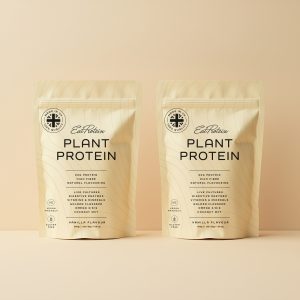
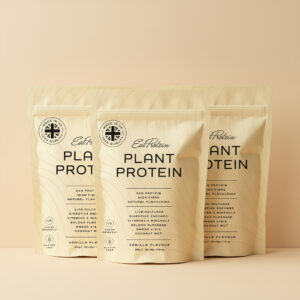
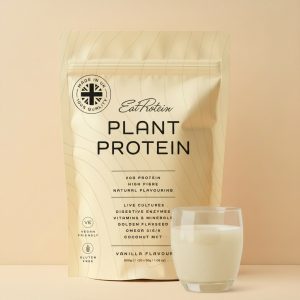
EatProtein Plant Based Wellness Protein is pea isolate with the gut-health stack built in. Designed specifically for women — vegan, made in the UK, naturally sweetened with stevia, no artificial sweeteners.
Who Should Care About Complete Proteins?
For most people, the complete-protein question is more theoretical than practical. If you eat a varied diet, you’re getting all your essential amino acids regardless of which individual sources you choose. The people for whom the question matters most:
- Anyone using protein powder as the main source — say 30g+ from a shake — should make sure they’re eating some methionine-rich whole foods elsewhere (oats, brown rice, seeds, nuts).
- Strict vegans who rely on a small number of plant proteins should vary their sources (legumes + grains is the classic complementary pairing).
- Older adults and those building muscle — total protein intake matters more for these groups, so hitting the target across the day matters more than which single source you use.
For an everyday smoothie or post-workout shake, pea protein on its own is genuinely fine. The bigger driver of results is your total daily protein intake — 1.2 to 1.6g per kg of bodyweight is the working range for most adults.
What to Look for in a Quality Pea Protein
- Pea isolate as the primary protein — not concentrate, not flour, not a mystery “plant blend”
- At least 20g of protein per serving — anything less and you’re paying for filler
- No artificial sweeteners — stevia is the gentler choice
- Added prebiotic fibre and/or live cultures — meaningful gut support, not marketing
- Digestive enzymes — particularly cellulase if fibre is included, to help your body process it
- Made in the UK — easier supply chain traceability
- Short, recognisable ingredient list
For a side-by-side look at how pea protein compares to whey, see our guide to pea vs whey protein. If you’re new to plant protein generally, our plant-based protein powder complete guide covers the full landscape.
The Bottom Line
Yes, pea protein contains all nine essential amino acids — which technically makes it a complete protein. It’s slightly lower in methionine than ideal, but the gap is small and easily closed by anything else you eat in the day. Pea isolate scores around 0.9 on PDCAAS — comparable to beef, well ahead of most plant proteins. For everyday use, it works. And when it’s formulated with the wider gut-health stack — inulin, live cultures, enzymes — the benefits go well beyond amino acid maths.
Ready to try pea protein with the full gut-health stack? Explore EatProtein Plant Based Wellness Protein — pea isolate with prebiotic fibre, live cultures and digestive enzymes. Or browse our full Vegan Protein range.
References
- Babault, N., Païzis, C., Deley, G., et al. (2015). Pea proteins oral supplementation promotes muscle thickness gains during resistance training. Journal of the International Society of Sports Nutrition, 12:3. View source
- Banaszek, A., Townsend, J.R., Bender, D., et al. (2019). The effects of whey vs. pea protein on physical adaptations following 8 weeks of high-intensity functional training. Sports, 7(1):12. View source
- FAO/WHO. (1991). Protein quality evaluation: report of a joint FAO/WHO expert consultation. Food and Agriculture Organization. View source
- Gorissen, S.H.M., Crombag, J.J.R., Senden, J.M.G., et al. (2018). Protein content and amino acid composition of commercially available plant-based protein isolates. Amino Acids, 50(12):1685–1695. View source
- Phillips, S.M. (2017). Current concepts and unresolved questions in dietary protein requirements and supplements in adults. Frontiers in Nutrition, 4:13. View source
- Joy, J.M., Lowery, R.P., Wilson, J.M., et al. (2013). The effects of 8 weeks of whey or rice protein supplementation on body composition and exercise performance. Nutrition Journal, 12:86. View source