You’ve found a protein you love. You’ve nailed your routine. But every morning, the same thing happens — lumps at the bottom, powder stuck to the sides, and that slow realisation that your shaker is letting the whole thing down.
It sounds like a small thing. It isn’t. A protein shaker bottle is the one piece of kit you use every single day, and the difference between a good one and a mediocre one is more noticeable than you’d expect. Smooth shakes, no leaks in your bag, no mysterious smell lingering three washes later — that’s what a well-designed shaker actually delivers.
Here’s everything you need to know about choosing the best protein shaker for your routine — what features genuinely matter, which materials hold up, and when it’s worth upgrading.
Why Your Protein Shaker Matters More Than You Think
A protein shake is only as good as how well it’s mixed. Clumpy, half-blended shakes aren’t just unpleasant to drink — they mean powder sitting at the bottom of your bottle instead of being absorbed by your body. If your protein shake isn’t mixing properly, you’re not getting the full benefit of what’s inside.
Beyond mixing, there are the everyday frustrations that quietly add up:
- Leaks — a lid that doesn’t seal properly means stained gym bags, sticky handbags, and wasted protein. Once you’ve had a shake leak in your work bag, you never forget it
- Odour — protein residue trapped in scratches, seals, and textured surfaces creates a breeding ground for bacteria. That stale, sour smell is one of the most common complaints about shaker bottles, and it’s almost always a material problem
- Temperature — a shake that warms up on the commute isn’t just less enjoyable. Warm protein drinks can develop an unpleasant texture and taste, especially plant-based formulas
- Durability — cracked lids, warped plastic, faded markings. A shaker that doesn’t hold up means replacing it every few months
None of these are deal-breakers on their own. But together, they’re the reason so many people cycle through shaker after shaker, never quite finding one that feels right. The good news? Once you know what to look for, the difference is immediate.
Key Features to Look For in a Protein Shaker Bottle
Not every feature matters equally. Here’s what actually makes a difference in daily use — the things that separate a shaker you’ll keep for years from one that ends up at the back of the cupboard.
Material
This is the single biggest factor. The material your shaker is made from affects everything — durability, hygiene, temperature, taste, and how it looks after six months of daily use. We’ll cover the main options in detail below, but the short version: stainless steel outperforms plastic in almost every way that matters for daily use.
Leak-Proof Design
A shaker goes in bags, gets tossed in car cup holders, and travels upside down in gym kit. A truly leak-proof seal isn’t a bonus feature — it’s essential. Look for a secure screw-on lid with a silicone gasket and a flip-top or snap-lock drinking spout. The best designs seal in two places: where the lid meets the bottle and where the drinking spout closes.
Mixing Mechanism
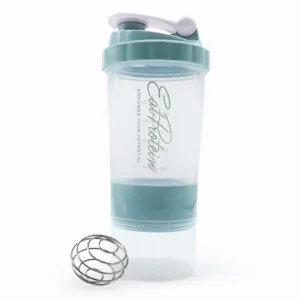
The whole point of a shaker is to blend powder into liquid smoothly. Different bottles approach this differently — wire whisk balls, mixing grids, built-in agitators, or specially shaped internal walls. The most effective mechanisms break up powder on contact and keep it suspended, not just pushed around. A silent mixing mechanism is a nice bonus too — nobody wants to announce their shake to the entire office.
Capacity
Most protein shakes need around 300–400ml of liquid. But you also need room for the powder, any extras (ice, oats, fruit), and enough headspace for the mixer to work. For most people, 500ml to 700ml is the sweet spot. Any smaller and you’re cramped; any larger and it starts to feel bulky in a bag.
Ease of Cleaning
A shaker you can’t clean properly is a shaker that will smell. Look for a wide mouth (easy to reach inside with a sponge), minimal parts (fewer crevices for residue to hide), and dishwasher-safe materials. If you need a guide on keeping things fresh, our protein shaker cleaning guide covers the essentials.
Insulation
If your shake sits in a bag or on a desk for any length of time, insulation makes a genuine difference. Double-walled construction keeps drinks cold for hours without condensation on the outside — no wet patches in your bag, no lukewarm shake at lunchtime. This is especially valuable if you prep your shake before leaving the house.
Protein Shaker Materials: How They Compare
The material your shaker is made from shapes your entire experience with it. Here’s how the three main options stack up.
Plastic Shakers
Plastic is the most common shaker material, and there are good reasons — it’s lightweight, affordable, and widely available. For someone just starting out or looking for a basic option, plastic does the job.
Where plastic falls short is longevity. Over time, the surface scratches — and those micro-scratches trap protein residue and bacteria, which is the main cause of that lingering shaker smell. Plastic can also absorb flavours and colours from protein powders, discolour in sunlight, and warp in the dishwasher. It’s a perfectly fine starting point, but it’s worth knowing its limitations.
Stainless Steel Shakers
Stainless steel is the premium choice, and for good reason. It’s naturally resistant to scratches, odours, and staining. It doesn’t absorb flavours, doesn’t discolour, and can handle the dishwasher without issue. The smooth, non-porous surface means bacteria have nowhere to hide — which is why stainless steel is the standard in professional kitchens and medical equipment.
The real advantage comes with double-walled construction. A double-walled stainless steel shaker is essentially a vacuum flask — it keeps cold drinks cold for hours and prevents condensation on the outside. Your shake stays fresh and chilled; your bag stays dry.
Stainless steel is heavier than plastic, which is the one genuine trade-off. But for daily use where durability, hygiene, and temperature matter, it’s the stronger choice by a clear margin.
Glass Shakers
Glass is excellent for taste purity and easy cleaning — nothing sticks to glass, and it doesn’t absorb odours or flavours. The obvious downside is fragility. Glass shakers are best suited to home use where they won’t be tossed in a gym bag or knocked off a desk. They’re also heavier than both plastic and stainless steel, and most aren’t insulated. A lovely option for the kitchen; less practical on the go.
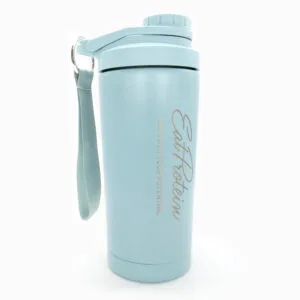
EatProtein’s stainless steel shaker bottles are double-walled and vacuum-insulated — designed to keep your shakes cold for hours, with a 100% leak-proof seal and a silent mixer built in. No condensation, no odour, no fuss.
When to Upgrade Your Protein Shaker
There’s no shame in starting with a basic shaker. But there are a few clear signs it’s time to move on:
- The smell won’t go away — if your shaker smells stale even after a thorough wash, the surface is likely scratched and harbouring bacteria. No amount of cleaning will fix that permanently
- You’re finding lumps consistently — if your shakes aren’t mixing smoothly despite following the right ratios, the mixing mechanism isn’t doing its job. A better shaker makes a noticeable difference
- The lid leaks — seals wear out, plastic warps, threads lose their grip. If you’re double-checking the lid every time you put it in your bag, it’s time
- It looks tired — discolouration, scratches, faded markings. Your shaker is part of your daily routine. It’s one of the things you reach for first every morning. It should be something you actually enjoy using
- You want your shake to stay cold — if you prep ahead or your shake sits for more than 30 minutes before you drink it, an insulated bottle transforms the experience
Upgrading your shaker isn’t about spending more for the sake of it. It’s about removing small daily frustrations and making a routine you already have work better. The right shaker makes your protein taste better, last longer, and fit into your day without a second thought.
What Size Protein Shaker Do You Need?
Capacity is one of those things people rarely think about until they get it wrong. Here’s a simple guide:
- 400–500ml — compact and portable. Best if you mix with water only, use a single scoop, and prefer something slim enough for most cup holders. The trade-off is less headspace for mixing
- 500–700ml — the sweet spot for most people. Enough room for liquid, powder, and extras like ice or a banana. Plenty of space for the mixer to do its work. This is the range that suits most daily routines
- 700ml+ — ideal if you blend larger smoothies, add multiple ingredients, or prefer to carry more water alongside your shake. These tend to be bulkier, so check it fits your bag or cup holder before committing
As a general rule, your shaker should be at least 50% larger than the volume of liquid you’re mixing. That extra headspace is what allows the mixing mechanism to break up the powder properly. A shaker filled to the brim won’t mix well, no matter how good the design.
Making Your Shake Routine Work Harder
A great shaker is the foundation — but the real magic is in what goes inside it. If you’re looking for a protein that mixes beautifully without clumps and tastes genuinely good, EatProtein’s vegan protein range is formulated to blend smoothly in a shaker, no blender required. Combined with a quality shaker bottle, it’s a routine that takes seconds and feels effortless.
For inspiration on what to mix, our guide to making the perfect protein shake covers ratios, flavour combinations, and the little details that make the difference between a shake you tolerate and one you genuinely look forward to.
Designed for women who want more from their kit. EatProtein’s premium shaker bottles are double-walled stainless steel, 100% leak-proof, and vacuum-insulated to keep your drinks cold for hours. With a silent mixer and a design you’ll actually want to carry, it’s the last shaker you’ll need to buy.
The Bottom Line
Your protein shaker is the thing that stands between you and a genuinely enjoyable shake. It’s the difference between lumps and silk, between leaks and confidence, between a bottle you replace every few months and one that’s still perfect a year from now.
When you’re choosing, focus on the things that matter most in daily use: material, leak-proof design, effective mixing, easy cleaning, and — if you’re on the go — insulation. Stainless steel wins on almost every count, especially double-walled designs that keep your shakes cold and your bag dry.
And if you’re ready to upgrade? EatProtein’s stainless steel shaker bottles are designed with exactly these priorities in mind — because your daily routine deserves kit that works as hard as you do.
Ready to upgrade your shake routine? Explore EatProtein’s premium stainless steel shaker bottles — leak-proof, insulated, and designed for women who expect more.
References
- Food Standards Agency. (2024). BPA in plastic. Food Standards Agency. View source
- Darbre, P. D. (2022). An insight into bisphenol A, food exposure and its adverse effects on health: A review. PMC / Environmental Research. View source
- BioCote. (2023). Hygienic protein shaker bottles: contamination and microbial risk in drinking vessels. BioCote. View source
- Stanhewicz, A. E., & Larry Kenney, W. (2020). Practical hydration solutions for sports. PMC / Nutrients. View source
- British Heart Foundation. (2023). Hydration and exercise. British Heart Foundation. View source