We’ve all been there. It’s mid-afternoon, lunch was hours ago, and your energy is fading. You reach for whatever’s closest — a biscuit, a handful of crisps, a cereal bar that promises the world on the wrapper. Twenty minutes later, you feel exactly the same. Maybe worse.
The problem isn’t that you snacked. The problem is that the snack didn’t do anything useful. It didn’t sustain you. It didn’t support you. It was just… empty.
High-protein snacks change that equation entirely. When you reach for something with real protein content, you’re not just filling a gap — you’re giving your body something it can actually work with. Here’s everything you need to know about choosing the best protein snacks to keep you fuelled, focused, and feeling good between meals.
Why Protein Matters in Your Snacks
Most of us understand that protein is important at mealtimes. But snacking tends to be where protein falls off the radar entirely. The average snack is heavy on carbohydrates, light on protein, and over before your body has had time to register it.
Here’s what happens when you add protein to the picture:
- Sustained energy — protein takes longer to digest than simple carbohydrates, which means a steadier release of energy rather than a spike and crash. That 3pm slump? Protein helps smooth it out.
- Appetite management — protein is the most satiating macronutrient. A high-protein snack genuinely keeps you feeling full and satisfied until your next meal, rather than triggering a chain of grazing.
- Muscle support — your body needs a regular supply of protein to maintain and repair muscle tissue. Spreading your protein intake across the day — including snacks — is more effective than loading it all into one or two meals.
- Steady blood sugar — pairing protein with other nutrients helps slow the absorption of sugar into your bloodstream, keeping your energy levels more consistent throughout the day.
None of this means you need to turn every snack into a meal. It just means that choosing something with a decent protein content — even 10 or 15 grams — can transform the way you feel between meals.
The Best High Protein Snacks: Your Options
High-protein snacking doesn’t mean living on chicken breast and boiled eggs (unless that’s your thing — no judgement). The range of protein-rich snacks available now is wider than it’s ever been, and there’s genuinely something for every taste, every schedule, and every kind of day.
Protein Crisps
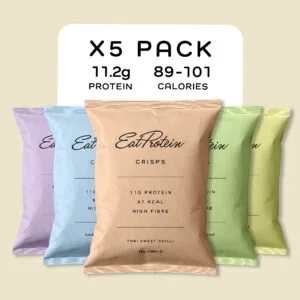
If you love the crunch and flavour of regular crisps, protein crisps are a revelation. They deliver the same satisfying texture and savoury hit, but with a meaningful protein content that turns a casual snack into something your body can actually use. They’re light, portable, and shelf-stable — perfect for desk drawers, handbags, and gym bags.
EatProtein’s Protein Crisps pack 11g of protein per bag at under 101 calories — all the satisfaction of crisps with a genuine protein boost. Explore the full range in our protein crisps collection.
Protein Chocolate
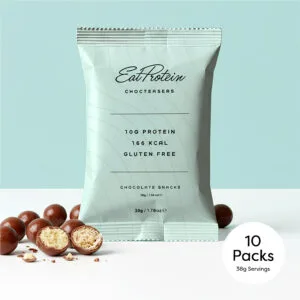
Yes, chocolate can be a protein snack. Protein chocolate takes something you already love and adds a meaningful amount of protein while keeping sugar low. It’s the snack that feels indulgent but actually delivers nutritional value — and there’s something genuinely satisfying about that.
EatProtein’s Protein Chocolate delivers up to 13g of protein with low sugar, from just 162 calories. It’s chocolate that does more. Browse the full protein chocolate range.
Protein Wafers
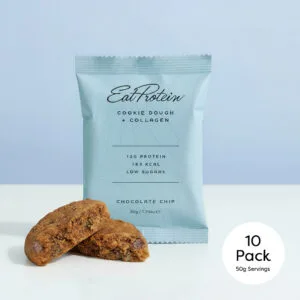
Light, crispy, and surprisingly high in protein — protein wafers are one of the most underrated snack options going. The layered texture makes them feel like a proper treat, and the best ones add functional benefits beyond protein alone.
EatProtein’s Protein Wafers deliver up to 15g of protein per serving with 6,000mg of collagen built in, from just 162 calories. A snack that supports your skin, hair, and nails while keeping you fuelled. See the full protein wafer collection.
Greek Yoghurt
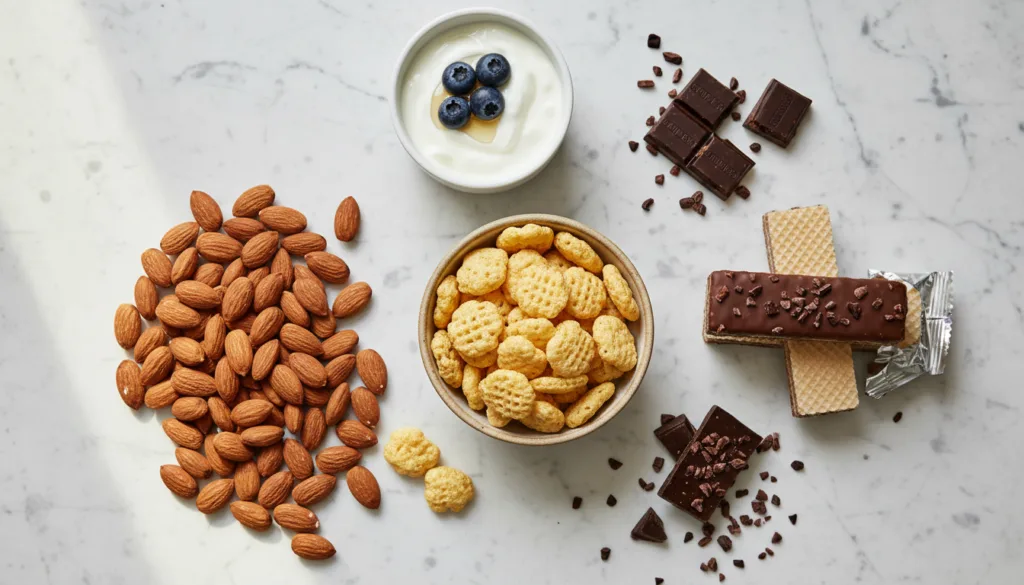
A classic for good reason. A standard serving of Greek yoghurt delivers 15–20g of protein, and it works as a base for almost anything — berries, a drizzle of honey, a handful of seeds. It’s a fresh, versatile option that’s ideal when you’re at home or have access to a fridge.
Nuts and Seeds
Almonds, pumpkin seeds, cashews, pistachios — a small handful provides a decent protein hit alongside healthy fats and fibre. They’re calorie-dense, so portion awareness matters, but as part of a balanced snacking routine they’re hard to beat for nutrient density.
Beef or Turkey Jerky
Jerky is one of the highest-protein portable snacks you can find — often 10–15g of protein per serving with very little fat. It’s lightweight, doesn’t need refrigeration, and travels well. Look for options with simple seasoning and lower sodium.
Boiled Eggs
Simple, affordable, and packed with around 6–7g of protein each. Two boiled eggs give you 12–14g of protein with virtually no carbohydrates. They’re one of the most nutrient-complete snacks available — just not the most convenient if you’re out and about.
Edamame
Lightly salted edamame beans make a surprisingly satisfying snack — around 11g of protein per 100g, with fibre and a pleasant texture. You’ll find them in most supermarkets now, either frozen or ready-to-eat, and they’re a refreshing change from the usual snack rotation.
What Makes a Great Protein Snack?
Not all protein snacks are created equal. Some pack plenty of protein but come with a calorie count that rivals a full meal. Others taste so uninspiring that you’d rather go hungry. The sweet spot — the snack you’ll actually reach for day after day — balances four things:
- Protein content — aim for at least 10g per serving. Anything below that and you’re unlikely to notice a meaningful difference in satiety or energy.
- Calorie balance — a snack should sit comfortably within your day, not dominate it. Somewhere between 100 and 250 calories is a sensible range for most people.
- Convenience — the best snack is the one you actually have with you. Shelf-stable, portable options that don’t need preparation or refrigeration win on busy days.
- Taste — this is the one that matters most, honestly. A snack you don’t enjoy is a snack you won’t reach for. High-protein snacking only works if it fits naturally into what you already like eating.
When all four come together, you stop thinking about protein snacking as a chore and start thinking of it as just… snacking. That’s the goal.
Your High Protein Snack Cheat Sheet
Here’s a quick comparison to help you find what works for your day:
- EatProtein Protein Crisps — 11g protein, under 101 calories. Best for: savoury cravings, desk snacking, on-the-go.
- EatProtein Protein Chocolate — up to 13g protein, low sugar, from 162 calories. Best for: sweet cravings, afternoon treat, handbag snack.
- EatProtein Protein Wafers — up to 15g protein, 6,000mg collagen, from 162 calories. Best for: collagen support, layered crunch craving, functional snacking.
- Greek yoghurt — 15–20g protein, ~130 calories per pot. Best for: breakfast pairing, at-home snacking, versatile base.
- Almonds (30g handful) — ~6g protein, ~180 calories. Best for: healthy fats, nutrient density, portion-controlled snacking.
- Beef jerky (30g) — ~10g protein, ~100 calories. Best for: highest protein-to-calorie ratio, travel, long days out.
- Two boiled eggs — ~13g protein, ~140 calories. Best for: nutrient completeness, budget-friendly, meal prep.
- Edamame (100g) — ~11g protein, ~120 calories. Best for: plant-based option, fibre, light and fresh.
The right choice depends on the moment. Some days call for chocolate. Some days call for crunch. Some days you want something you can eat at your desk without anyone noticing. Having a few favourites in rotation means you’re always covered.
Desk Drawer and On-the-Go Snacking
Let’s be honest — the moments when you most need a good snack are usually the moments when you have the least time to prepare one. Between meetings, on the school run, halfway through a long drive, waiting at the airport. These are the times that make or break your snacking habits.
The trick is to think ahead, even just a little:
- The desk drawer stash — keep a few shelf-stable protein snacks at your desk or workspace. Protein crisps and protein chocolate are perfect for this — they don’t need refrigeration, they’re individually wrapped, and they’re ready when you are. When 3pm hits, you’ve got something to reach for that actually helps.
- The handbag essentials — a protein bar, a bag of protein crisps, or a protein wafer takes up almost no space but can rescue an entire afternoon. If you commute, travel regularly, or have a schedule that makes sit-down meals unpredictable, keeping a snack in your bag is a small habit with a big impact.
- The Sunday prep — if you prefer whole food options, spending ten minutes on a Sunday boiling a batch of eggs, portioning nuts into small bags, or prepping edamame containers for the week can set you up beautifully. It’s not meal prep — it’s snack prep, and it takes a fraction of the time.
The common thread? Making protein snacking easy. The easier it is, the more consistently you’ll do it. And consistency is where the real benefits stack up — steadier energy, better appetite management, and a more balanced intake of protein across your whole day.
How Much Protein Should You Snack On?
There’s no single magic number, but 10–15g of protein per snack is a solid target for most people. Here’s why that range works:
- Below 5g — you’re unlikely to notice any meaningful difference in satiety or energy. Most conventional snacks sit here, which is why they don’t hold you.
- 5–10g — a useful contribution, especially if you’re already hitting your protein targets at meals. A handful of nuts or a small yoghurt falls into this range.
- 10–15g — the sweet spot. Enough to genuinely sustain you between meals, support muscle maintenance, and keep your energy steady. Most dedicated protein snacks — including protein crisps, chocolate, and wafers — deliver in this range.
- 15g+ — approaching mini-meal territory. Greek yoghurt, two boiled eggs, or a larger protein bar. Great if you have a long gap between meals or higher protein needs.
For women, the general recommendation is around 0.75–1g of protein per kilogram of body weight daily, though active women and those focused on muscle maintenance may benefit from more. Spreading that across three meals and one or two snacks is a practical, sustainable approach — and it means your snacks are doing real work rather than just keeping your hands busy.
Snacking Smarter, Not Harder
High-protein snacking isn’t about restriction. It’s not about earning your food or following rigid rules. It’s about making the moments between meals count — choosing snacks that give your body something useful alongside the taste and enjoyment you’re reaching for in the first place.
The best protein snacks are the ones that fit seamlessly into the way you already live. The ones you genuinely look forward to. The ones that mean you arrive at dinner feeling balanced and steady rather than ravenous and reaching for anything in sight.
Whether that’s a bag of protein crisps at your desk, a square of protein chocolate after lunch, or a protein wafer with built-in collagen on a busy afternoon — the point is the same. Small choices, made consistently, that add up to a noticeable difference in how you feel.
Ready to upgrade your snack drawer? Explore EatProtein’s full high-protein snack range — protein crisps, chocolate, and collagen wafers designed to keep you going between meals.
References
- Paddon-Jones, D., Westman, E., Mattes, R. D., Wolfe, R. R., Astrup, A., & Westerterp-Plantenga, M. (2008). Protein, weight management, and satiety. The American Journal of Clinical Nutrition, 87(5), 1558S–1561S. View source
- Leidy, H. J., Tang, M., Armstrong, C. L., Martin, C. B., & Campbell, W. W. (2011). The effects of consuming frequent, higher protein meals on appetite and satiety during weight loss in overweight/obese men. Obesity, 19(4), 818–824. View source
- Areta, J. L., Burke, L. M., Ross, M. L., Camera, D. M., West, D. W., Broad, E. M., Jeacocke, N. A., Moore, D. R., Stellingwerff, T., Phillips, S. M., Hawley, J. A., & Coffey, V. G. (2013). Timing and distribution of protein ingestion during prolonged recovery from resistance exercise alters myofibrillar protein synthesis. The Journal of Physiology, 591(9), 2319–2331. View source
- Mamerow, M. M., Mettler, J. A., English, K. L., Casperson, S. L., Arentson-Lantz, E., Sheffield-Moore, M., Layman, D. K., & Paddon-Jones, D. (2014). Dietary protein distribution positively influences 24-h muscle protein synthesis in healthy adults. The Journal of Nutrition, 144(6), 876–880. View source
- Stokes, T., Hector, A. J., Morton, R. W., McGlory, C., & Phillips, S. M. (2018). Recent perspectives on the role of dietary protein for the promotion of muscle hypertrophy with resistance exercise training. Nutrients, 10(2), 180. View source