You cleanse, you moisturise, you protect — and your skincare routine might be brilliant. But what if the secret to your best skin isn’t only in the products you apply, but in what’s happening inside your gut? The relationship between your digestive system and your skin is one of the most fascinating areas of modern nutrition research — and once you understand it, it changes the way you think about looking after yourself.
This is the gut-skin connection: the science behind why your digestion influences your complexion, and what you can do to support both from the inside out.
What Is the Gut-Skin Axis?
Your gut and your skin have more in common than you might expect. They’re both barriers — your skin protects you from the outside world, and your gut lining protects your internal systems from what passes through your digestive tract. They’re both home to thriving microbial communities. And they’re both deeply connected to your immune system.
Researchers call this relationship the gut-skin axis — a two-way communication network linking your gastrointestinal tract to your skin through immune pathways, metabolic signals, and the nervous system. It’s not a fringe concept. Studies published in journals like Frontiers in Microbiology and The Journal of Clinical Medicine have mapped out how shifts in your gut microbiome can directly influence skin health, inflammation, and even the speed at which your skin ages.
In simple terms: what’s happening inside your digestive system doesn’t stay there. Your gut talks to your skin — constantly — and the messages it sends depend on how well your microbiome is supported.
How Your Gut Influences Your Skin
The gut-skin connection works through several overlapping mechanisms. Understanding them helps you see why an inside-out approach to skin health makes so much sense alongside your existing routine.
Your gut barrier and intestinal permeability
Your gut lining is made up of a single layer of cells held together by structures called tight junctions. When your gut is healthy, these junctions form a selective barrier — letting nutrients through while keeping bacteria, toxins, and undigested food particles contained. When the gut barrier is weakened (sometimes referred to as increased intestinal permeability or “leaky gut”), those tight junctions loosen, allowing substances to pass into the bloodstream that shouldn’t be there.
Your immune system responds to these escaped particles with inflammation — and that inflammation doesn’t stay localised. It circulates. And one of the places it shows up most visibly is your skin. Research has linked increased intestinal permeability to inflammatory skin conditions including acne, eczema, and rosacea.
Inflammation: the shared thread
Chronic low-grade inflammation is one of the most significant ways your gut affects your skin. When your gut microbiome is out of balance — a state called dysbiosis — it can trigger an immune response that produces pro-inflammatory cytokines. These molecules travel through your bloodstream and can trigger or amplify inflammation in the skin.
This is why people who experience digestive issues sometimes notice their skin flaring up at the same time. It’s not a coincidence — it’s the same inflammatory process expressing itself in two different organs. If you’re curious about recognising the signs, our guide to signs of an unhealthy gut covers what to watch for.
Nutrient absorption
Your skin depends on a steady supply of nutrients — vitamins A, C, E, zinc, omega-3 fatty acids, and amino acids — to repair itself, produce collagen, maintain hydration, and defend against oxidative stress. All of these need to be properly absorbed through your digestive system. When your gut isn’t functioning well, absorption can be compromised. You might be eating all the right things and still not getting the full benefit. Supporting your gut health means your skin actually receives the building blocks it needs.
The microbiome connection
Your gut microbiome — the trillions of bacteria living in your large intestine — does far more than aid digestion. It produces short-chain fatty acids (SCFAs) like butyrate that nourish your gut lining, regulate immune function, and have anti-inflammatory effects throughout your body, including your skin.
A diverse, well-fed microbiome supports a strong gut barrier, balanced immune responses, and efficient nutrient processing. An imbalanced one — where less beneficial microbes outnumber the helpful strains — can set off a cascade of inflammation, poor absorption, and immune dysregulation that your skin reflects.
What an Imbalanced Gut Looks Like on Your Skin
Your skin is remarkably honest. When something is off internally, it often shows up on the surface. Here are some of the ways gut imbalances can manifest in your skin.
Breakouts and acne
The link between gut health and acne is one of the most studied aspects of the gut-skin axis. Research has found that people with acne are more likely to have altered gut microbiome compositions and increased intestinal permeability. The inflammatory signals triggered by gut dysbiosis can increase sebum production, promote bacterial growth on the skin, and amplify the inflammatory response that turns a blocked pore into a full breakout.
Eczema and sensitivity
Eczema (atopic dermatitis) has a strong immune component, and your gut plays a central role in immune regulation. Studies have shown that reduced microbial diversity in the gut — particularly lower levels of beneficial Bifidobacteria — is associated with eczema. Supporting your microbiome with prebiotic fibre can help create the conditions for a more balanced immune response.
Redness and rosacea
Rosacea has been linked to gut conditions including small intestinal bacterial overgrowth (SIBO) and Helicobacter pylori infection. While the relationship is complex, the inflammatory pathways connecting the gut and skin appear to play a significant role. Some research has found that treating gut-related conditions can improve rosacea symptoms.
Dullness and dryness
When your gut isn’t absorbing nutrients efficiently, your skin can lose its lustre. Dull, dry, or lacklustre skin is sometimes a reflection of what’s happening deeper — poor absorption of essential fatty acids, vitamins, and minerals that your skin cells need to stay hydrated, plump, and radiant. It’s not always about what you’re putting on your skin — sometimes it’s about what’s getting through.
Premature ageing
Chronic inflammation accelerates skin ageing by breaking down collagen and elastin — the proteins that keep your skin firm and elastic. When your gut is producing ongoing inflammatory signals, your skin is under constant low-level stress. Supporting your gut helps reduce this internal inflammation, giving your skin a calmer environment in which to maintain and repair itself.
Supporting Your Skin from the Inside Out
The good news is that supporting the gut-skin connection doesn’t require a complete lifestyle overhaul. Small, consistent changes to how you nourish your gut can make a meaningful difference to how your skin looks and feels over time. Here’s where to start.
1. Feed your microbiome with prebiotic fibre
Prebiotics are the fuel your beneficial gut bacteria need to thrive. They’re non-digestible fibres that travel to your large intestine and selectively feed the good bacteria — particularly Bifidobacteria and Lactobacilli — helping them grow, multiply, and produce the short-chain fatty acids that strengthen your gut barrier.
Chicory root inulin is one of the most well-researched prebiotic fibres available, and it’s a brilliant place to start. It supports your microbiome gently and effectively — and a healthier microbiome means fewer inflammatory signals reaching your skin.
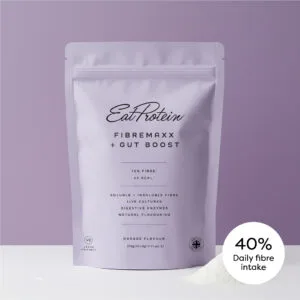
EatProtein’s Prebiotic Fibre is built on chicory root inulin — a clean, plant-based prebiotic that feeds the beneficial bacteria in your gut. By supporting your microbiome from the inside, you’re also supporting the gut-skin connection that influences how your skin looks and feels. No artificial sweeteners, no unnecessary extras — just thoughtful nutrition for your gut and your glow.
If you’re looking for more ways to increase your fibre intake, our guide on how to get more fibre has plenty of practical ideas.
2. Include probiotic-rich foods
While prebiotics feed your existing good bacteria, probiotic-rich foods introduce additional beneficial strains. Fermented foods like natural yoghurt, kefir, sauerkraut, kimchi, miso, and kombucha all contain live cultures that contribute to microbial diversity in your gut — and greater diversity is associated with stronger gut barrier function and more balanced immune responses.
You don’t need to eat all of them. Pick the ones you genuinely enjoy and include them regularly.
3. Eat a wide range of whole plants
One of the most consistent findings in microbiome research is that people who eat a greater diversity of plant foods have more diverse gut microbiomes. Aim for a wide range of vegetables, fruits, wholegrains, legumes, nuts, and seeds throughout your week. Each plant food feeds slightly different bacterial strains, so variety genuinely helps.
Our guide to gut health foods covers the best options in more detail — including foods that are particularly good at supporting your microbiome.
4. Reduce processed sugar
High intakes of refined sugar and ultra-processed foods can feed less beneficial gut bacteria at the expense of the strains you want to support. This shift in microbial balance can increase gut inflammation and weaken your gut barrier — both of which can affect your skin. You don’t need to cut sugar out entirely — just be mindful of how much refined sugar and processed food makes up your overall diet, and look for opportunities to swap in whole-food alternatives.
5. Stay well hydrated
Water is essential for digestion, nutrient absorption, and maintaining the mucosal lining of your gut. It’s also fundamental for skin hydration from the inside out. Soluble fibre — including prebiotic fibres like inulin — works best when there’s plenty of water available. Aim for consistent hydration throughout the day, and drink a full glass of water when you take your prebiotic fibre.
6. Manage stress
Your gut and brain are connected via the vagus nerve — a relationship known as the gut-brain axis. Chronic stress can alter your gut microbiome composition, increase intestinal permeability, and trigger inflammation. If you’ve ever noticed your skin flaring up during a stressful period, this is part of why. Regular movement, adequate sleep, breathing exercises, and whatever genuinely helps you unwind all contribute to a calmer gut — and calmer skin.
7. Support your skin’s structure with collagen
While you’re supporting your skin from the inside through your gut, you can also give it the building blocks it needs to maintain its structure. Collagen is the most abundant protein in your skin, responsible for firmness, elasticity, and hydration. As we age, our natural collagen production gradually declines, and supplementing with hydrolysed collagen can provide your body with the peptides it needs to support skin repair and resilience.
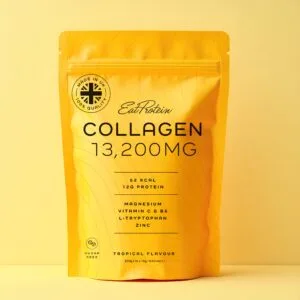
EatProtein’s Collagen range provides high-quality bovine collagen peptides that support your skin’s structure and elasticity. Combined with gut-supportive nutrition, it’s a beautiful way to care for your skin from the inside — giving it both the environment and the building blocks it needs to thrive.
How Long Does It Take to See Results?
This is the question everyone asks — and the honest answer is that it varies. Your gut microbiome can begin to shift within days of dietary changes, but meaningful, visible changes to your skin typically take longer.
Most people begin to notice improvements in their skin within four to eight weeks of consistent gut support. Here’s why: your gut needs time to rebalance its microbial community, reduce inflammation, and restore barrier function. Your skin has its own renewal cycle too — skin cells turn over roughly every 28 days, so the skin you see today was being built a month ago.
Be patient with the process. The changes you’re making now are creating the internal conditions for healthier skin in the weeks ahead. Consistency is everything — a daily prebiotic and a gut-supportive diet will do far more over time than sporadic efforts.
EatProtein’s Vegan Protein is formulated with prebiotic fibre from chicory root inulin, live cultures, and digestive enzymes — supporting your digestion and your microbiome in every serving. It’s an easy way to build gut-skin support into your daily routine, whether you blend it into a smoothie or stir it into your morning oats.
Your Skin Starts in Your Gut
The gut-skin connection is real, it’s well-researched, and it’s something you can actively support every day. By feeding your microbiome with prebiotic fibre, eating a diverse diet rich in whole plants and fermented foods, staying hydrated, and managing stress, you’re giving your skin the internal support it needs to look and feel its best.
Your skincare routine takes care of the outside. Your gut takes care of the inside. Together, they’re a powerful combination — and the inside-out approach doesn’t replace what you’re already doing, it complements it beautifully.
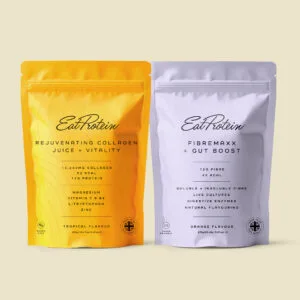
Ready to support your skin from the inside out? Explore EatProtein’s Prebiotic Fibre, Vegan Protein, and Collagen range — and give your gut-skin connection the nutrition it deserves.
References
- Salem, I., Ramser, A., Isham, N., & Ghannoum, M.A. (2018). The gut microbiome as a major regulator of the gut-skin axis. Frontiers in Microbiology, 9:1459. View source
- Mahmud, M.R., Akter, S., Tamanna, S.K., et al. (2022). Impact of gut microbiome on skin health: gut-skin axis observed through the lenses of therapeutics and skin diseases. Gut Microbes, 14(1). View source
- O’Neill, C.A., Monteleone, G., McLaughlin, J.T., & Paus, R. (2016). The gut-skin axis in health and disease: a paradigm with therapeutic implications. BioEssays, 38(11):1167–1176. View source
- Bowe, W.P., & Logan, A.C. (2011). Acne vulgaris, probiotics and the gut-brain-skin axis — back to the future? Gut Pathogens, 3(1):1. View source
- De Pessemier, B., Grine, L., Debaere, M., et al. (2021). Gut–skin axis: current knowledge of the interrelationship between microbial dysbiosis and skin conditions. Microorganisms, 9(2):353. View source
- Rinaldi, F., Trink, A., Pinto, D., & Giuliani, G. (2022). The microbiome in rosacea, microbiome and probiotics: the gut-skin axis. Frontiers in Microbiology. View source
- Dahl, W.J., Zank, L., & Auger, J. (2017). Effect of consumption of chicory inulin on bowel function in healthy subjects with constipation. International Journal of Food Sciences and Nutrition. View source