Your gut health affects more than you might think. Energy, skin, mood, digestion, immunity — they all trace back to what’s happening in your digestive system. The trillions of bacteria living in your gut play a role in almost every aspect of how you feel day to day.
The good news? What you eat has a direct and powerful impact on the balance of those bacteria. You don’t need a complicated protocol or expensive testing. You just need to know which foods support your microbiome — and which ones work against it.
Your Gut Microbiome in 60 Seconds
Your gut is home to trillions of microorganisms — bacteria, fungi, and other microbes that collectively make up your gut microbiome. Think of it as a living ecosystem inside your digestive tract. When it’s balanced and diverse, everything runs smoothly: digestion feels comfortable, your energy is steady, your skin looks clear, and your immune system works the way it should.
When it’s out of balance — too many of the wrong bacteria, not enough of the right ones — things start to shift. Bloating, sluggish digestion, low energy, breakouts, and even mood changes can all be linked to an unhappy gut.
Here’s the key: diet is the single biggest factor influencing your microbiome. More than genetics, more than where you live, more than any supplement — what you eat every day shapes the community of bacteria in your gut. The more diverse and fibre-rich your diet, the more diverse and resilient your microbiome becomes.
The Three Pillars of Gut Health
When it comes to building and maintaining a healthy gut, there are three things your microbiome needs. Think of them as the three pillars that keep everything in balance:
1. Prebiotic fibre — feed the good bacteria
Prebiotics are types of fibre that your body can’t digest — but your gut bacteria can. They act as fuel for your beneficial bacteria, helping them grow, multiply, and thrive. The most well-researched prebiotic fibre is inulin, found naturally in foods like chicory root, garlic, onions, and asparagus.
2. Probiotics and live cultures — add good bacteria
Probiotics are live bacteria that, when consumed, add to the population of beneficial microbes in your gut. You’ll find them in fermented foods like live yoghurt, kefir, kimchi, and sauerkraut. The key is consistency — your gut benefits most from a regular intake of diverse probiotic strains.
3. Digestive support — enzymes and gut-lining nutrients
Even a great diet can’t do its job if your digestion isn’t working efficiently. Digestive enzymes help break food down properly, so nutrients are absorbed and your gut doesn’t have to work overtime. Meanwhile, certain nutrients — including specific types of collagen — help maintain the integrity of your gut lining, which acts as a barrier between your digestive system and the rest of your body.
The best gut health strategy addresses all three pillars. And the foundation? Everyday food.
10 Best Foods for Gut Health
These are the foods that genuinely make a difference to your microbiome — and all of them are easy to find in UK supermarkets. For each one, here’s what it provides and why it helps.
1. Chicory root
Chicory root is the single richest natural source of inulin — a prebiotic fibre that feeds your beneficial gut bacteria directly. Inulin passes through your stomach undigested and arrives in your large intestine, where it’s fermented by good bacteria like Bifidobacteria and Lactobacilli, helping them flourish. You won’t find chicory root in most kitchens as a whole food, but it’s widely used as a fibre ingredient in supplements and health products. For a deeper look at why it’s so effective, our guide to chicory root fibre covers the science.
2. Live yoghurt
A daily portion of live yoghurt is one of the simplest ways to introduce beneficial bacteria into your gut. Look for yoghurts that say “live cultures” or “contains active cultures” on the label — this means the probiotic bacteria are still alive and active. Natural, unsweetened varieties are best. The Lactobacillus and Streptococcus strains in live yoghurt support digestion and help maintain a healthy balance of gut bacteria.
3. Garlic
Garlic is a prebiotic powerhouse. It contains both inulin and fructooligosaccharides (FOS) — two types of prebiotic fibre that selectively feed your beneficial gut bacteria. Raw garlic has the strongest prebiotic effect, but cooked garlic still contributes. As a bonus, garlic has natural antimicrobial properties that may help keep less desirable bacteria in check.
4. Oats
A bowl of porridge is a genuinely good thing for your gut. Oats are rich in beta-glucan, a soluble fibre that feeds beneficial bacteria, supports the production of short-chain fatty acids (which nourish your gut lining), and helps maintain steady energy throughout the morning. They’re also one of the most accessible, affordable gut health foods you can eat every day.
5. Kimchi and sauerkraut
Fermented vegetables like kimchi and sauerkraut are packed with diverse probiotic strains — often a wider variety than you’d find in yoghurt alone. The fermentation process creates an environment where beneficial Lactobacillus bacteria thrive, and eating these foods regularly introduces those bacteria into your gut. Look for unpasteurised versions in the chilled section — pasteurised products have been heat-treated, which kills the live cultures.
6. Bananas
Bananas are a brilliant everyday gut food. Slightly green bananas are particularly beneficial because they contain resistant starch — a type of starch that resists digestion and acts as a prebiotic, feeding your gut bacteria in much the same way as inulin. Riper bananas contain less resistant starch but still provide FOS (fructooligosaccharides) and are gentle on sensitive stomachs.
7. Leeks and onions
Like garlic, leeks and onions are members of the allium family — and they’re excellent sources of prebiotic fibre, particularly inulin and FOS. Cooking them softens the fibre slightly but doesn’t eliminate the prebiotic benefit. Adding leeks and onions to soups, stews, and stir-fries is an easy way to increase your daily prebiotic intake without thinking too hard about it.
8. Kefir
Kefir is a fermented milk drink that’s essentially yoghurt’s more diverse cousin. It typically contains a much wider range of probiotic strains than standard yoghurt — often 30 or more different species of bacteria and yeasts. It’s tangy, slightly fizzy, and increasingly easy to find in UK supermarkets. If you tolerate dairy well, a small glass of kefir daily is one of the most potent probiotic foods available.
9. Asparagus
Asparagus is another excellent source of naturally occurring inulin. A typical serving provides a meaningful dose of prebiotic fibre alongside folate, vitamins A, C, and K, and anti-inflammatory compounds. It’s seasonal in the UK from late April through June — but frozen asparagus retains its prebiotic benefits year-round.
10. Jerusalem artichokes
Don’t let the name confuse you — Jerusalem artichokes are a root vegetable, not actually artichokes. They’re one of the highest inulin foods available, with studies reporting inulin content that can make up a significant proportion of their dry weight — making them one of the richest food sources of prebiotic fibre. Roasted, in soups, or thinly sliced in salads, they’re a delicious way to give your gut bacteria a serious boost. Start with small portions if you’re new to them — the high inulin content can cause some digestive adjustment initially.
Notice a pattern? The best gut health foods aren’t exotic or expensive. They’re everyday ingredients — garlic, onions, oats, yoghurt, bananas — that you can weave into meals you’re already eating. Consistency matters more than perfection.
Foods That Work Against Your Gut
Just as certain foods support your microbiome, others can disrupt it. This isn’t about demonising entire food groups — it’s about being aware of what can shift the balance in the wrong direction when consumed regularly.
- Ultra-processed foods — highly processed foods are typically low in fibre and high in emulsifiers, preservatives, and additives that some research suggests can disrupt the gut lining and reduce microbial diversity. The more your diet leans on whole, minimally processed foods, the better your gut bacteria fare.
- Artificial sweeteners — some studies have found that certain artificial sweeteners can alter the composition of gut bacteria in ways that may affect blood sugar regulation and digestive comfort. The research is still evolving, but it’s worth paying attention to — particularly if you consume them frequently.
- Excessive alcohol — regular heavy drinking reduces microbial diversity, can damage the gut lining, and promotes the growth of less beneficial bacteria. Moderate, occasional consumption is less likely to cause lasting issues, but your gut does notice the difference.
The takeaway isn’t to be rigid or fearful about food. It’s that a diet built primarily around whole, fibre-rich foods — with fermented foods regularly included — creates the best conditions for your microbiome to thrive.
When Diet Isn’t Enough: Smart Supplementation
In an ideal world, you’d get everything your gut needs from food alone. But the reality for most of us is a gap between what we should be eating and what we actually eat.
Here’s the most telling statistic: the NHS recommends 30g of fibre per day. The average UK adult manages around 18g. That’s a significant shortfall — and fibre is the single most important nutrient for feeding your gut bacteria.
On top of that, not everyone eats fermented foods daily. And even with a varied diet, it can be hard to consistently hit all three pillars — prebiotics, probiotics, and digestive support — through food alone.
That’s where smart supplementation comes in. Not as a replacement for a good diet, but as a way to close the gaps and give your gut consistent, daily support.
Prebiotic fibre
A prebiotic supplement based on chicory root inulin is the most direct way to feed your beneficial gut bacteria. It’s the same prebiotic fibre found naturally in chicory root, garlic, and Jerusalem artichokes — just in a convenient, concentrated form. For a detailed comparison of how prebiotics and probiotics work together, our prebiotics vs probiotics guide breaks it down.
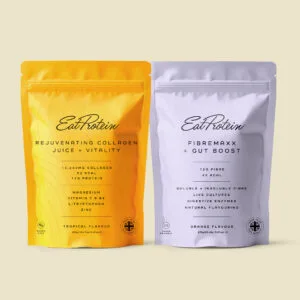
EatProtein’s Prebiotic Fibre is made from chicory root inulin — a natural prebiotic that feeds your beneficial gut bacteria. Zero artificial sweeteners, UK-made, and easy to add to any drink or smoothie.
Live cultures and digestive enzymes
If you’re not eating fermented foods every day, a supplement that includes live cultures can help maintain the probiotic side of your gut health. Digestive enzymes, meanwhile, support comfortable digestion — especially useful if you experience bloating or heaviness after meals.
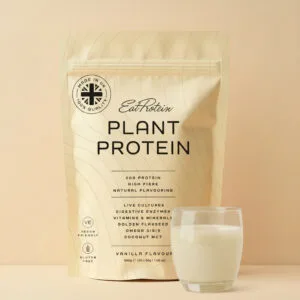
EatProtein’s Vegan Protein is more than a protein shake. It contains prebiotic fibre from chicory root inulin, live cultures, and digestive enzymes — supporting all three pillars of gut health in one serving.
Gut-lining support
Your gut lining is a single-cell-thick barrier that controls what passes from your digestive system into your bloodstream. Keeping it strong and intact is essential for digestive comfort and overall wellness. Collagen amino acids — particularly glycine and proline — contribute to the structural integrity of the gut lining, and supporting collagen synthesis can help maintain that barrier.
EatProtein’s Collagen contains bovine collagen rich in the amino acids glycine and proline — key building blocks that support your gut lining. It’s a simple daily addition that benefits your gut alongside your skin, hair, and joints.
A Simple Daily Gut Health Routine
Gut health doesn’t have to be complicated. Here’s what a practical, everyday routine looks like — combining the best of food and supplementation.
Morning foundation: breakfast
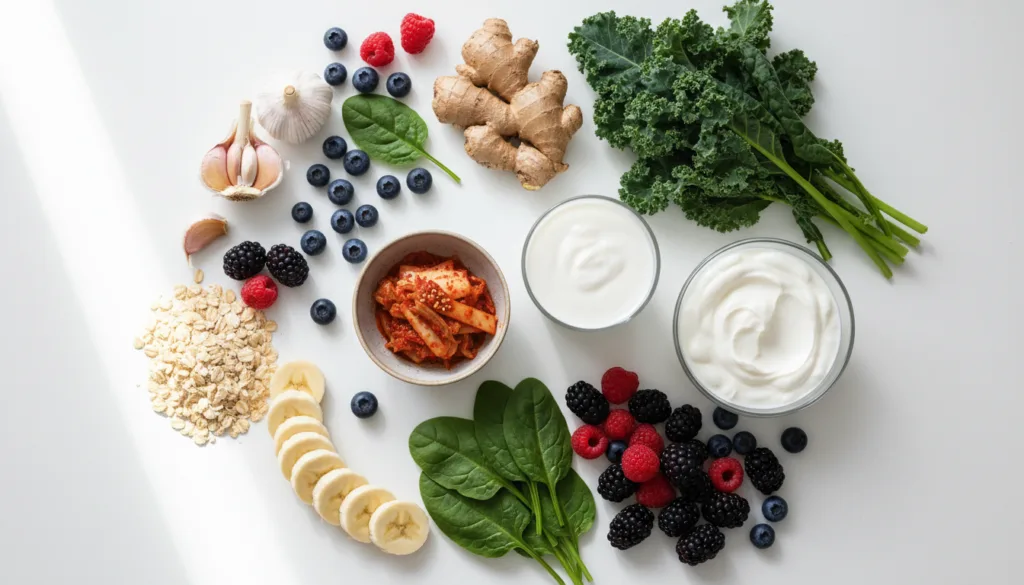
Start with a bowl of oats topped with a sliced banana and a spoonful of live yoghurt. In one meal, you’re getting beta-glucan fibre (oats), resistant starch and FOS (banana), and live probiotic cultures (yoghurt). It takes five minutes, it tastes great, and your gut bacteria will thank you.
Mid-morning: protein shake
Blend an EatProtein Vegan Protein shake with your favourite plant milk or water. You’re adding prebiotic fibre, live cultures, and digestive enzymes — all in one drink. It’s an easy way to support your microbiome alongside your protein intake, without having to think about three separate supplements.
Afternoon: prebiotic boost
Stir a scoop of EatProtein Prebiotic Fibre into a smoothie, water, or juice. This is your extra prebiotic top-up — helping close the fibre gap and giving your beneficial bacteria the fuel they need to thrive. It dissolves easily and doesn’t change the taste of your drink.
Evening: gut-lining support
Mix your daily EatProtein Collagen drink. Collagen amino acids support your gut lining, and you’re also getting benefits for your skin, hair, nails, and joints. One drink, multiple benefits — the kind of efficiency that makes a routine sustainable.
Throughout the day
Cook with garlic, onions, and leeks. Add sauerkraut or kimchi as a side with lunch. Snack on a banana. These small, consistent choices add up to a diet that genuinely supports your microbiome — without requiring a dramatic overhaul of how you eat.
The best gut health routine is one you’ll actually stick with. You don’t need to do everything at once. Start with one or two changes — add a prebiotic fibre to your morning routine, or swap your usual snack for a banana and yoghurt — and build from there.
Your Gut Health, Your Way
Improving your gut health isn’t about following a strict protocol or cutting out entire food groups. It’s about consistently giving your microbiome what it needs — prebiotic fibre to feed the good bacteria, probiotics to keep the population diverse, and the right support to keep everything running comfortably.
The foods on this list are your foundation. They’re accessible, affordable, and genuinely effective. And where your diet falls short — as it does for most of us, especially with fibre — a thoughtful supplement can bridge the gap without adding complexity to your day.
Your gut is at the centre of how you feel. Energy, skin, mood, digestion — it all connects back to the ecosystem living inside you. Looking after it is one of the simplest, most impactful things you can do for your overall wellness.
Ready to support your gut from the inside out? Explore EatProtein’s Prebiotic Fibre, Vegan Protein, and Collagen — designed to support all three pillars of gut health, every day.
References
- Sonnenburg, J., & Sonnenburg, E. (2019). Vulnerability of the industrialized microbiota. Science, 366(6464):eaaw9255. View source
- Dahl, W.J. & Stewart, M.L. (2015). Position of the Academy of Nutrition and Dietetics: health implications of dietary fiber. Journal of the Academy of Nutrition and Dietetics, 115(11):1861–1870. View source
- Davani-Davari, D., Negahdaripour, M., Karimzadeh, I., et al. (2019). Prebiotics: Definition, Types, Sources, Mechanisms, and Clinical Applications. Foods, 8(3):92. View source
- Wastyk, H.C., Fragiadakis, G.K., Perelman, D., et al. (2021). Gut-microbiota-targeted diets modulate human immune status. Cell, 184(16):4137–4153. View source
- Staudacher, H.M., & Whelan, K. (2017). The low FODMAP diet: recent advances in understanding its mechanisms and efficacy in irritable bowel syndrome. Gut, 66(8):1517–1527. View source
- NHS. (2022). How to get more fibre into your diet. NHS.uk. View source
- Marco, M.L., Heeney, D., Binda, S., et al. (2017). Health benefits of fermented foods: microbiota and beyond. Current Opinion in Biotechnology, 44:94–102. View source