It’s that feeling after almost every meal. The tightness, the pressure, the uncomfortable fullness that makes you want to unbutton your jeans by 3pm. And the frustrating thing is, you’re not overeating. You’re not doing anything obviously wrong. You’re just… always bloated.
If this sounds like your life, you’re not imagining it and you’re definitely not alone. Bloating is one of the most common digestive complaints — and it affects women far more often than men. But understanding why it happens is the first step to making it stop.
Why Am I Always Bloated? The Common Causes
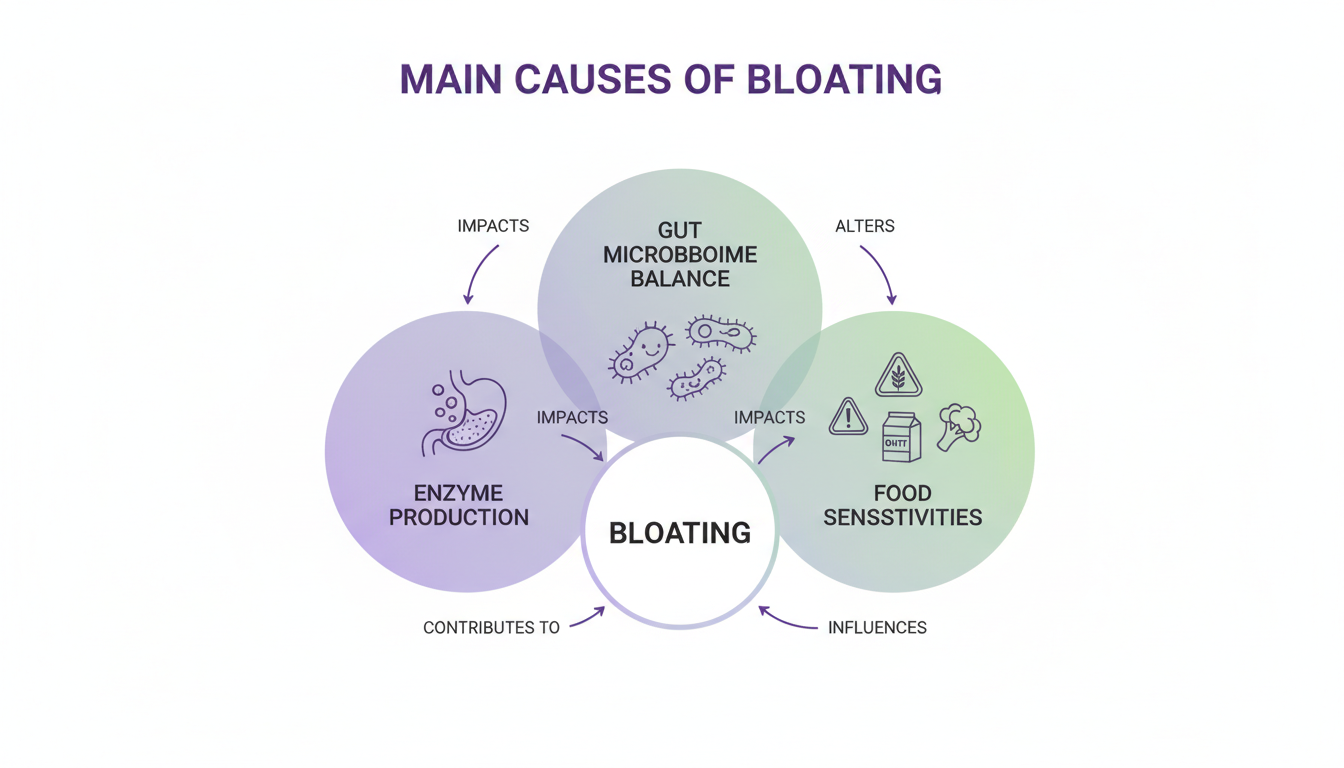
Bloating isn’t a single problem with a single cause. It’s a symptom — and it can have several things driving it at once. That’s partly why it’s so hard to pin down.
Eating too fast — When you rush through meals, you swallow more air and give your body less time to start producing the digestive enzymes it needs. Food hits your stomach before your system is ready for it, and the result is gas and pressure.
Low digestive enzyme production
Your body needs specific digestive enzymes to break down protein, carbohydrates, and fats. When enzyme levels are low — due to stress, age, or gut health issues — food isn’t fully broken down in the stomach and small intestine. It passes into the large intestine partially undigested, where bacteria ferment it and produce gas. That fermentation is what creates the bloated, distended feeling.
Gut microbiome imbalance
The bacteria in your gut play a huge role in digestion. When the balance tips — too many of certain bacteria, not enough of others — fermentation increases and bloating follows. Factors that disrupt this balance include antibiotics, stress, poor diet, and lack of prebiotic fibre.
Food sensitivities — Dairy, gluten, certain FODMAPs (fermentable carbohydrates), and artificial sweeteners are all common bloating triggers. You might not be fully intolerant, but your body may struggle to process these efficiently, especially when your gut is already under stress.
Artificial sweeteners — This one deserves its own mention because it catches so many people out. Sucralose, acesulfame-K, and sugar alcohols like sorbitol and xylitol are known to cause digestive issues including bloating and gas. They’re in everything from diet drinks to protein powders to “sugar-free” snacks. If you’re consuming these regularly and wondering why you’re bloated, this might be a bigger factor than you think.
Hormonal fluctuations — Oestrogen and progesterone directly affect gut motility. In the days before and during your period, digestion naturally slows down, which means food sits in the gut longer and produces more gas. This is why many women experience worse bloating at certain times of the month — it’s hormonal, not something you’re doing wrong.
Stress — The gut-brain connection is real and powerful. Chronic stress reduces digestive enzyme production, slows gut motility, and disrupts your microbiome. If you’re stressed and bloated, the two are almost certainly connected.
Why Bloating Is More Common in Women
This isn’t talked about enough. Research consistently shows that women experience bloating more frequently and more severely than men, and there are real physiological reasons for this.
Research consistently shows that women experience bloating more frequently and more severely than men — hormonal cycles directly affect gut transit time, and women are also more likely to experience IBS, which has bloating as a primary symptom.
Hormonal cycles affect digestion directly — progesterone, which rises in the second half of the menstrual cycle, slows gut transit time. This means food moves through more slowly, ferments more, and produces more gas. It’s completely normal, but nobody warns you about it.
Women are also more likely to experience IBS, which has bloating as a primary symptom. The reasons aren’t fully understood, but hormones, stress response patterns, and differences in gut microbiome composition all appear to play a role.
And then there’s the social factor. Women are more likely to eat quickly (fitting meals around childcare, work, and other people’s schedules), more likely to skip meals and then overeat later, and more likely to restrict food groups in ways that can disrupt gut bacteria.
None of this means bloating is inevitable. It means the solutions need to account for what’s actually happening in women’s bodies, rather than offering generic advice that ignores the complexity.
What Actually Helps — Starting from the Inside
The good news is that most everyday bloating responds well to practical changes. Not dramatic diet overhauls or expensive gut-reset programmes — just consistent, sensible adjustments that support your digestive system.
Support your digestive enzymes
If your body isn’t producing enough enzymes to break down food efficiently, giving it some help makes an immediate difference. Digestive enzyme supplements, or products that include them, reduce the workload on your gut and cut down on the fermentation that causes gas and bloating. This is especially relevant if you’re eating more protein than you used to — protein is one of the hardest macronutrients to digest.
Feed your gut bacteria properly
Prebiotic fibre is the fuel that beneficial bacteria need to thrive. Chicory root inulin is one of the most well-researched prebiotics — it specifically feeds the bacteria that help with digestion and reduce bloating. Adding it consistently makes a compounding difference over weeks.
Add live cultures — Probiotics help restore and maintain a healthy balance of gut bacteria. They won’t fix everything overnight, but regular intake supports the kind of gut environment where digestion runs more smoothly and bloating becomes less frequent.
Cut the artificial sweeteners — If you’re consuming sucralose or acesulfame-K regularly (check your protein powder, squash, diet drinks, and “sugar-free” snacks), try switching to stevia or monk fruit-sweetened alternatives for a few weeks and see what changes. For many people, this single switch reduces bloating significantly.
Slow down at meals — Chewing thoroughly and eating without rushing gives your body time to produce enzymes and begin digestion properly. It’s the simplest advice on this list and one of the most effective.
Why Your Protein Powder Might Be Making It Worse
This is worth its own section because it’s something we hear constantly — women who start taking protein powder to support their health and fitness, only to find themselves more bloated than before.
The usual culprits:
Whey protein and dairy sensitivity — Whey is derived from milk, and even if you’re not “lactose intolerant” in the clinical sense, your body may struggle with it. Low-level dairy sensitivity is incredibly common, and it often shows up as bloating, gas, and a heavy feeling in the stomach rather than obvious digestive distress.
Artificial sweeteners in the formula — Cheaper protein powders use sucralose and acesulfame-K because they’re cost-effective. Both are known to disrupt gut bacteria and cause digestive discomfort in sensitive individuals. If your protein powder contains these, your bloating might have nothing to do with the protein itself.
No digestive support — Most protein powders are just protein, sweetener, and flavouring. There’s nothing in the formula to help your body actually break down and absorb the protein. So your gut is left to handle 20-30g of concentrated protein with whatever enzymes it has available — and if you’re stressed or your gut health isn’t great, that’s often not enough.
Switching to a plant-based protein — specifically pea protein isolate — removes the dairy issue entirely. Choosing one sweetened with stevia removes the artificial sweetener problem. And finding a formula with built-in digestive enzymes, live cultures, and prebiotic fibre addresses the absorption issue.
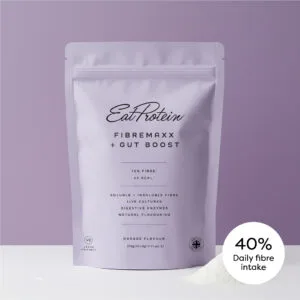
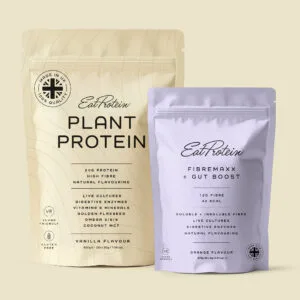
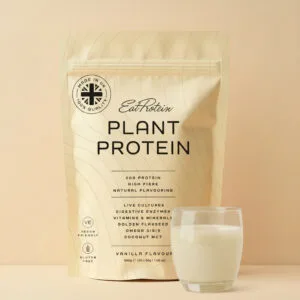
Our vegan protein was designed around exactly this problem. We kept hearing from women who wanted to use protein powder but couldn’t because of bloating. So we built a formula where the protein itself is easily digestible (pea protein isolate), the sweetener is natural (stevia), and the digestive support is comprehensive — five enzymes, live cultures, and prebiotic fibre from chicory root. The coconut MCT oil adds sustained energy without digestive heaviness, and the B vitamins, magnesium, calcium, and omega-3 DHA mean you’re supporting your energy levels and broader wellbeing at the same time.
It’s not a supplement designed to fix bloating. It’s a protein powder designed not to cause it — which, unfortunately, puts it in a surprisingly small category.
Supplements for Gut Health and Bloating
Beyond your protein powder, a few things are worth considering if bloating is a regular issue for you:
A quality prebiotic — Chicory root fibre (inulin) is the most studied and consistently effective prebiotic for supporting beneficial gut bacteria. Start with a small amount and build up gradually — too much too quickly can temporarily increase gas before your microbiome adapts.
Live culture supplements — Look for products with multiple strains and a guaranteed count at the point of expiry, not just at manufacture. Consistency matters more than potency — taking a moderate-strength probiotic daily beats taking a mega-dose occasionally.
Peppermint oil capsules — Enteric-coated peppermint oil has good evidence for reducing IBS-related bloating. It relaxes the smooth muscle in the gut and can ease that tight, pressured feeling.
Ginger — A natural prokinetic that helps move food through the digestive system. Fresh ginger in hot water before or after meals is a simple, effective habit.
The Gut-Skin Connection Worth Knowing About
Something that surprises many women — persistent bloating and digestive issues don’t just affect how your stomach feels. They can show up on your skin too.
When your gut is inflamed or your microbiome is out of balance, it triggers systemic inflammation that can manifest as breakouts, dullness, redness, and sensitivity. Many women notice that when their digestion improves, their skin improves too. It’s the same underlying system — when one part is struggling, the effects ripple outward.
This is one more reason why addressing bloating at its root — through enzyme support, prebiotics, live cultures, and removing trigger ingredients — matters for your overall wellbeing, not just your comfort after meals.
When to See Your GP
Most bloating is uncomfortable but not serious. However, if you’re experiencing any of the following, it’s worth getting checked:
Bloating that’s new and persistent (lasting more than three weeks with no clear cause). Bloating accompanied by unexplained weight loss. Blood in your stools. Severe pain alongside the bloating. A change in bowel habits that doesn’t resolve.
These symptoms don’t necessarily mean something is wrong, but they’re worth investigating. Conditions like coeliac disease, ovarian cysts, and certain digestive disorders can all present with bloating as an early symptom, and catching them early makes a significant difference.
The Bottom Line
If you’re always bloated, there’s a reason — and it’s usually something you can address. Low enzyme production, gut bacteria imbalance, artificial sweeteners, hormonal fluctuations, and the wrong protein powder are among the most common culprits for women.
Start with the simple things: slow down when you eat, cut the artificial sweeteners, support your gut with prebiotics and live cultures, and choose a protein formula that’s designed to be digested comfortably, not just cheaply. Your gut is doing a lot for you — give it the right tools and it will return the favour.
References
- Heitkemper, M. M., & Chang, L. (2009). Do fluctuations in ovarian hormones affect gastrointestinal symptoms in women with irritable bowel syndrome? Gender Medicine, 6(Suppl 2), 152–167. View source
- Bernstein, M. T., Graff, L. A., Avery, L., Palatnick, C., Parnerowski, K., & Targownik, L. E. (2014). Gastrointestinal symptoms before and during menses in healthy women. BMC Women’s Health, 14(1), 14. View source
- Ford, A. C., Sperber, A. D., Corsetti, M., & Camilleri, M. (2020). Irritable bowel syndrome. The Lancet, 396(10263), 1675–1688. View source
- Abrams, S. A., & Griffin, I. J. (2020). Synthetic vs. non-synthetic sweeteners and their differential effects on gut microbiome diversity. Nutrients. View source
- Mäkinen, K. K. (2016). Gastrointestinal disturbances associated with the consumption of sugar alcohols with special consideration of xylitol. International Journal of Dentistry. View source
- Cash, B. D., Epstein, M. S., & Shah, S. M. (2016). A novel delivery system of peppermint oil is an effective therapy for irritable bowel syndrome symptoms. Digestive Diseases and Sciences, 61(2), 560–571. View source