There are hundreds of vegan protein powders on the market now. Walk into any health food shop or scroll through Amazon and you’ll find shelf after shelf of options, all promising roughly the same thing. High protein. Great taste. Plant-powered.
But they’re really not all the same. Some are genuinely well-formulated. Others are mostly filler with a decent label. And the difference between the two isn’t always obvious unless you know what to look for.
So whether you’ve been using plant protein for years or you’re just thinking about making the switch, here’s what actually separates the best vegan protein powder from a forgettable one.
It Starts with the Protein Source
The single biggest factor is what the protein is actually made from. And with plant-based protein powders, this matters more than you might think.
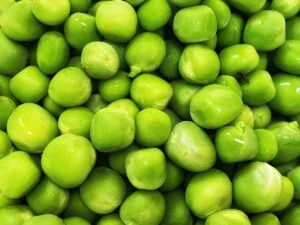
Most animal-based proteins (whey, casein) are “complete” by default — they contain all nine essential amino acids your body can’t make on its own. Plant proteins vary, but pea protein isolate stands out as one of the strongest options available.
The quality of the primary protein source matters far more than how many sources are listed on the label. A well-processed pea protein isolate with a thoughtfully designed supporting formula will outperform a blend of mediocre ingredients every time.
It’s naturally rich in branched-chain amino acids — particularly leucine, the one that triggers muscle protein synthesis — and has a well-rounded amino acid profile that makes it effective as a primary protein source.
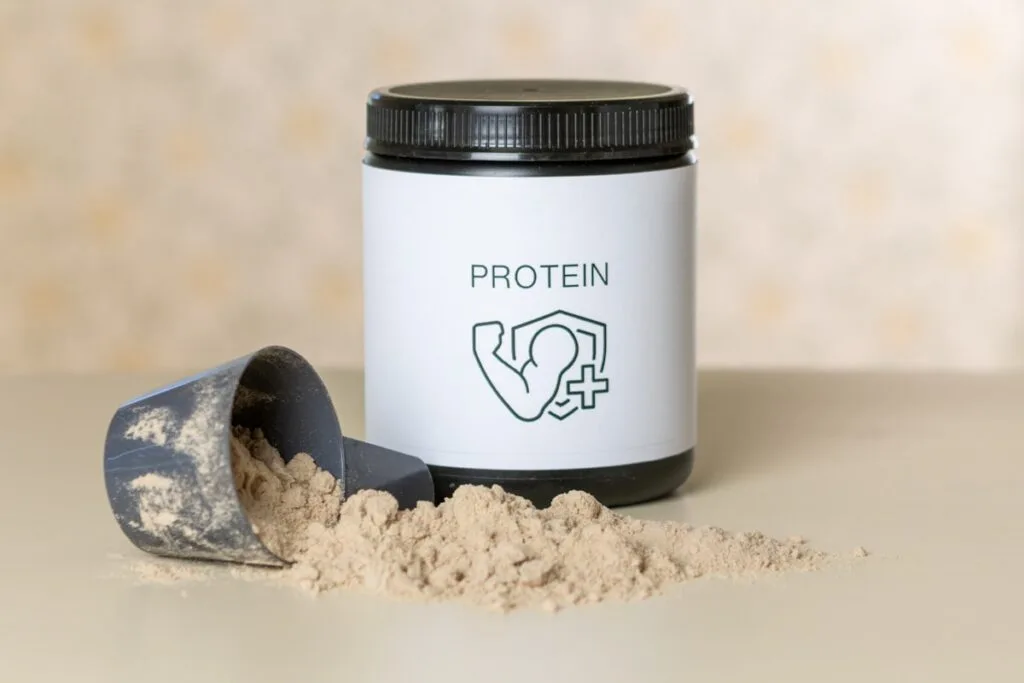
The isolate part matters too. Pea protein isolate has had most of the starch and fibre removed, which means a higher concentration of protein per scoop, better mixability, and easier digestion. It’s a step up from pea protein concentrate, which retains more of the plant material and can feel heavier.
Some brands use blends of different plant proteins (pea with rice, hemp, or soy), which can work well. But the quality of the primary protein source matters far more than how many sources are listed on the label. A well-processed pea protein isolate with a thoughtfully designed supporting formula will outperform a blend of mediocre ingredients every time.
Protein Per Serving (and What Else Comes With It)
A good benchmark is 20g or more of protein per serving. That’s enough to support muscle recovery, keep you feeling full, and make it worth actually adding to your day.
But the number on its own doesn’t tell you everything. Look at what comes alongside it. How much sugar? How many calories? What’s the ratio of protein to everything else?
Some vegan powders pad out the scoop with maltodextrin, vegetable gums, or sugar to improve texture and taste. You end up with 20g of protein but also 15g of carbs you didn’t ask for. A well-made powder keeps the other numbers tight — enough to taste good, not so much that it undermines the point.
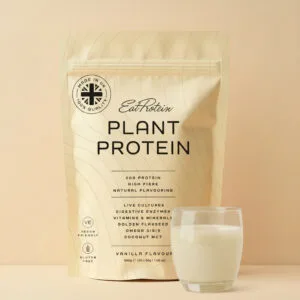
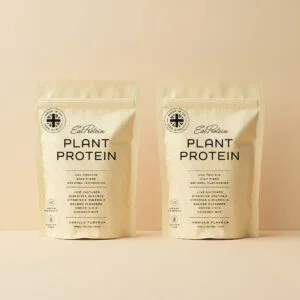
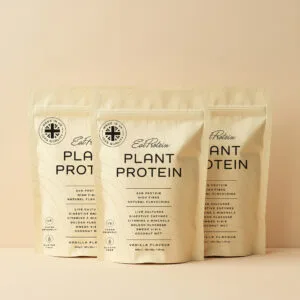
Our vegan protein delivers 20g of pea protein isolate per serving with no added sugar and no artificial sweeteners. The sweetness comes from stevia, and the rest of the formula is built around things you’d actually want in there — not cheap bulking agents.
Why Gut Health Matters in a Vegan Protein Powder
This is something most protein powder conversations skip entirely, and it’s a shame because it’s one of the biggest reasons people give up on protein shakes.
Bloating. That heavy, uncomfortable feeling after drinking a protein shake. It’s incredibly common, especially with cheaper formulas that use low-quality protein sources or pack in artificial sweeteners that upset your digestive system.
A protein powder that includes digestive support isn’t a gimmick — it’s genuinely useful. Digestive enzymes help your body break down and absorb the protein more efficiently, which means less bloating and more of the good stuff actually reaching your muscles.
Our formula includes five digestive enzymes and live cultures specifically for this reason. We also add prebiotic fibre from chicory root, which feeds the beneficial bacteria already in your gut. It sounds like a lot of ingredients, but they all serve a purpose — and the result is a shake that sits comfortably rather than sitting like a brick.
The connection between gut health and overall wellbeing goes deeper than digestion, too — it affects everything from your skin to your energy levels. If you’re curious about that, our article on the gut-skin connection is worth a read.
If you’ve tried vegan protein before and felt bloated or heavy afterwards, it’s worth trying one with built-in digestive support before writing off the whole category.
The Sweetener Question
Artificial sweeteners are a dealbreaker for a lot of people, and honestly, it’s not hard to see why. Sucralose and acesulfame-K are the usual suspects in cheaper protein powders, and while they’re technically safe at normal consumption levels, they can cause digestive discomfort for some people and many would simply rather avoid them.
Stevia and monk fruit are the more natural alternatives you’ll see in better-quality powders. They’re plant-derived, zero-calorie, and tend to be gentler on the gut. Stevia can have a slightly bitter aftertaste in high doses, but a well-formulated product balances that out.
The key thing is to actually check. “No added sugar” doesn’t mean “no artificial sweeteners” — brands can technically claim one without the other. Flip the pack over and read the ingredients rather than trusting the front-of-pack messaging.
Extras That Actually Earn Their Place
A great vegan protein powder does more than just deliver protein. The best ones are thoughtfully formulated with ingredients that complement what the protein is doing.
Things worth looking for:
Digestive Enzymes and Live Cultures
We’ve already covered why gut health matters. But it’s worth emphasising: this is one of the clearest markers of a protein powder that’s been designed with real care. Most brands skip it because it’s expensive to include. The ones that don’t are telling you something about their priorities.
Prebiotic Fibre
Feeds the good bacteria in your gut. Chicory root inulin is the gold standard here. It works alongside live cultures to support your digestive system from both sides — adding beneficial bacteria and giving them something to thrive on.
Omega-3 (DHA)
Hard to get on a plant-based diet and important for brain health, inflammation, and skin. If your protein powder includes it, that’s one less supplement to think about.
MCT Oil
Medium-chain triglycerides from coconut. Provides clean, sustained energy without the crash. Also helps with the texture and mouthfeel of the shake, which is a nice bonus.
B Vitamins (B6, B12, Folate)
Another common gap in plant-based diets. B12 especially is almost impossible to get from food alone if you’re vegan, so having it in your daily protein shake is practical.
Magnesium and Calcium
Supportive minerals for bone health, sleep, and recovery. Not essential in a protein powder, but if they’re there, it’s a sign the formula has been designed with your broader wellbeing in mind, not just hitting a protein number.
Our vegan protein includes all of the above. We wanted to make something that works as a daily wellness foundation, not just a post-workout shake. One scoop covers protein, gut health, essential vitamins, and omega-3 — which saves you reaching for four different products every morning.
Taste and Texture Matter More Than You Think
Let’s be honest — if it doesn’t taste good, you won’t drink it. And consistency matters too. Nobody wants a chalky, gritty shake they have to force down.
Vegan protein has come a long way from the early days of gritty pea protein that tasted like cardboard. But there’s still a wide range. Some powders blend beautifully with just water. Others need a blender, a banana, and a prayer.
The best way to judge is to try it mixed with water first. If it’s good with water, it’ll be great with milk or in a smoothie. If it only works when you mask it with other ingredients, that tells you something about the base product.
Texture comes down to how finely the protein is processed and what’s been added to improve mixability. Pea protein isolate (rather than pea protein concentrate) tends to be smoother because more of the starch and fibre has been removed, leaving a cleaner protein.
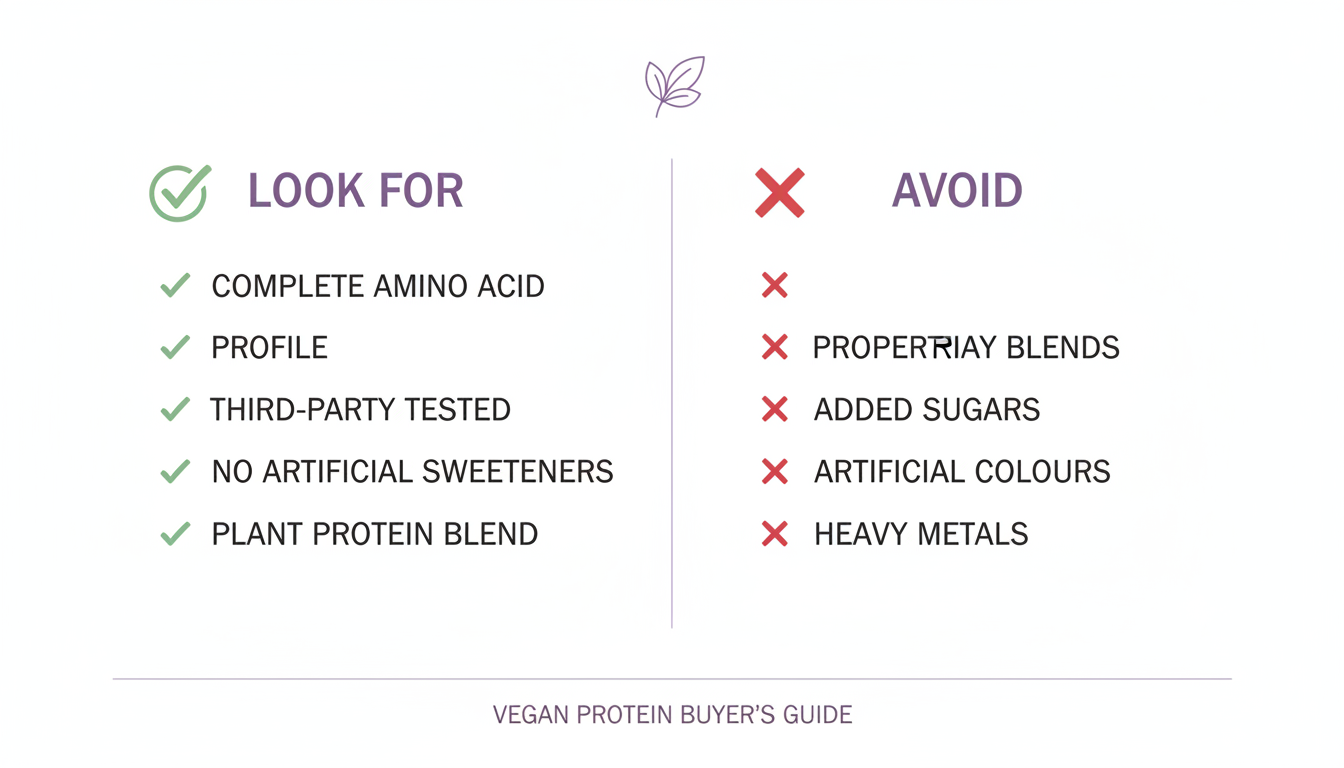
What to Avoid in a Vegan Protein Powder
A quick list of things that should make you put a vegan protein powder back on the shelf:
Proprietary Blends
If the label says “protein blend” without telling you exactly how much of each protein source is included, you can’t assess quality. Transparency matters.
Long Ingredients Lists Full of Things You Can’t Pronounce
A good protein powder doesn’t need 30 ingredients. If the list is a paragraph long, most of those additions aren’t doing you any favours.
Artificial Colours and Flavours
There’s no nutritional reason for these. They’re cost-saving measures, full stop.
“May Contain” Warnings for Allergens You’re Avoiding
This signals cross-contamination risk during manufacturing. If you’re avoiding gluten, dairy, or soy, take these warnings seriously.
Who Is Vegan Protein Powder Actually For?
This is worth saying because there’s still a perception that vegan protein is only for vegans. It’s not.
Plenty of people choose plant-based protein because it’s easier to digest. Others prefer it because they’re lactose intolerant or dairy-sensitive. Many women are switching to plant-based protein for gentler digestion, cleaner ingredients, and better gut health support. Some people just don’t like the heaviness of whey. And increasingly, people are making the switch for environmental reasons — plant proteins generally have a much smaller carbon footprint than dairy-based alternatives.
You don’t need a label or a lifestyle to justify choosing it. If it works for your body, your goals, and your values, that’s reason enough.
Making Your Choice
The best vegan protein powder gets the basics right — a quality protein source, transparent ingredients, good taste — and then adds genuine value with thoughtful extras like digestive enzymes, prebiotic fibre, essential vitamins, and omega-3.
The market is flooded with options, and most of them are fine. But “fine” isn’t what you should be settling for with something you put in your body every day.
Take the time to read labels. Ask questions. And find something that supports you properly — from the inside out.
References
- Babault, N., Paizis, C., Deley, G., Guérin-Deremaux, L., Saniez, M. H., Lefranc-Millot, C., & Allaert, F. A. (2015). Pea proteins oral supplementation promotes muscle thickness gains during resistance training: a double-blind, randomized, placebo-controlled clinical trial vs. whey protein. Journal of the International Society of Sports Nutrition. View source
- Stokes, T., Hector, A. J., Morton, R. W., McGlory, C., & Phillips, S. M. (2018). Recent perspectives on the role of dietary protein for the promotion of muscle hypertrophy with resistance exercise training. Nutrients. View source
- Berrazaga, I., Micard, V., Gueugneau, M., & Walrand, S. (2019). The role of the anabolic properties of plant- versus animal-based protein sources in supporting muscle mass maintenance: a critical review. Nutrients. View source
- Gorissen, S. H. M., Crombag, J. J. R., Senden, J. M. G., Waterval, W. A. H., Bierau, J., Verdijk, L. B., & van Loon, L. J. C. (2018). Protein content and amino acid composition of commercially available plant-based protein isolates. Amino Acids. View source
- Jäger, R., Kerksick, C. M., Campbell, B. I., Cribb, P. J., Wells, S. D., Skwiat, T. M., … & Antonio, J. (2017). International Society of Sports Nutrition position stand: protein and exercise. Journal of the International Society of Sports Nutrition. View source
- Zamora-Ros, R., Cayssials, V., & Scalbert, A. (2020). Probiotic supplementation and appetite control. Nutrients. View source
- Patel, S. (2015). Emerging trends in nutraceutical applications of whey protein and its derivatives. Journal of Food Science and Technology. View source