If you’ve started researching collagen supplements, you’ll have noticed the word “hydrolysed” everywhere. Hydrolysed collagen. Collagen peptides. Hydrolysed collagen peptides. It sounds technical — maybe even a bit off-putting — but it’s actually one of the simplest and most important things to understand when choosing a collagen supplement.
Here’s what it means, why it matters, and how to make sure you’re getting the most from your daily collagen.
What Does “Hydrolysed” Actually Mean?
Let’s start with the basics. Collagen in its natural state — the kind in your skin, joints, and bones — is a large, tightly wound protein with a triple-helix structure. It’s strong, resilient, and incredibly tough to break down. That’s the whole point of it in your body — it provides structure.
But that toughness is also a problem when it comes to supplementation. If you tried to swallow raw collagen, your digestive system would struggle to break it down efficiently. Much of it would pass through without being fully absorbed.
Hydrolysis solves this. It’s a process that uses water and enzymes to break those large collagen molecules into much smaller fragments — called peptides. These peptides are typically 2,000–5,000 daltons in size (for reference, the original collagen molecule is around 300,000 daltons). That’s a massive reduction in size.
The result: collagen that dissolves easily in liquid, is gentle on your stomach, and — most importantly — is absorbed quickly and efficiently by your body.
“Hydrolysed collagen” and “collagen peptides” mean the same thing. They’re just two names for collagen that’s been broken down into small, absorbable fragments. If you see either term on a label, you’re looking at the right form.
How Your Body Absorbs Hydrolysed Collagen
When you drink a hydrolysed collagen supplement, here’s what happens:
- In your stomach — the small peptide chains are further broken down by digestive enzymes into individual amino acids and di/tripeptides (chains of 2–3 amino acids).
- In your small intestine — these amino acids and small peptides are absorbed through the intestinal wall into your bloodstream. Because they’re already small, this happens quickly — research shows hydrolysed collagen peptides reach your blood within about 20 minutes.
- Around your body — once in your bloodstream, the amino acids and peptides are transported to the tissues that need them — your skin, joints, gut lining, hair follicles, nail beds, and bones.
- At the cellular level — the peptides stimulate fibroblasts (in skin) and chondrocytes (in joints) to produce new collagen. Some peptides are also used directly as building blocks for new collagen fibres.
This is the key advantage of hydrolysed collagen: your body doesn’t have to do the heavy lifting of breaking it down. The hard work has already been done, so more of what you consume actually gets used.
Hydrolysed vs Non-Hydrolysed: Does It Matter?
Yes — significantly. Here’s how the different forms compare:
Hydrolysed collagen (peptides)
The gold standard for supplementation. Small peptides, fast absorption, dissolves in cold water, virtually tasteless. This is what you’ll find in quality powder-based supplements and what the research overwhelmingly supports.
Gelatin
Gelatin is collagen that’s been partially broken down — more than raw collagen but not as thoroughly as hydrolysed. It dissolves in hot water and forms a gel when cooled (think jelly). It’s absorbed more slowly than hydrolysed collagen and can cause digestive discomfort in some people. It’s useful in cooking but not ideal for daily supplementation.
Native (undenatured) collagen
This is collagen in its original, intact form. It’s used in some joint-health supplements at very low doses (typically 40mg) for a specific purpose — to train the immune system to stop attacking joint cartilage. It works through a completely different mechanism than hydrolysed collagen and isn’t comparable in terms of skin, hair, or general wellness benefits.
For daily supplementation targeting skin, hair, nails, joints, and gut health, hydrolysed collagen is the clear winner. It’s what the research uses, it’s what your body absorbs best, and it’s what delivers results.
The Amino Acids in Hydrolysed Collagen
When hydrolysed collagen is absorbed, your body gets a concentrated dose of specific amino acids that are essential for building and maintaining connective tissue:
- Glycine — the most abundant amino acid in collagen. Supports the formation of new collagen fibres, has anti-inflammatory properties, and plays a role in sleep quality and gut health.
- Proline — essential for collagen synthesis and wound healing. Your body uses proline to repair and maintain cartilage, skin, and tendons.
- Hydroxyproline — unique to collagen. It stabilises the collagen structure and is a marker researchers use to confirm that collagen has been absorbed and is being used by your body.
These three amino acids are found in much higher concentrations in collagen than in other protein sources. That’s why collagen supplementation supports your connective tissues in ways that a general protein powder doesn’t — it provides the specific building blocks those tissues need.
Some collagen supplements go further by including all nine essential amino acids — the amino acids your body can’t produce on its own and must get from your diet. EatProtein’s formula adds L-Tryptophan (which supports serotonin production, mood, and sleep) to complete the essential amino acid profile, making it a genuinely complete protein.
Bovine vs Marine: Both Are Hydrolysed, But They’re Not Identical
The hydrolysis process is similar regardless of the source — both bovine and marine collagen are broken into small, absorbable peptides. But what you get from each source is different.
- Hydrolysed bovine collagen — provides Types I and III. This covers skin, hair, nails, joints, bones, tendons, ligaments, and gut health. It’s the broader option.
- Hydrolysed marine collagen — provides Type I only. Effective for skin, but doesn’t deliver the Type III support for gut health and broader connective tissue.
Both are well-absorbed. The difference is in what they deliver once absorbed. For women who want comprehensive, whole-body support, bovine collagen covers more ground. For a detailed comparison, our bovine vs marine collagen guide breaks it all down.
How Much Hydrolysed Collagen Do You Need?
The research is clear: dose matters. Most studies showing meaningful results for skin, joints, and overall wellness use daily doses of 10,000–15,000mg of hydrolysed collagen.
This is an important point when choosing a supplement. Many products — particularly tablets and capsules — deliver only 500–3,000mg per serving. To hit an effective dose, you’d need multiple servings per day, which is impractical and expensive.
Powder-based supplements make it easy. One scoop in water, and you’re at the dose the research supports. For the complete dosage breakdown — including how much for different goals and how long it takes to work — our collagen dosage guide has everything you need.
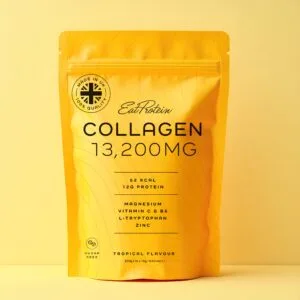
EatProtein’s Rejuvenating Collagen delivers 13,200mg of hydrolysed bovine collagen per serving — right in the sweet spot supported by research. One scoop, one drink, and you’ve given your body everything it needs.
What to Look for in a Hydrolysed Collagen Supplement
Not all hydrolysed collagen supplements are created equal. Here’s what separates a good one from a great one:
- A meaningful daily dose — 10,000mg or more per serving. If you have to take multiple servings to hit this number, the product is making your life harder than it needs to be.
- The right collagen types — Types I and III (from bovine) give the broadest support. Type I alone (from marine) is narrower.
- Supporting nutrients — Vitamin C is essential for collagen synthesis. Zinc, magnesium, and B vitamins all play supporting roles. A good formula includes them so you don’t need a separate stack.
- A complete amino acid profile — all nine essential amino acids means you’re getting a complete protein, not just a collagen supplement.
- Something you’ll enjoy taking — taste, mixability, and convenience matter. If you don’t look forward to taking it, consistency suffers — and consistency is everything.
It’s also worth checking what the product doesn’t contain. Added sugars, artificial colours, and unnecessary fillers dilute the quality and add ingredients your body doesn’t need.
Common Questions Cleared Up
Is hydrolysed collagen safe?
Yes. Hydrolysed collagen is a protein — your body handles it the same way it handles protein from food. Studies using doses up to 15,000mg daily have reported no adverse effects. It’s gentle on the stomach and suitable for daily, long-term use.
Does it taste of anything?
Unflavoured hydrolysed collagen is virtually tasteless and odourless, which is why it mixes well into water, coffee, or smoothies. Flavoured formulas — like a tropical juice — make it something you actually look forward to drinking.
Can I take it with other supplements?
Absolutely. Hydrolysed collagen works well alongside other supplements. It’s complementary to regular protein powders (collagen supports connective tissue while protein powders support muscle), and the amino acid profile doesn’t conflict with anything you’re likely taking.
How does it help joints?
The amino acids in hydrolysed collagen — particularly glycine, proline, and hydroxyproline — are the building blocks your body uses to maintain cartilage, tendons, and ligaments. Research shows daily supplementation can improve joint comfort and flexibility within 8–12 weeks. Our collagen for joint health guide covers the evidence in detail.
Does it help with weight management?
Collagen is a protein, and protein is the most satiating macronutrient. At 12g of protein and just 52 calories per serving, hydrolysed collagen helps you feel fuller without adding significant calories. It’s not a weight loss supplement — but it supports healthy body composition. Our collagen and weight management guide explains the relationship.
The Simple Version
Hydrolysed collagen is just collagen that’s been broken down so your body can actually use it. It’s the most effective, most researched, and most practical form of collagen supplementation available. The science is straightforward, the benefits are well-documented, and taking it daily is one of the simplest wellness upgrades you can make.
EatProtein’s Rejuvenating Collagen Tropical Juice delivers 13,200mg of hydrolysed bovine collagen per serving — with all nine essential amino acids, Vitamin C, B6, Zinc, and Magnesium — in a refreshing drink that takes seconds to prepare.
Ready to start your daily collagen ritual? Explore our collagen range and give your body the building blocks it needs.
References
- Oesser, S., Adam, M., Babel, W., & Seifert, J. (1999). Oral administration of 14C labeled gelatin hydrolysate leads to an accumulation of radioactivity in cartilage of mice. Journal of Nutrition. View source
- Ichikawa, S., Morifuji, M., Ohara, H., Matsumoto, H., Takeuchi, Y., & Sato, K. (2010). Hydroxyproline-containing dipeptides and tripeptides quantified at high concentration in human blood after oral ingestion of gelatin hydrolysate. International Journal of Food Sciences and Nutrition. View source
- Praet, S. F. E., Purdam, C. R., Welvaert, M., Vlahovich, N., Lovell, G., Burke, L. M., & Waddington, G. (2019). Oral Supplementation of Specific Collagen Peptides Combined with Calf-Strengthening Exercises Enhances Function and Reduces Pain in Achilles Tendinopathy Patients. Nutrients. View source
- Taga, Y., Kodera, Y., Yanagimoto, K., & Hayashida, O. (2019). Bioavailability of the collagen tripeptide Gly-Pro-Hyp and its hydrolyzed form in the bloodstream and skin. Journal of Agricultural and Food Chemistry. View source
- Dar, Q. A., Schott, E. M., Catheline, S. E., Maynard, R. D., Liu, Z., Kamal, F., & Zuscik, M. J. (2017). Daily oral consumption of hydrolyzed type 1 collagen is chondroprotective and anti-inflammatory in murine posttraumatic osteoarthritis. PLOS ONE. View source
- Asserin, J., Lati, E., Shioya, T., & Prawitt, J. (2015). The effect of oral collagen peptide supplementation on skin moisture and the dermal collagen network: evidence from an ex vivo model and randomized, placebo-controlled clinical trials. Journal of Cosmetic Dermatology. View source
- Choi, F. D., Sung, C. T., Juhasz, M. L. W., & Mesinkovska, N. A. (2019). Oral Collagen Supplementation: A Systematic Review of Dermatological Applications. Journal of Drugs in Dermatology. View source