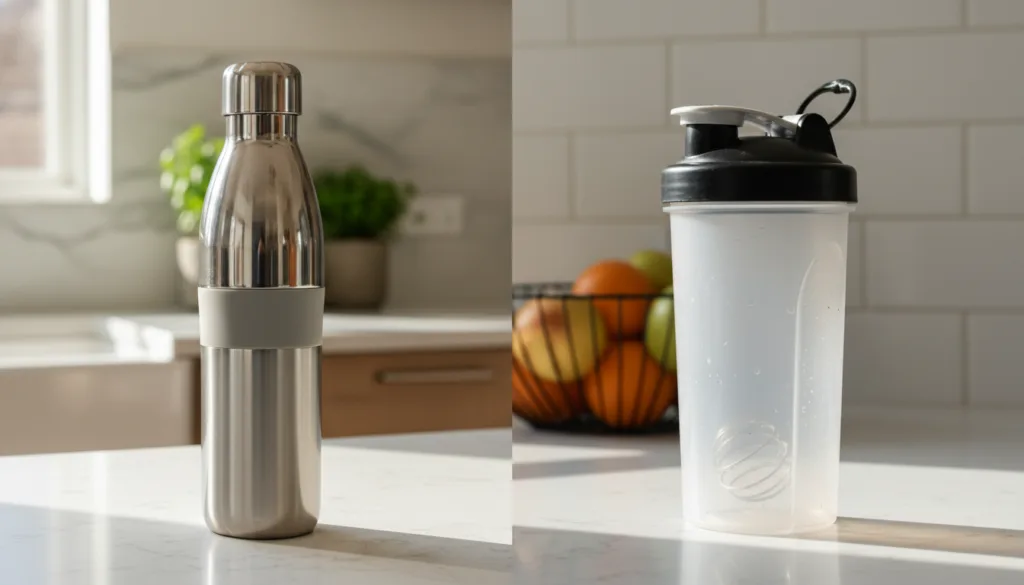
Your shaker goes everywhere with you — the gym, the office, the school run, the car. It holds your protein shake, your morning smoothie, sometimes just your water. And yet, most of us grab whatever shaker came free with a supplement order and never think about it again. Here’s why the material your shaker is made from matters more than you’d expect — and what to look for when you’re ready to upgrade.
Why the Material of Your Shaker Bottle Matters
A protein shaker seems simple enough. It holds liquid, you shake it, you drink. But the material it’s made from quietly affects your daily experience in ways that add up over weeks and months — from how your shake tastes to how long the bottle lasts, how clean it actually gets, and whether it’s keeping your drink at the right temperature.
The two most common materials are plastic and stainless steel. Both work. Both have their strengths. But they’re not the same, and understanding the differences helps you make a choice that fits your routine — not just your budget.
The Case for Stainless Steel
Stainless steel shaker bottles have moved from niche to mainstream over the past few years, and there are good reasons for that. Here’s what stainless steel brings to the table.
No flavour or odour absorption
This is the one that wins people over immediately. Stainless steel is non-porous — it doesn’t absorb the flavours, colours, or smells of whatever you put in it. Your morning coffee won’t carry a hint of last night’s chocolate protein shake. Your water won’t taste faintly of berry smoothie from three days ago. Every drink tastes exactly like it should, every time.
If you’ve ever opened a well-used plastic shaker and caught that unmistakable stale-protein smell — even after washing — you’ll understand why this matters. It’s not that the plastic is dirty. It’s that the material itself has absorbed traces of what’s been in it. Stainless steel simply doesn’t do that.
Temperature retention
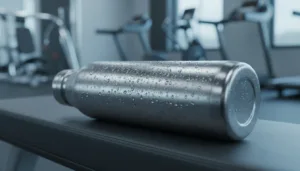
A double-walled stainless steel shaker uses vacuum insulation — the same technology as premium flasks and travel mugs. This keeps cold drinks cold for hours, even on a warm day or sitting in your gym bag. If you mix your protein shake at home before heading out, it’ll still be refreshingly cold when you’re ready to drink it.
This makes a genuine difference if there’s any gap between making your shake and drinking it. Commutes, long gym sessions, busy mornings — a lukewarm protein shake is nobody’s idea of a good time. Double-walled stainless steel solves that quietly and completely.
Durability that lasts
Stainless steel doesn’t crack, shatter, or develop stress fractures. It won’t warp in a hot car. The threading on the lid won’t strip over time the way plastic threads can. A well-made stainless steel shaker is genuinely a buy-once product — it’ll outlast multiple plastic replacements without losing function or appearance.
That also means fewer shakers ending up in the bin over the course of a year. Durability and sustainability go hand in hand here.
Naturally BPA-free
BPA (bisphenol A) is an industrial chemical found in some plastics that can leach into food and drinks — particularly when exposed to heat or acidic liquids. Most quality plastic shakers are now labelled BPA-free, and that’s a positive shift. But stainless steel sidesteps the conversation entirely. There’s no BPA, no phthalates, no plastic-related chemicals to worry about. The material is inherently inert — it doesn’t react with your food or drink, full stop.
For anyone who prefers not to think about what might be leaching into their shake, stainless steel offers straightforward peace of mind.
Fully recyclable
When a stainless steel shaker does eventually reach the end of its very long life, it’s 100% recyclable. Steel is one of the most recycled materials on the planet — it can be melted down and reused without any loss of quality. Compared to the mixed plastics used in most shakers (which are often difficult to recycle in practice), stainless steel has a much cleaner end-of-life story.
What Plastic Shakers Offer
Plastic shakers have been the default for years, and they’re still the most widely used option for good reason. Here’s where plastic holds its own.
Lightweight and portable
Plastic is lighter than stainless steel — noticeably so when your bag is already full. If weight is a priority (travelling light, running between appointments, carrying everything in one bag), a plastic shaker adds less bulk. For some routines, that genuinely matters.
Affordable entry point
A decent plastic shaker costs a fraction of a stainless steel one. If you’re just getting started with protein shakes and want to try different routines before committing to a premium bottle, plastic is a low-risk way to begin. There’s no shame in starting practical and upgrading later.
Transparency
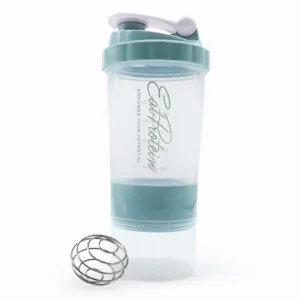
Most plastic shakers are clear or semi-transparent, which means you can see exactly how much liquid is inside, whether your shake is fully mixed, and when it’s time for a refill. Stainless steel is opaque by nature — you’re working by feel or using measurement markings on the inside. For some people, being able to see their shake matters.
Widely available
Plastic shakers are everywhere — online, in supermarkets, in gyms, bundled with supplement orders. Replacing one is easy. Finding one in a specific size or style takes minutes, not days. That accessibility is worth acknowledging.
Side-by-Side Comparison: Stainless Steel vs Plastic
Here’s how the two materials stack up across the things that matter most in daily use.
| Factor | Stainless Steel | Plastic |
|---|---|---|
| Taste | No flavour absorption — every drink tastes clean | Can absorb flavours and odours over time |
| Temperature | Double-walled keeps drinks cold for hours | No insulation — drinks reach room temp quickly |
| Durability | Dent-resistant, won’t crack or shatter | Can crack, warp, or discolour with use |
| Weight | Heavier, especially double-walled | Lightweight and easy to carry |
| BPA / chemicals | Naturally free from all plastic chemicals | Most are BPA-free; check labels to be sure |
| Cleaning | Non-porous surface cleans easily; no lingering smells | Can retain odours; may need deeper cleaning over time |
| Visibility | Opaque — can’t see liquid level from outside | Transparent — easy to check mix and volume |
| Price | Higher upfront; better long-term value | Affordable; may need replacing more often |
| Recyclability | 100% recyclable, indefinitely | Recyclability varies; often ends up in landfill |
| Longevity | Years of daily use without degradation | Typically 6–18 months before wear shows |
Cleaning: A Closer Look
One of the most common questions about stainless steel shakers is whether they’re harder to clean. The short answer: no. In many ways, they’re easier.
Because stainless steel is non-porous, residue doesn’t cling to the surface the way it can with plastic. A quick wash with warm water and a drop of washing-up liquid after each use is usually all it takes. There’s no ghost smell. No protein film that won’t quite shift. No staining from brightly coloured smoothies.
The one consideration is visibility. With a plastic shaker, you can see if there’s residue left inside. With stainless steel, you’re relying on touch and common sense. The simple habit of rinsing your shaker soon after use — rather than leaving a half-finished shake sitting for hours — keeps everything fresh without any extra effort.
For a deeper clean, a bottle brush and a splash of white vinegar work beautifully on stainless steel. But honestly, daily rinsing is enough for most people.
The Environmental Picture
Sustainability isn’t just about the material — it’s about how long the product lasts and what happens to it afterwards.
A plastic shaker that gets replaced every year creates more waste than a stainless steel shaker that lasts five. Even if each individual plastic shaker has a smaller manufacturing footprint, the cumulative impact of replacing them adds up. And while plastic recycling rates remain frustratingly low (particularly for mixed-material items like shaker bottles with rubber seals and wire mixing balls), stainless steel is one of the most successfully recycled materials in the world.
This isn’t about guilt. It’s about recognising that a product built to last is, by its nature, a more sustainable choice. Choosing quality over quantity is one of the simplest environmental decisions you can make — and it happens to save you money in the long run, too.
Who Should Choose What
There’s no wrong answer here — just the right answer for where you are right now.
A plastic shaker makes sense if:
- You’re new to protein shakes and want to start without a big investment
- You need the lightest possible option for travel or a packed bag
- You like being able to see your shake mix and liquid level at a glance
- You’re buying for occasional use rather than a daily routine
A stainless steel shaker makes sense if:
- You use your shaker daily and want something that keeps up with your routine
- You’re tired of lingering odours or flavours in your bottle
- You want your drinks to stay cold — especially if there’s a gap between making and drinking
- You prefer to buy once and buy well, rather than replacing every few months
- You want a shaker that looks and feels as considered as the rest of your routine
Most people who try stainless steel don’t go back. Not because plastic was terrible — but because the daily experience is noticeably better. It’s a quiet upgrade that you feel every single time you use it.
What to Look for in a Stainless Steel Shaker
Not all stainless steel shakers are created equal. If you’re making the switch, here’s what separates a good one from a great one.
- Double-walled insulation — single-walled stainless steel won’t keep drinks cold. Look for vacuum-insulated, double-walled construction for genuine temperature retention.
- Leak-proof seal — this is non-negotiable. A shaker that leaks in your bag is a shaker you’ll stop using. Look for a properly engineered seal, not just a screw-on lid.
- Silent mixing — traditional wire whisk balls rattle loudly in stainless steel. The best designs use alternative mixing systems that blend smoothly without the noise.
- Comfortable grip and size — a shaker should feel good in your hand, fit in your bag, and suit your typical serving size. Not too big, not too small.
- Thoughtful design — details matter. A wide mouth for easy filling and cleaning. A drinking spout that flows well. A finish that doesn’t show every fingerprint.
EatProtein’s Stainless Steel Shaker: Designed for Your Routine
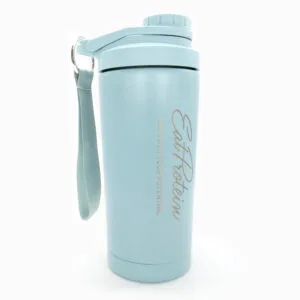
When we designed the EatProtein stainless steel shaker, we started with one question: what would make the best protein shaker for women who take their wellness seriously?
The answer wasn’t just “make it stainless steel.” It was about getting every detail right.
- Double-walled vacuum insulation — keeps drinks cold for hours, no condensation on the outside
- 100% leak-proof — tested and trusted, because your bag deserves better than a protein shake spill
- Silent mixer — smooth, lump-free shakes without the rattling wire ball
- Premium stainless steel construction — no flavour absorption, no BPA, no compromise
- Designed for women — the size, the weight, the look. This isn’t a unisex afterthought. It’s made for you.
EatProtein’s double-walled stainless steel shaker keeps your drinks cold, your bag dry, and your shakes tasting exactly as they should. Premium materials, thoughtful design, made for women who don’t settle. It’s the last shaker you’ll need to buy.
It’s the kind of product where the quality is obvious the first time you hold it — and the value becomes even clearer over months of daily use.
The Upgrade That Pays for Itself
Switching from plastic to stainless steel isn’t about judging what you’ve been using. It’s about recognising that something you use every single day deserves to be genuinely good. Better taste. Better temperature. Better durability. Better for the planet. A shaker that matches the care you put into the rest of your routine.
Plastic shakers have their place — they’re affordable, lightweight, and perfectly functional. But if you’re ready for something that elevates your daily experience, stainless steel is the clear step up. And once you’ve made the switch, you’ll wonder why you waited.
For more on choosing the right shaker and getting the most from it, explore our guides on choosing the best protein shaker, keeping your shaker fresh, and why stainless steel wins.
Ready to upgrade? Explore EatProtein’s stainless steel shaker collection — double-walled, leak-proof, and designed for women who take their wellness seriously.
References
- Food Standards Agency. (2024). BPA in plastic. Food Standards Agency. View source
- Darbre, P. D. (2022). An insight into bisphenol A, food exposure and its adverse effects on health: A review. PMC / Environmental Research. View source
- Ecowayhouse. (2023). What is a thermos? The science and factory guide to vacuum flasks. Ecowayhouseware. View source
- Okon Recycling. (2024). Can you recycle stainless steel?. Okon Recycling. View source
- Unified Alloys. (2023). Sustainability meets durability: the environmental benefits of stainless steel. Unified Alloys. View source