Plant-based protein powder used to be the thing you settled for when you couldn’t have whey. Gritty texture, chalky taste, and the lingering feeling that you were probably missing out on something nutritionally.
That was ten years ago. The category has moved on — massively. The best plant-based proteins now match whey on amino acid delivery, beat it on digestibility, and come with added benefits that dairy-based powders simply don’t offer.
But there’s still a lot of variation. Some plant proteins are genuinely excellent. Others are riding the “plant-based” trend with mediocre formulas and good branding. Here’s how to tell the difference.
The Main Types of Plant Protein (and What Each One Does)
Not all plant proteins are built the same. Each source brings something different to the table, and understanding the strengths of each one helps you make a better choice.
Pea protein
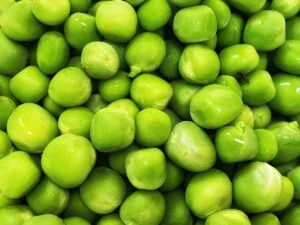
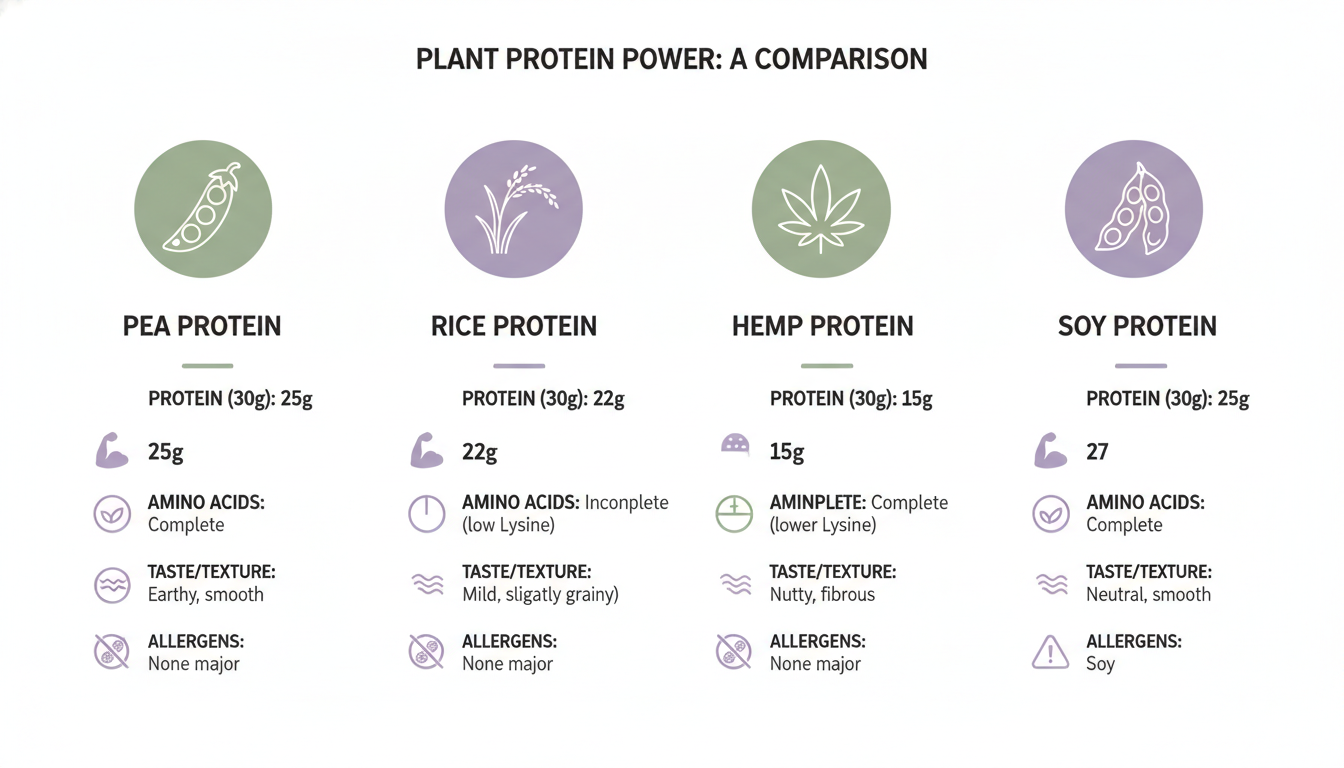
The standout in plant-based protein. Made from yellow split peas and usually available as pea protein isolate, which means the starch and fibre have been stripped out, leaving a high-concentration protein powder. It’s rich in branched-chain amino acids — particularly leucine, the one most responsible for triggering muscle protein synthesis. Easily digestible, naturally free from dairy, soy, and gluten. Pea protein isolate has the strongest amino acid profile of any plant protein source, which is why it forms the foundation of the most effective plant-based formulas.
Rice protein
Hypoallergenic and very gentle on the stomach. It has a different amino acid emphasis to pea protein (higher in methionine, lower in lysine), which is why some brands pair the two together. Often used as a supporting ingredient in blends.
Hemp protein
Less refined than pea or rice, which means it retains more fibre and omega-3 fatty acids. The protein content per serving is lower, and the texture is earthier. Best thought of as a nutritional bonus ingredient rather than a primary protein source.
Soy protein
One of the few plant proteins that’s complete on its own, with all nine essential amino acids. It’s fallen slightly out of favour due to concerns about phytoestrogens and hormonal effects, though the research on this is more nuanced than the headlines suggest. Still a solid choice if soy isn’t a personal concern for you.
Other sources
You’ll also see pumpkin seed protein, sunflower seed protein, and fava bean protein appearing in newer formulas. These are usually supporting players rather than standalone sources, adding diversity to the nutritional profile.
Why the Formula Matters More Than the Number of Protein Sources
There’s a common assumption that a blend of multiple plant proteins is always better than a single source. It sounds logical — more sources, more amino acid coverage. But the reality is more nuanced than that.
What actually matters is the quality of the primary protein source and what the rest of the formula does around it.
Pea protein isolate, for example, already has a strong and well-rounded amino acid profile on its own. It’s particularly high in leucine — the amino acid that plays the biggest role in muscle protein synthesis — and provides meaningful amounts of all nine essential amino acids. It’s not identical to whey’s profile, but the differences are small and, in practice, research shows comparable results for muscle recovery and maintenance.
Where a formula really earns its value is in what it includes beyond the protein itself. A pea protein isolate on its own is good protein. A pea protein isolate combined with digestive enzymes, live cultures, prebiotic fibre, omega-3, MCT oil, and essential vitamins becomes a complete daily wellness product. That’s a much bigger upgrade than simply adding a second or third protein source.
When you’re reading a label, pay more attention to the supporting ingredients than to how many protein sources are listed. A thoughtfully designed formula built around one excellent protein source will outperform a blend of mediocre ones padded with cheap fillers.
What Separates a Good Plant Protein Powder from an Average One
Digestive enzymes and prebiotic fibre in the formula are what separate a comfortable shake from a bloating trigger. A formula with digestive enzymes, live cultures, and no artificial sweeteners will sit much more comfortably.
The protein source is the foundation, but several other things determine whether you’ll actually enjoy using it every day.
Protein per serving — You want at least 20g. Anything less and you’re paying for a protein powder that’s more filler than protein. Check the serving size too — some brands use a larger scoop to hit a higher number, which means the bag runs out faster.
Sweeteners — The difference between natural and artificial sweeteners is meaningful here. Sucralose and acesulfame-K are cheaper for manufacturers but can cause digestive issues and leave an aftertaste. Stevia and monk fruit are plant-derived, calorie-free, and generally better tolerated. If a plant-based protein powder uses artificial sweeteners, it’s undercutting its own selling point.
Digestive support — This is where the best plant proteins really pull ahead. Digestive enzymes help your body break down the protein efficiently, reducing bloating. Prebiotic fibre feeds the good bacteria in your gut. Live cultures support your digestive system directly. Not every formula includes these, but the ones that do tend to sit noticeably more comfortably. And there’s a wider benefit too — a healthier gut doesn’t just improve digestion, it can affect everything from your energy levels to the way your skin looks and feels.
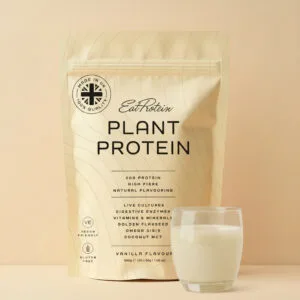
Our vegan protein is built around this approach. 20g of pea protein isolate at the core, five digestive enzymes, live cultures, and prebiotic fibre from chicory root for gut support. We also include coconut MCT oil for sustained energy, omega-3 DHA, golden flaxseed, and B vitamins (B6, B12, folate) plus calcium and magnesium — because if you’re having a protein shake every day, it should do more than just deliver protein. One scoop that covers your protein, gut health, essential vitamins, and omega-3 makes your morning routine a lot simpler.
Taste and texture — This used to be plant protein’s biggest weakness, and honestly some products still haven’t cracked it. The key is pea protein isolate rather than concentrate — the isolate process removes more of the starch and fibre, giving you a smoother, less gritty result. If a powder blends well with just water, that’s a strong sign of quality. If it needs a full smoothie to be drinkable, that’s telling you something.
Common Concerns (and Straight Answers)
“Is plant protein as effective as whey for building muscle?”
Yes — when consumed in adequate amounts. Research published in the Journal of the International Society of Sports Nutrition found no significant difference in muscle thickness or strength gains between pea protein and whey protein over a 12-week training programme. The amino acids do the work, regardless of where they come from. Pea protein isolate is particularly effective because of its high leucine content — the amino acid that triggers the muscle repair process.
“Is it a complete protein?”
Pea protein isolate contains all nine essential amino acids. It’s slightly lower in methionine compared to whey, but in the context of a normal varied diet this isn’t a practical concern. If you’re eating any grains, nuts, or seeds alongside your shake, you’re covering all bases comfortably. A good formula will also include complementary ingredients that round out the nutritional profile beyond just amino acids.
“Will it make me bloated?”
It shouldn’t — and if it does, the formula is probably the issue, not plant protein as a category. Low-quality protein sources, artificial sweeteners, and a lack of digestive support are the usual culprits. A formula with digestive enzymes, live cultures, and no artificial sweeteners will sit much more comfortably.
“Does it taste bad?”
It doesn’t have to. Five years ago this was a fair concern. Today, the best plant-based proteins genuinely taste good — smooth, well-flavoured, and easy to drink with water. The category has evolved, and the gap between plant and whey on taste has mostly closed.
Who Is Plant-Based Protein Actually For?
The obvious answer is vegans and vegetarians, but the audience is much broader than that.
Anyone who’s lactose intolerant or dairy-sensitive — Plant protein eliminates dairy entirely. No lactose, no casein, no whey.
People with multiple food sensitivities — A pea-based formula that’s also free from soy, gluten, and dairy covers most of the common allergens in one product. If you’re someone who has to check every label for gluten, this simplifies things.
Women looking for gentler nutrition — A lot of women find plant protein easier on their stomach than whey, with less bloating and heaviness. Combined with added vitamins and digestive support, it fits neatly into a wellness-first approach.
Anyone who cares about sustainability — Plant proteins have a significantly lower environmental footprint than dairy-based alternatives. Less water, less land, lower carbon emissions. If that matters to you, this is one of the easiest switches to make.
People who just prefer how it feels — Lighter, cleaner, less heavy in the stomach. Some people don’t have a dietary restriction — they just prefer the experience of a plant-based shake. That’s a perfectly good reason.
Making It Work for You
Plant-based protein powder is versatile. A few ways to use it beyond the standard shake:
Mixed into porridge or overnight oats for a higher-protein breakfast. Blended into smoothies with fruit, spinach, and nut butter. Stirred into yoghurt or mixed into pancake batter. Even added to soups for a protein boost without changing the flavour much.
The point is that it fits around your life rather than demanding you change your routine. A good protein powder should make things easier, not more complicated.
The Bottom Line
Plant-based protein powder has earned its place. The science supports it, the formulas have caught up, and for many people it’s simply the better option — whether that’s for digestive reasons, dietary needs, environmental values, or just personal preference.
Look for a quality protein source, check the label for transparency, and choose something with genuine added value — digestive support, essential vitamins, clean ingredients. The best plant-based protein powders aren’t trying to imitate whey. They’re doing something better.
References
- Babault, N., Paizis, C., Deley, G., Guérin-Deremaux, L., Saniez, M. H., Lefranc-Millot, C., & Allaert, F. A. (2015). Pea proteins oral supplementation promotes muscle thickness gains during resistance training: a double-blind, randomized, placebo-controlled clinical trial vs. whey protein. Journal of the International Society of Sports Nutrition. View source
- Gorissen, S. H. M., Crombag, J. J. R., Senden, J. M. G., Waterval, W. A. H., Bierau, J., Verdijk, L. B., & van Loon, L. J. C. (2018). Protein content and amino acid composition of commercially available plant-based protein isolates. Amino Acids. View source
- Berrazaga, I., Micard, V., Gueugneau, M., & Walrand, S. (2019). The role of the anabolic properties of plant- versus animal-based protein sources in supporting muscle mass maintenance: a critical review. Nutrients. View source
- Nosworthy, M. G., Medina, G., Franczyk, A. J., Neufeld, J., Appah, P., Utioh, A., Frohlich, P., & House, J. D. (2021). Comparison of the protein quality of thermally processed yellow and green split peas (in vitro and in vivo). Nutrients. View source
- Messina, M. (2016). Soy and health update: Evaluation of the clinical and epidemiologic literature. Nutrients. View source
- Hertzler, S. R., Lieblein-Boff, J. C., Weiler, M., & Allgeier, C. (2020). Plant proteins: Assessing their nutritional quality and effects on health and physical function. Nutrients. View source
- Pendick, D. (2018). The right plant-based foods make a difference. Harvard Health Publishing. View source