- Pea protein isolate is a complete protein with all nine essential amino acids and a digestibility score of 94-98%
- Research shows no significant difference in muscle gains or strength between pea protein and whey over 12 weeks
- The isolate form (not concentrate) is what makes pea protein smooth, high in protein per scoop, and easy to digest
- Digestive enzymes alongside pea protein dramatically improve amino acid absorption and reduce bloating
- A well-formulated pea protein powder can replace multiple daily supplements with added vitamins, MCT, and omega-3
Five years ago, if you mentioned pea protein powder to someone in the gym, you’d get a polite nod and a quiet “I’ll stick with whey, thanks.” The assumption was clear — plant protein was a compromise, something you tolerated if you were vegan but not something you’d choose if you had the option.
That assumption has aged badly. Pea protein powder is now one of the fastest-growing segments of the protein market, and it’s not just being bought by vegans. Athletes, women with digestive sensitivities, people with multiple food allergies, and anyone who’s had enough of feeling bloated after a whey shake — they’re all making the switch.
Here’s why. And more importantly, here’s what actually makes pea protein work as well as it does.
What Is Pea Protein Powder?
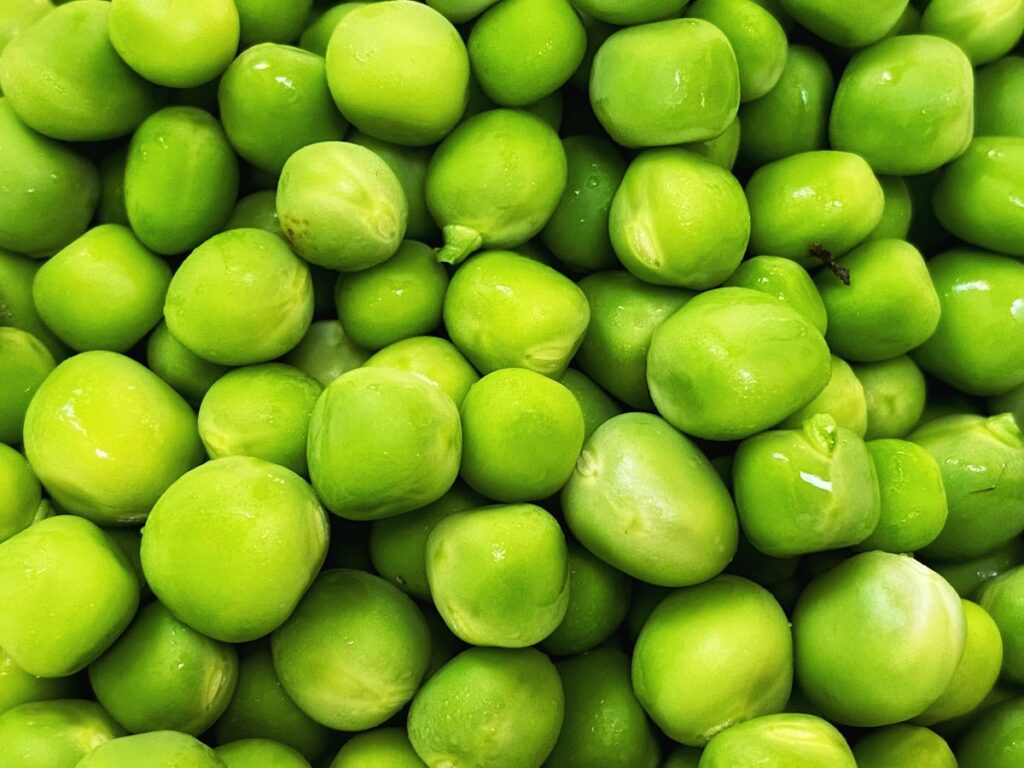
Pea protein is extracted from yellow split peas — the same ones you’d use in soup. The peas are dried, ground, and then processed to separate the protein from the starch and fibre. What you’re left with is a concentrated protein powder.
There are two main forms:
Pea protein concentrate
Contains around 60-70% protein by weight, with the remainder being starch, fibre, and other plant components. It’s less refined, which means more of the “pea” taste and a grittier texture. Cheaper to produce, often used in budget protein powders.
Pea protein isolate
Contains around 85-90% protein by weight. The additional processing removes more of the starch and fibre, resulting in a smoother texture, milder taste, and higher protein-per-scoop ratio. This is what you’ll find in well-formulated protein powders, and the difference in drinking experience is significant.
If you’ve tried pea protein before and found it chalky or gritty, there’s a good chance it was a concentrate rather than an isolate. The isolate process makes a genuine difference — it’s the reason some pea protein shakes blend smoothly with just water while others need a banana and a prayer.
The Amino Acid Profile — Is Pea Protein Complete?
This is the question that comes up more than any other, and it deserves a clear answer.
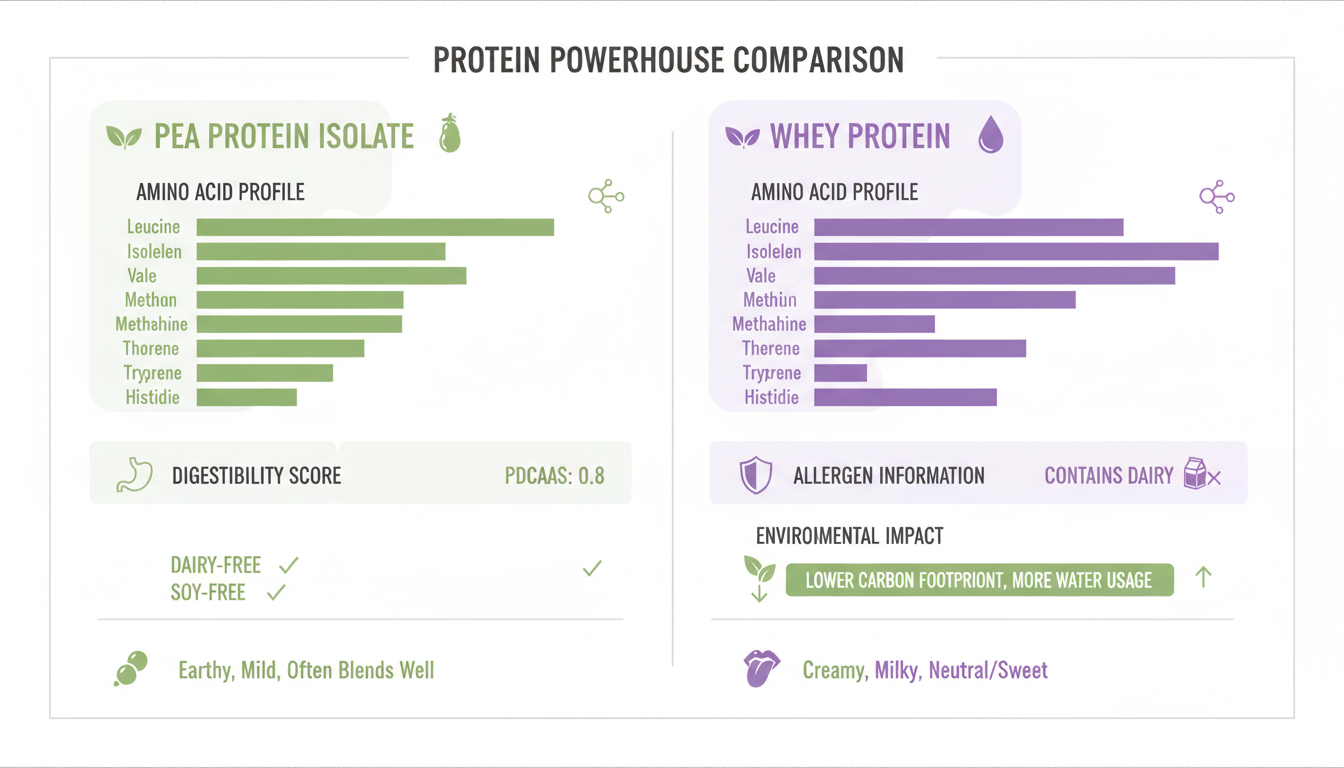
Pea protein isolate contains all nine essential amino acids — the ones your body can’t produce on its own and must get from food. By definition, that makes it a complete protein.
Where it differs from whey is in the proportions. Here’s how they compare on the amino acids that matter most:
Leucine
The most important amino acid for triggering muscle protein synthesis (the process that repairs and builds muscle tissue). Pea protein isolate typically provides around 8-9% leucine, compared to whey’s 10-11%. That’s a smaller gap than most people assume, and research shows it’s more than enough to effectively stimulate muscle recovery.
Lysine — Important for tissue repair and immune function. Pea protein is strong here, comparable to whey.
Methionine
This is where pea protein is genuinely lower. It’s a sulphur-containing amino acid involved in metabolism and detoxification. However, in the context of a normal varied diet (where you’re eating grains, nuts, seeds, and vegetables alongside your shake), this gap is easily covered. You’d need to be consuming pea protein as your sole food source for this to be a practical concern — which nobody is doing.
BCAAs (branched-chain amino acids) — Leucine, isoleucine, and valine collectively. Pea protein provides roughly 18-20% BCAAs, compared to whey’s 22-25%. Again, the difference is smaller than the marketing would have you believe, and the practical outcomes in terms of muscle recovery are comparable.
The headline: pea protein isolate is a complete protein with a strong amino acid profile. It’s not identical to whey, but the differences are small and, in practice, don’t translate to meaningfully different results.
Pea Protein vs Whey — What the Research Says
The comparison that matters most to people considering the switch. Let’s look at what the studies actually found.
A study published in the Journal of the International Society of Sports Nutrition compared pea protein and whey protein over a 12-week resistance training programme. The results: no significant difference in muscle thickness, strength gains, or body composition between the two groups. Both produced meaningful improvements. Pea protein didn’t just hold its own — it matched whey on every measure that mattered.
A 12-week study published in the Journal of the International Society of Sports Nutrition found no significant difference in muscle thickness, strength gains, or body composition between pea protein and whey protein groups.
Another study in the journal Nutrients found that pea protein was equally effective at promoting satiety (feelings of fullness) compared to whey, despite the slight differences in amino acid composition.
Where pea protein consistently outperforms whey is in digestibility and tolerance. Whey is a dairy derivative, which means it brings lactose and dairy proteins that a significant portion of the population struggles with. Bloating, gas, and digestive discomfort are common complaints with whey — not because the protein itself is bad, but because the dairy components trigger issues in sensitive individuals.
Pea protein sidesteps all of that. No lactose, no dairy allergens, no soy, naturally gluten free. For anyone with digestive sensitivities or multiple food allergies, the difference in daily comfort is dramatic.
Why Digestibility Matters as Much as the Protein Itself
A protein powder can have a perfect amino acid profile on paper and still be useless if your body can’t properly digest and absorb it.
Pea protein isolate has a digestibility score of around 93–96%, which is good relative to many plant proteins. The isolate process removes antinutrients (phytic acid, trypsin inhibitors) that can reduce protein absorption in whole peas — making pea protein isolate considerably more bioavailable than whole peas.
But here’s what makes a real difference in practice: what else is in the formula alongside the protein.
Digestive enzymes — specifically proteases that break down protein — dramatically improve how efficiently your body processes and absorbs the amino acids. A pea protein isolate with added digestive enzymes delivers more usable protein to your muscles than one without, even at the same scoop size. It’s also why enzyme-enhanced formulas cause less bloating — the protein is broken down more completely in the stomach rather than fermenting in the large intestine.
Prebiotic fibre supports the gut environment where absorption happens. Live cultures maintain the bacterial balance that keeps your digestive system functioning well. The combination of all three — enzymes, prebiotics, and probiotics — means the protein you’re drinking actually becomes the protein your body uses. That distinction matters more than most people realise.
Beyond the Protein — What a Good Pea Protein Formula Includes
Pea protein isolate is an excellent foundation, but the best products build something more complete around it.
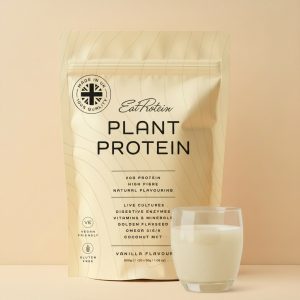
Our vegan protein uses pea protein isolate as its core — 20g per serving — and adds the ingredients that turn a simple protein shake into genuine daily nutrition:
Coconut MCT oil
For sustained, clean energy that doesn’t rely on caffeine or sugar. MCTs are absorbed quickly and converted to fuel your body can use immediately, which is why they’re particularly useful at breakfast or mid-afternoon.
Five digestive enzymes and live cultures
Because protein absorption matters as much as protein content. These reduce bloating, improve amino acid uptake, and support long-term gut health.
Prebiotic fibre from chicory root — Feeds the beneficial bacteria in your gut, creating an environment where digestion and absorption work better over time.
Omega-3 DHA and golden flaxseed — Supporting brain function, reducing inflammation, and filling one of the most common nutritional gaps in women’s diets.
B6, B12, and folate — The B vitamins most commonly deficient in women, particularly those eating plant-based. Essential for energy metabolism, nervous system function, and cell production.
Magnesium and calcium — Supporting bone health, muscle recovery, and sleep quality. Particularly important for women from their thirties onwards and during perimenopause.
None of these are random additions. Each one was chosen because it addresses a real nutritional gap — the kind that most women are either supplementing separately or, more commonly, not addressing at all.
Who Is Pea Protein Powder For?
The short answer: anyone who wants quality protein without the digestive trade-offs.
Women who’ve struggled with whey — If protein shakes have always left you bloated or uncomfortable, pea protein isolate with digestive support is worth trying before you give up on protein powder entirely. The difference is often immediate.
Anyone dairy free, soy free, or gluten free — Pea protein covers all three. For people managing multiple food sensitivities, finding one product that avoids all their triggers is genuinely liberating.
Vegans and vegetarians — Obviously. But it’s worth emphasising that pea protein isn’t a “vegan compromise” — it’s a protein that happens to be plant-based and performs comparably to whey.
Women looking for more than just protein — If your protein powder also delivers gut support, essential vitamins, omega-3, and sustained energy, it becomes a daily wellness product rather than just a post-workout shake. That’s a much more useful role for something you’re having every day.
Anyone who cares about sustainability — Pea protein production requires significantly less water and land than dairy protein, and generates fewer carbon emissions. If environmental impact factors into your choices, this is one of the simplest switches you can make.
How to Use Pea Protein Powder
Pea protein isolate is versatile. A few ways to work it into your day:
Shaken with water or plant milk — The simplest test of quality. If it tastes good with just water, the product is well made. If it needs a smoothie to mask the flavour, that tells you something.
Blended into smoothies — With frozen berries, banana, spinach, nut butter — whatever combination works for you. Pea protein isolate blends smoothly without going gritty.
Stirred into porridge or overnight oats — A high protein breakfast without needing a shake. Add a scoop while the porridge is warm (not boiling) and stir through.
Baked into recipes — Pancakes, protein balls, banana bread. Pea protein isolate holds up well in baking and adds protein without significantly changing texture.
Mixed into yoghurt — A quick way to turn a regular yoghurt into a high-protein snack.
The Bottom Line
Pea protein powder has gone from niche alternative to genuine mainstream choice — and the science backs the shift. It’s a complete protein with a strong amino acid profile, comparable muscle-building results to whey, superior digestibility, and none of the dairy-related side effects that put so many people off protein shakes.
Pea protein isolate specifically gives you the cleanest, smoothest, highest-concentration form. And when it’s part of a well-designed formula with digestive enzymes, prebiotics, essential vitamins, and omega-3, it stops being just a protein supplement and starts being the foundation of genuinely thoughtful daily nutrition.
References
- Babault, N., Paizis, C., Deley, G., Guérin-Deremaux, L., Saniez, M. H., Lefranc-Millot, C., & Allaert, F. A. (2015). Pea proteins oral supplementation promotes muscle thickness gains during resistance training: a double-blind, randomized, placebo-controlled clinical trial vs. whey protein. Journal of the International Society of Sports Nutrition. View source
- Gorissen, S. H. M., Crombag, J. J. R., Senden, J. M. G., Waterval, W. A. H., Bierau, J., Verdijk, L. B., & van Loon, L. J. C. (2018). Protein content and amino acid composition of commercially available plant-based protein isolates. Amino Acids. View source
- Nosworthy, M. G., Medina, G., Franczyk, A. J., Neufeld, J., Appah, P., Utioh, A., Frohlich, P., & House, J. D. (2021). Comparison of the protein quality of thermally processed yellow and green split peas using in vitro and in vivo methodologies. Nutrients. View source
- Moughan, P. J., & Wolfe, R. R. (2019). Determination of dietary amino acid digestibility in humans. Journal of Nutrition. View source
- Duquesne, M., Smith, N., Chanet, A., Salles, J., Guillet, C., Walrand, S., & Dardevet, D. (2021). Real ileal amino acid digestibility of pea protein compared to casein in healthy humans: a randomized trial. Nutrients. View source
- Dahl, W. J., & Foster, L. M. (2020). Pea protein satiety and appetite control. Nutrients. View source
- Berrazaga, I., Micard, V., Gueugneau, M., & Walrand, S. (2019). The role of the anabolic properties of plant- versus animal-based protein sources in supporting muscle mass maintenance: a critical review. Nutrients. View source