Most people first hear about MCT oil in the context of bulletproof coffee or keto diets. It sounds like a niche ingredient — something for biohackers and fitness obsessives. But the benefits of MCT oil are far more practical and far more relevant to everyday life than that reputation suggests.
If you’ve noticed it listed on the back of a protein powder or wellness supplement and wondered what it’s actually doing there, here’s the honest answer.
What Is MCT Oil?
MCT stands for medium-chain triglycerides. These are a type of fat found naturally in coconut oil, palm kernel oil, and some dairy products. What makes them different from most dietary fats is their molecular structure — the chains are shorter, which means your body processes them differently.
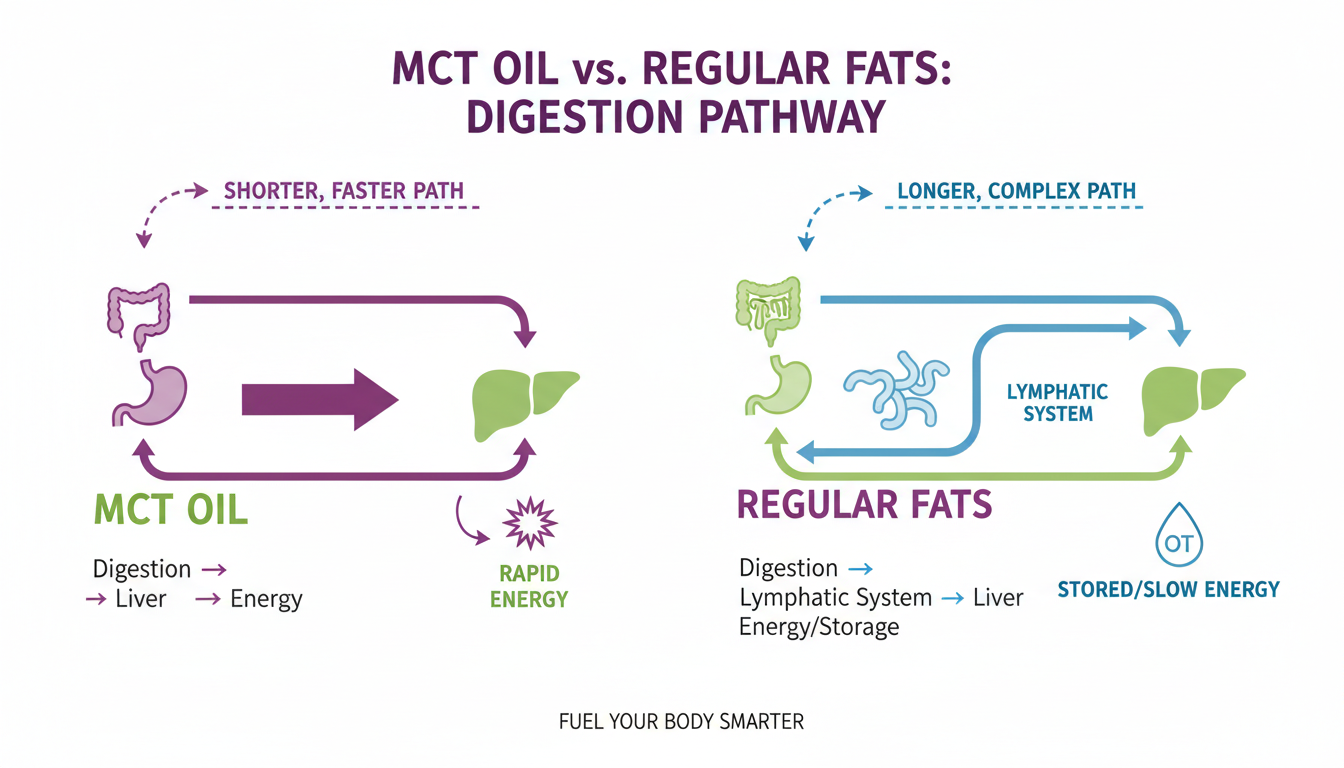
Most fats go through a long digestive journey — broken down in the intestine, packaged into lipoproteins, and transported through the lymphatic system. MCTs skip most of that. They’re absorbed quickly and sent straight to the liver, where they’re converted into energy almost immediately.
Most fats go through a long digestive journey. They’re broken down in the intestine, packaged into lipoproteins, and transported through the lymphatic system before eventually being used for energy or stored. MCTs skip most of that. They’re absorbed quickly and sent straight to the liver, where they’re converted into energy almost immediately.
That’s the key point. MCT oil gives you energy — real, usable energy — without the blood sugar spike and crash you get from sugary snacks or simple carbohydrates. It’s a cleaner fuel source, and your body can access it fast.
The Real MCT Oil Benefits Worth Knowing About
There’s plenty of hype around MCTs, so let’s stick to what’s actually well-supported.
Sustained energy without the crash
Because MCTs are converted to energy quickly and don’t require insulin to be processed, they provide steady fuel. This makes them particularly useful for that mid-morning or mid-afternoon window when energy tends to dip. Instead of reaching for sugar, you’re giving your body something it can actually use for more than twenty minutes.
Better mental clarity
Your brain is an energy-hungry organ. MCTs can be converted into ketones, which the brain uses as an alternative fuel source to glucose. This is why many people report feeling sharper and more focused after consuming MCTs. It’s not a dramatic effect, but over time the difference in sustained concentration is noticeable.
Supports a healthy metabolism
Research suggests MCTs have a slightly higher thermic effect than long-chain fats, meaning your body uses more energy to process them. They also support feelings of fullness, which can help with managing portion sizes naturally. This isn’t a weight loss miracle — it’s just good nutrition doing its job.
Gentle on digestion
MCTs are easier for your body to break down than most fats, which makes them a good option if you find heavier oils or fats uncomfortable. Paired with digestive enzymes in a protein formula, the whole shake becomes noticeably more comfortable. Coconut-derived MCT oil, specifically, tends to be well tolerated by most people.
Why MCT Oil Belongs in a Protein Powder
Here’s where it gets interesting — and where most protein powders miss a trick.
The majority of protein powders are just protein. Some add vitamins. A few throw in fibre. But almost none think about energy delivery as part of the formula. You end up with a shake that gives your muscles what they need but doesn’t do much for the rest of your day.
Adding MCT oil to a protein powder changes the equation. You’re getting your protein for muscle support and recovery, and alongside it, a source of clean, sustained energy that doesn’t rely on sugar or caffeine. For women especially, who are often juggling work, training, family, and everything else, that steady energy is genuinely valuable.
It also improves the drinking experience. MCT oil gives a protein shake a smoother, slightly creamier mouthfeel without adding dairy or excessive calories. It’s a small detail, but it makes the difference between a shake you tolerate and one you actually enjoy.
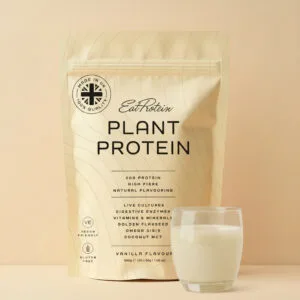
Our vegan protein includes coconut MCT oil as a core part of the formula — not as an afterthought, but because it works alongside the other ingredients to create something that supports you through the whole day. Pea protein isolate for muscle support, MCT oil for sustained energy, digestive enzymes and prebiotic fibre for gut comfort, and B vitamins for energy metabolism. One scoop that covers multiple bases, rather than stacking separate supplements.
MCT Oil vs Coconut Oil — What’s the Difference?
This comes up a lot, and it’s a fair question. Coconut oil contains MCTs, so why not just use coconut oil?
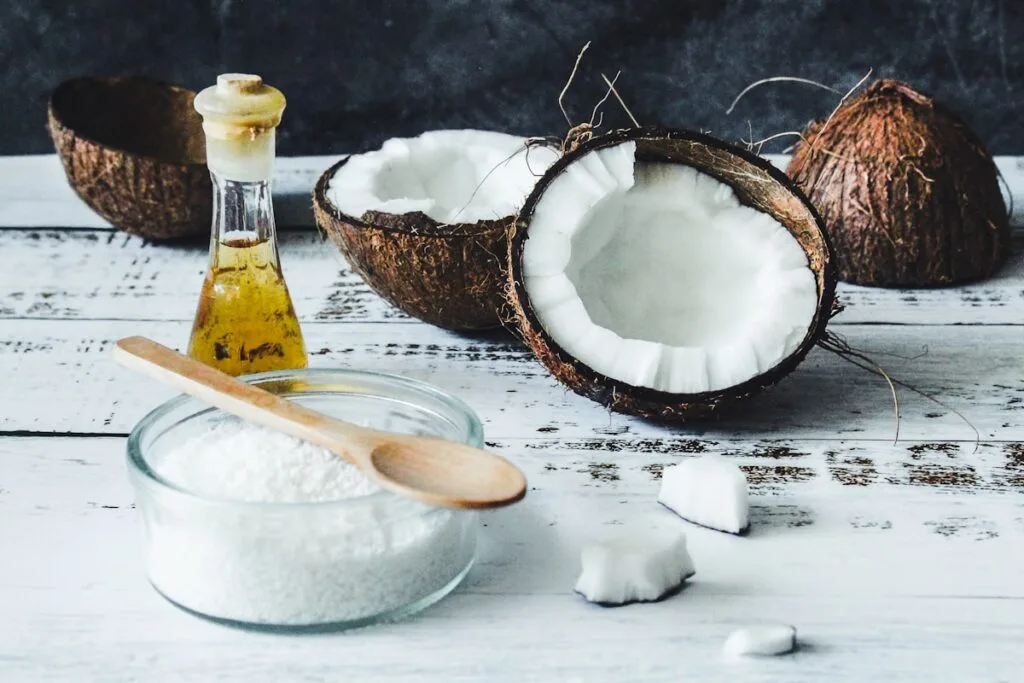
The answer is concentration. Coconut oil is roughly 54% MCTs, but it also contains a significant amount of lauric acid, which behaves more like a long-chain fat in terms of digestion. Pure MCT oil — or coconut-derived MCT oil used in supplements — concentrates the specific medium-chain fats (caprylic and capric acid) that your body converts to energy most efficiently.
So while coconut oil is a perfectly good cooking fat, it’s not delivering MCTs in the same concentrated, fast-acting way that MCT oil does. When you see “coconut MCT oil” on a supplement label, that’s the refined, concentrated form — and it’s doing more than a spoonful of coconut oil would.
When to Take MCT Oil (and How Much)
If you’re getting MCT oil through a protein shake, you’re already timing it well. Most people have their shake as part of a high protein breakfast or early afternoon — exactly when sustained energy matters most.
A few practical pointers:
Start with what’s in your shake — If your protein powder already includes MCT oil, that’s a sensible daily dose built in. You don’t necessarily need to add more on top.
Don’t overdo it early on — If you’re new to MCTs and decide to supplement separately, start with a small amount. Too much too quickly can cause digestive discomfort. Your body adapts, but it needs a little time.
Pair it with protein — MCT oil works well alongside protein because the combination delivers both immediate energy and longer-term satiety. A shake with protein and MCT oil will keep you going far longer than either one alone.
Morning or early afternoon — Because MCTs provide energy, most people find them most useful earlier in the day. Having them too close to bedtime might keep you more alert than you’d like.
Who Benefits Most from MCT Oil?
Honestly, most people. But a few groups notice the benefits more than others.
Women managing energy around their cycle — Hormonal fluctuations can make energy levels unpredictable. MCTs provide a stable source of fuel that doesn’t depend on blood sugar regulation, which can be helpful during the days when everything feels a bit harder than usual.
Anyone cutting back on sugar or caffeine — If you’re trying to reduce your reliance on coffee or sugary snacks for energy, MCT oil offers a genuine alternative. Combined with the right vitamins for tiredness, it’s a practical foundation for steadier energy throughout the day. It won’t give you the same buzz, but the sustained, even energy is more useful in the long run.
Active women — Whether you’re training, walking, or just keeping up with a busy schedule, having a reliable energy source that doesn’t cause crashes makes a real difference. Especially paired with quality plant-based protein for recovery.
People who find heavy shakes uncomfortable — MCTs are easily digested, and they help create a lighter-feeling shake. If you’ve ever felt sluggish after a protein shake, a formula with MCT oil instead of heavier fats is worth trying.
The Bottom Line
MCT oil benefits are real, practical, and relevant — particularly if you’re looking for cleaner energy, better focus, and a protein shake that does more than just deliver protein.
It’s not a superfood. It’s not going to transform your life overnight. But as part of a well-designed daily formula — alongside quality protein, gut-friendly ingredients, and essential vitamins — it quietly makes everything work a little better. And sometimes that’s exactly what good nutrition looks like.
References
- Augustin, K., Khabbush, A., Williams, S., Eaton, S., Orford, M., Cross, J. H., Heales, S. J. R., Walker, M. C., & Williams, R. S. B. (2018). Mechanisms of action for the medium-chain triglyceride ketogenic diet in neurological and metabolic disorders. The Lancet Neurology, 17(1), 84–93. View source
- Croteau, E., Castellano, C. A., Richard, M. A., Fortier, M., Nugent, S., Lepage, M., Duchesne, S., Whittingstall, K., Turcotte, É. E., Bocti, C., Fülöp, T., & Cunnane, S. C. (2018). Ketogenic medium chain triglycerides increase brain energy metabolism in Alzheimer’s disease. Journal of Alzheimer’s Disease, 64(2), 551–561. View source
- Mumme, K., & Stonehouse, W. (2015). Effects of medium-chain triglycerides on weight loss and body composition: a meta-analysis of randomized controlled trials. Journal of the Academy of Nutrition and Dietetics, 115(2), 249–263. View source
- Rego Costa, A. C., Rosado, E. L., & Soares-Mota, M. (2012). Influence of the dietary intake of medium chain triglycerides on body composition, energy expenditure and satiety: a systematic review. Nutricion Hospitalaria, 27(1), 103–108. View source
- Schönfeld, P., & Wojtczak, L. (2016). Short- and medium-chain fatty acids in energy metabolism: the cellular perspective. Journal of Lipid Research, 57(6), 943–954. View source
- St-Onge, M. P., & Jones, P. J. (2002). Physiological effects of medium-chain triglycerides: potential agents in the prevention of obesity. The Journal of Nutrition, 132(3), 329–332. View source