Breakfast is the meal that sets the tone. Get it right — enough protein, steady energy, something that actually keeps you going — and the rest of the day falls into place more easily. Get it wrong, and you’re reaching for biscuits by 10:30am wondering why you’re already tired.
The problem is that most traditional breakfasts are carb-heavy and protein-light. Toast, cereal, granola, porridge made with water — they taste fine but leave you hungry an hour later. Adding protein changes everything. Not in a dramatic, fitness-influencer way. Just in a quiet, practical, “I actually made it to lunch without snacking” way.
Here are some high protein breakfast ideas that work in real life — whether you’ve got twenty minutes or barely two.
Why Protein at Breakfast Matters
This isn’t about hitting macro targets or bodybuilding meal plans. It’s about how your body responds to different nutrients first thing in the morning.
When you eat a carb-dominant breakfast, your blood sugar spikes quickly and then drops. That drop is what creates the mid-morning energy crash, the brain fog, and the cravings for something sweet. It’s not a willpower problem — it’s a blood sugar problem.
Protein slows that whole process down. It takes longer to digest, produces a more gradual rise in blood sugar, and keeps insulin levels steadier. The result is sustained energy, better concentration, and genuine fullness that lasts for hours rather than minutes.
Research suggests that starting the day with at least 20-30g of protein has a measurable impact on appetite regulation throughout the rest of the day. You naturally eat less at subsequent meals — not because you’re restricting, but because you’re not running on empty.
Research suggests that starting the day with at least 20-30g of protein has a measurable impact on appetite regulation throughout the rest of the day — you naturally eat less at subsequent meals, not because you’re restricting, but because you’re not running on empty.
For women in particular, this matters. Fatigue is one of the most common complaints among women of all ages, and in many cases it’s not about sleep — it’s about blood sugar management and nutritional gaps that start at the very first meal.
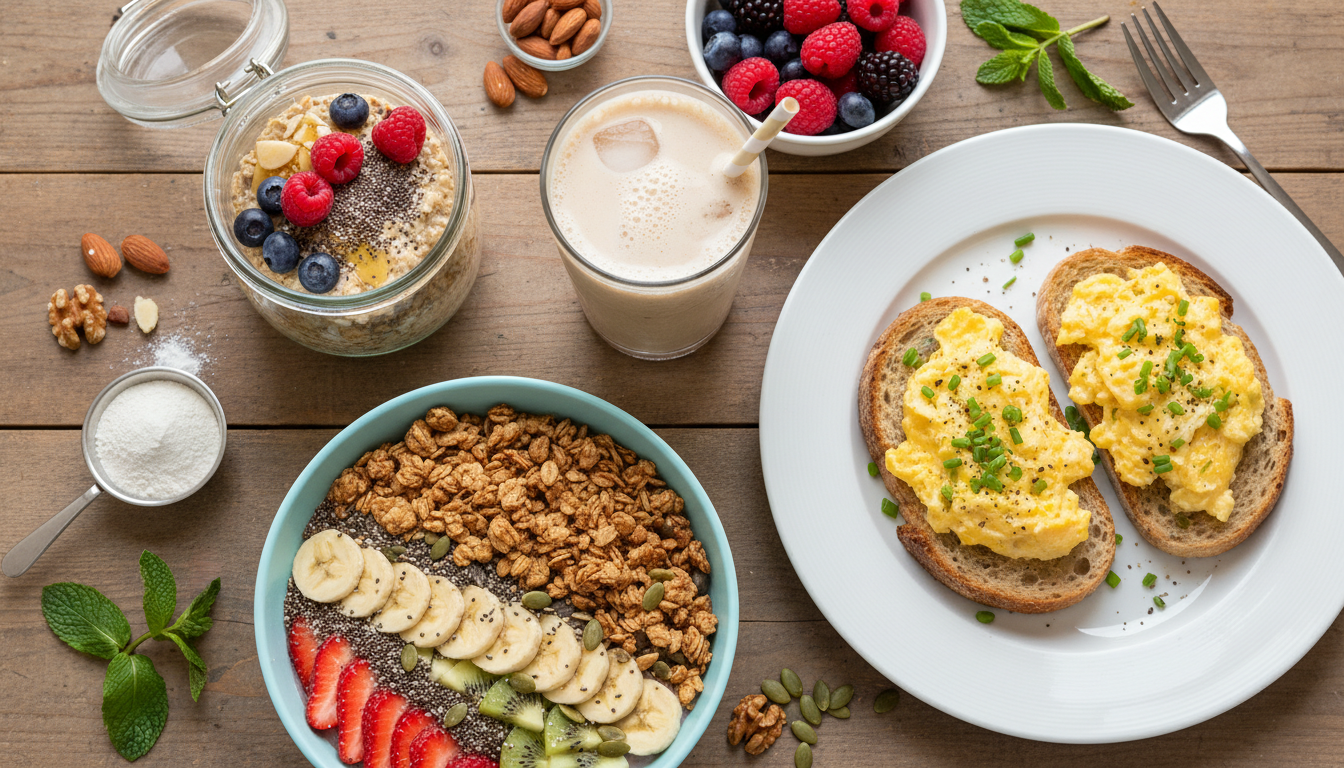
Quick High Protein Breakfasts (Under 5 Minutes)
For the mornings when time barely exists.
Protein shake with water or milk
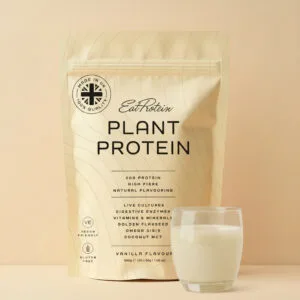
The simplest option. One scoop of quality protein powder, 250ml of water or plant milk, shaken for 30 seconds. That’s 20g of protein before you’ve even left the house. If your powder includes MCT oil, B vitamins, and omega-3, you’re covering energy, brain function, and gut support in a single glass.
Greek yoghurt (or coconut yoghurt) with seeds — A pot of high-protein yoghurt with a handful of pumpkin seeds and a drizzle of honey. Quick, satisfying, and easy to eat at your desk. For a vegan or dairy-free version, choose a coconut or soy yoghurt and add a scoop of protein powder stirred through — it changes the texture for the better.
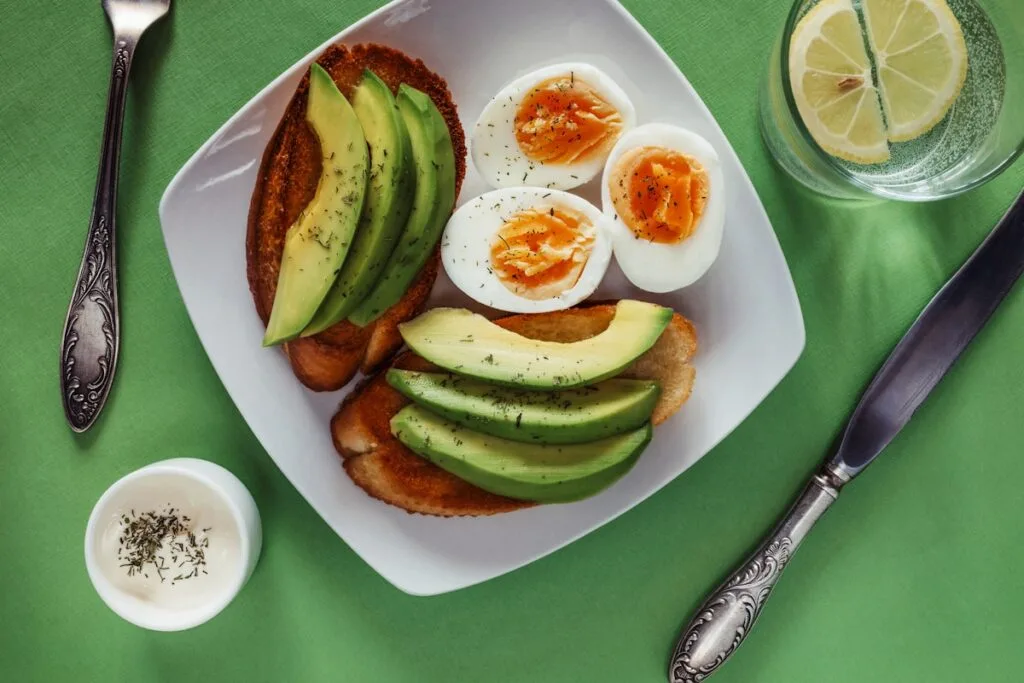
Two boiled eggs with rye toast — About 15g of protein from the eggs alone. Boil them the night before and keep them in the fridge for truly zero-effort mornings. Add a slice of sourdough or rye with avocado and you’re well over 20g.
Overnight protein oats
Mix oats, protein powder, chia seeds, and plant milk the night before. Stir it together in a jar, put it in the fridge, and grab it on your way out. You can prep several at once on a Sunday evening and have breakfast sorted for the week. Around 30g of protein per jar depending on your ratios.
High Protein Breakfast Ideas Worth the Extra Time
For weekends, slower mornings, or batch prep.
Protein pancakes
Blend one banana, two eggs (or a flax egg for vegan), one scoop of protein powder, and a splash of milk. Cook in a non-stick pan like regular pancakes. Top with berries, nut butter, or a drizzle of maple syrup. About 30g of protein per batch and they taste like an actual treat, not a health compromise.
Scrambled tofu with vegetables — Crumble firm tofu into a pan with turmeric, nutritional yeast, spinach, and cherry tomatoes. Season well. This is a vegan breakfast staple that delivers around 20g of protein and tastes better than it sounds. Add a slice of sourdough and you’re sorted.
Smoked salmon on rye with cream cheese — Around 25g of protein and packed with omega-3. Quick to assemble, feels a bit special, and keeps you full deep into the afternoon. Swap the cream cheese for avocado if you’re dairy free.
Protein smoothie bowl — Blend protein powder with frozen berries, a small banana, and minimal liquid to keep it thick. Pour into a bowl, top with granola, coconut flakes, and nut butter. More satisfying than a regular smoothie because eating from a bowl slows you down and feels more like a proper meal.
Veggie frittata — Whisk eggs (or a chickpea flour batter for vegan), pour over whatever vegetables you have — peppers, courgette, mushrooms, spinach — and bake at 180°C for 20 minutes. Cut into portions and keep in the fridge for up to four days. Grab a slice each morning with toast. Around 18-22g of protein per portion depending on size.
High Protein Vegan Breakfasts
Hitting 20-30g of protein at breakfast without eggs or dairy takes a bit more thought, but it’s completely doable.
Protein powder is your best friend here. A scoop of pea protein isolate adds 20g of protein to anything — smoothies, oats, pancakes, even stirred into warm porridge. It’s the single easiest way to close the gap without restructuring your entire breakfast.
Overnight oats with protein powder and nut butter — Oats (5g protein), protein powder (20g), a tablespoon of almond butter (4g), chia seeds (2g), plant milk. That’s over 30g of protein and it takes 3 minutes to prepare the night before. Add berries in the morning for flavour and antioxidants.
Tofu scramble on sourdough — As above, with the added benefit of being naturally gluten free if you use GF bread. About 20g of protein from the tofu alone.
Smoothie with protein, spinach, and nut butter — Blend protein powder, a handful of spinach (you won’t taste it), frozen mango, a tablespoon of cashew butter, and plant milk. High protein, packed with micronutrients, and genuinely delicious. The right plant-based protein makes all the difference here — one that blends smoothly with water rather than turning gritty.
Chia pudding with protein — Mix chia seeds with plant milk and a half scoop of protein powder. Leave overnight. The chia seeds absorb the liquid and create a thick, pudding-like texture. Top with whatever fruit you have. About 22g of protein and more fibre than most breakfasts manage.
The 30g Protein Breakfast — Why It’s Become a Thing
You’ve probably seen the “30g protein breakfast” trend online. The idea is straightforward: aim for at least 30g of protein at your first meal to maximise the appetite-regulating and muscle-supporting benefits.
Is 30g necessary? Not strictly. 20g is enough to trigger meaningful muscle protein synthesis and improve satiety. But for women who are active, managing their weight, or going through perimenopause (when muscle maintenance becomes harder), pushing closer to 30g at breakfast provides more noticeable benefits.
The easiest way to hit 30g without eating a steak at 7am:
One scoop of protein powder (20g) + overnight oats with chia seeds and nut butter (10-12g). Or two eggs (14g) + protein toast or a half-scoop protein shake on the side (10-15g). Or a large protein smoothie with powder, nut butter, and seeds (30g+).
It doesn’t need to be complicated. It just needs a bit of intention.
Protein Breakfast Tips That Actually Help
Prep the night before — Overnight oats, boiled eggs, chia pudding, and pre-portioned smoothie bags (frozen fruit + protein powder in a bag, ready to blend) all take the decision-making out of early mornings.
Keep protein powder on the worktop — If it’s visible, you’ll use it. If it’s in a cupboard behind the flour, you’ll forget it exists.
Don’t force yourself into shakes if you hate shakes — Protein powder is an ingredient, not just a drink. Stir it into porridge, bake it into pancakes, blend it into smoothie bowls. Find the format that works for you.
Pair protein with fibre — Oats, chia seeds, berries, and vegetables all add fibre alongside your protein. The combination of protein and fibre is what creates genuinely lasting fullness — more effective than either one alone. A protein powder that already includes prebiotic fibre and digestive enzymes gives you a head start.
Don’t skip breakfast thinking it’ll save calories — For most women, skipping breakfast leads to overeating later in the day. A protein-rich breakfast typically results in lower total calorie intake over 24 hours, not higher. It’s an investment in the rest of your day, not an indulgence.
The Bottom Line
A high protein breakfast doesn’t need to be complicated, expensive, or time-consuming. It just needs some protein in it — ideally 20g or more — alongside the foods you already enjoy.
Protein powder makes that easy on the mornings when nothing else will. Eggs, tofu, yoghurt, and nut butters handle the rest. The goal isn’t perfection — it’s consistency. Build the habit, notice how different your mornings feel, and let that carry you forward.
Your body’s been asking for a better breakfast. This is what that looks like.
References
- Leidy, H. J., Ortinau, L. C., Douglas, S. M., & Hoertel, H. A. (2013). Beneficial effects of a higher-protein breakfast on the appetitive, hormonal, and neural signals controlling energy intake regulation in overweight/obese, “breakfast-skipping,” late-adolescent girls. American Journal of Clinical Nutrition. View source
- Leidy, H. J., Bossingham, M. J., Mattes, R. D., & Campbell, W. W. (2009). Increased dietary protein consumed at breakfast leads to an initial and sustained feeling of fullness during energy restriction compared to other meal times. British Journal of Nutrition. View source
- Weigle, D. S., Breen, P. A., Matthys, C. C., Callahan, H. S., Meeuws, K. E., Burden, V. R., & Purnell, J. Q. (2005). A high-protein diet induces sustained reductions in appetite, ad libitum caloric intake, and body weight despite compensatory changes in diurnal plasma leptin and ghrelin concentrations. American Journal of Clinical Nutrition. View source
- Lonnie, M., Hooker, E., Brunstrom, J. M., Corfe, B. M., Green, M. A., Watson, A. W., Williams, E. A., Stevenson, E. J., Penson, S., & Johnstone, A. M. (2018). Protein for life: Review of optimal protein intake, sustainable dietary sources and the effect on appetite in ageing adults. Nutrients. View source
- Babault, N., Paizis, C., Deley, G., Guérin-Deremaux, L., Saniez, M. H., Lefranc-Millot, C., & Allaert, F. A. (2015). Pea proteins oral supplementation promotes muscle thickness gains during resistance training: a double-blind, randomized, placebo-controlled clinical trial vs. whey protein. Journal of the International Society of Sports Nutrition. View source
- British Nutrition Foundation. (2023). Protein. British Nutrition Foundation. View source
- Paddon-Jones, D., & Rasmussen, B. B. (2009). Dietary protein recommendations and the prevention of sarcopenia. Current Opinion in Clinical Nutrition and Metabolic Care. View source