- Digestive enzymes break down food into absorbable nutrients — proteases for protein, amylases for carbs, lipases for fats
- Enzyme production naturally decreases with age, which is why bloating and discomfort often worsen over time
- Enzymes, probiotics, and prebiotics serve different roles — enzymes break food down, probiotics balance bacteria, prebiotics feed them
- A protein powder with built-in digestive enzymes absorbs more efficiently and causes significantly less bloating
- Natural enzyme sources include pineapple, papaya, fermented foods, and ginger
Digestive enzymes have quietly moved from the niche supplement shelf into mainstream wellness — and for good reason. If you’ve ever felt bloated after eating, struggled to digest protein shakes, or just felt heavy and sluggish after meals, digestive enzymes might be the missing piece you haven’t considered.
But the category is confusing. There are standalone enzyme supplements, enzyme blends in protein powders, and plenty of products making bold claims with questionable ingredients. Here’s what digestive enzymes actually do, which ones matter, and how to find the best digestive enzymes for what you need.
What Are Digestive Enzymes?
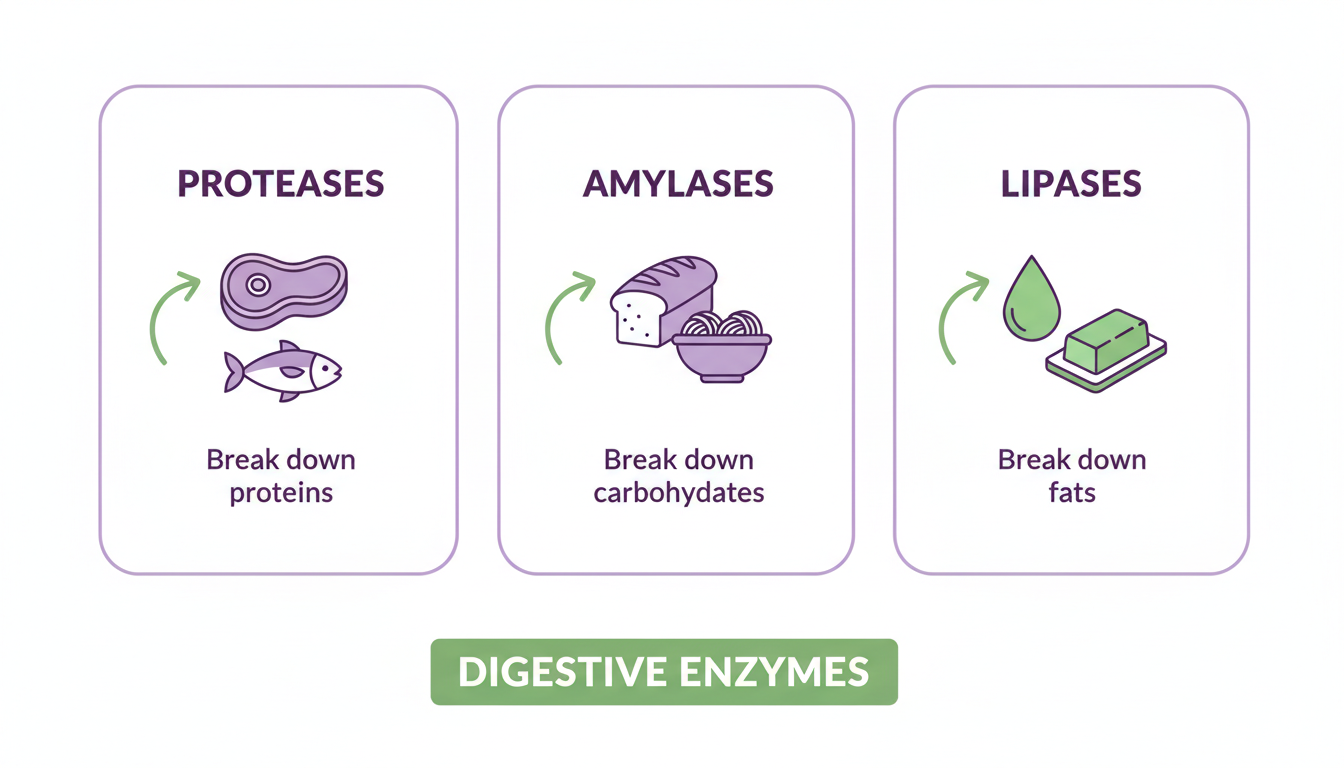
Your body naturally produces digestive enzymes to break down food into nutrients it can absorb. Different enzymes handle different jobs:
Proteases
Proteases break down protein into amino acids. Without them, protein sits in your stomach longer than it should, causing bloating and discomfort — which is exactly why so many people feel heavy after protein shakes.
Amylases
Amylases break down carbohydrates and starches into simple sugars your body can use for energy.
Lipases
Lipases break down fats into fatty acids and glycerol, making dietary fats easier to absorb.
Lactase
Lactase breaks down lactose, the sugar in dairy products. If you’re lactose intolerant, it’s because your body doesn’t produce enough of this specific enzyme.
Cellulase
Cellulase breaks down cellulose, the fibre found in plant cell walls. Your body doesn’t produce cellulase naturally, which is one reason high-fibre foods can cause gas and bloating in some people.
When your body produces enough of these enzymes, digestion runs smoothly. When it doesn’t — due to stress, age, diet, or gut health issues — food isn’t fully broken down, and that’s when problems start. Bloating, gas, discomfort, and poor nutrient absorption are all signs your digestive enzymes might not be keeping up.
Why Women Are Particularly Affected
Oestrogen and progesterone affect gut motility — how quickly food moves through your digestive system. During certain phases of your menstrual cycle, digestion naturally slows down, which is why many women notice their digestion is worse at certain times of the month.
Digestive issues are significantly more common in women than men. IBS, chronic bloating, and food sensitivities all disproportionately affect women, and hormonal fluctuations play a direct role.
Oestrogen and progesterone affect gut motility — how quickly food moves through your digestive system. During certain phases of your menstrual cycle, digestion naturally slows down, which means food sits in the gut longer, ferments more, and produces more gas. This is why many women notice their digestion is worse at certain times of the month.
Stress compounds the problem. When you’re stressed, your body diverts resources away from digestion (it’s focusing on the perceived threat instead). Enzyme production drops, stomach acid decreases, and your gut simply doesn’t process food as efficiently. Given that women report higher levels of chronic stress than men, this creates a cycle that’s hard to break without addressing the digestive side directly.
Adding digestive enzymes — whether through food, supplements, or a protein powder that includes them — gives your body support where it’s struggling. It’s not about replacing your natural enzyme production. It’s about topping it up during the times when it’s not quite enough. Better digestion also means better nutrient absorption — which has a direct impact on energy levels and tiredness.
Digestive Enzymes, Probiotics, and Prebiotics — What’s the Difference?
These three terms get used interchangeably, but they do completely different things. Understanding the difference helps you work out what you actually need.
Digestive enzymes break food down. They’re the tools that physically dismantle what you eat into absorbable nutrients. They work immediately, in the moment, every time you eat.
Probiotics (live cultures) are beneficial bacteria that support the overall balance of your gut microbiome. They help maintain the environment in your gut, support immune function, and can reduce inflammation. They work over time, building a healthier gut ecosystem.
Prebiotics are food for those beneficial bacteria. Prebiotic fibre — like chicory root inulin — feeds the good bacteria in your gut, helping them thrive and multiply. Without prebiotics, probiotics don’t have the fuel they need to do their job properly.
The best approach is all three working together. Enzymes handle the immediate job of digestion. Probiotics maintain the long-term health of your gut. Prebiotics feed the probiotics so they can keep doing their work. It’s a system, not a single fix.
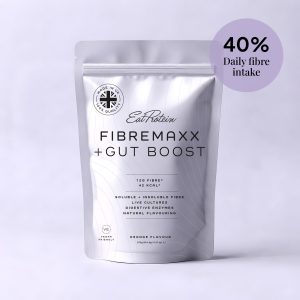
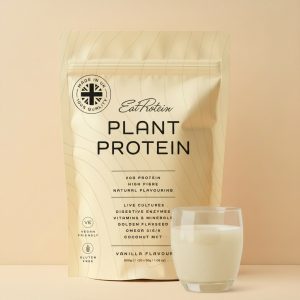
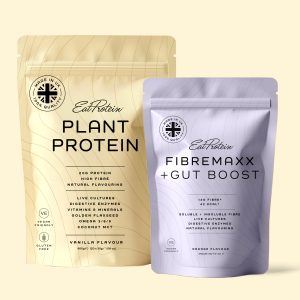
This is why our vegan protein includes all three — five digestive enzymes for efficient protein breakdown and nutrient absorption, live cultures to support your microbiome, and prebiotic fibre from chicory root to feed the good bacteria. Most protein powders include none of these. A few include one. Having the full system built into a product you’re using daily makes a genuine, compounding difference to your gut health over time.
Why Digestive Enzymes Matter in a Protein Powder
This is where it gets practical — and where a lot of people have their lightbulb moment.
Protein is one of the hardest macronutrients for your body to digest. It requires significant enzyme activity to break the long protein chains into individual amino acids your body can absorb and use. If your protease levels aren’t up to the job — because of stress, gut issues, or simply because you’re consuming more protein than your body is used to — the protein sits in your stomach and ferments.
The result? Bloating, gas, heaviness, and that uncomfortable “brick in the stomach” feeling that puts so many people off protein shakes entirely.
Adding protease and other digestive enzymes to a protein powder solves this at the source. The protein gets broken down more efficiently, your body absorbs more of the amino acids, and you skip the digestive discomfort. It’s not a gimmick — it’s basic biochemistry applied sensibly.
If you’ve tried plant-based protein and found it more comfortable than whey, this is part of the reason. Pea protein isolate is inherently easier to digest than dairy protein. Add digestive enzymes on top and you’ve removed the two biggest causes of protein shake bloating — the protein source and the enzyme gap.
What to Look for in the Best Digestive Enzymes
Whether you’re buying a standalone supplement or evaluating what’s in a protein powder, here’s what matters:
Multiple enzyme types — A single-enzyme product is limited. You want a formula that includes protease (for protein), amylase (for carbs), and lipase (for fats) at minimum. Cellulase is a valuable addition if you eat a lot of plant-based foods.
Activity levels, not just milligrams — Enzyme potency is measured in activity units, not weight. A product listing enzymes in milligrams without activity units isn’t giving you the full picture. Look for standardised measurements.
No unnecessary fillers — Some standalone enzyme supplements pad their capsules with maltodextrin, artificial colours, or flow agents. You’re taking them for digestion — the last thing you need is ingredients that make digestion harder.
Paired with probiotics and prebiotics — As covered above, enzymes work best as part of a system. A product that combines all three gives you more value than enzymes alone.
Included in something you’re already taking — The most consistent way to get digestive enzymes is through something that’s already part of your routine. A daily protein shake with built-in enzymes means you’re never forgetting a separate supplement.
Digestive Enzymes for Bloating — Do They Work?
Yes — but with a caveat. Digestive enzymes reduce bloating that’s caused by poor digestion. If your bloating is caused by something else — a food intolerance, SIBO, hormonal fluctuations, or a medical condition — enzymes alone won’t solve it.
That said, for the most common type of bloating (food sitting in your gut longer than it should, fermenting and producing gas), digestive enzymes can be a helpful and straightforward approach. They help your body do what it’s trying to do anyway, just more efficiently — though results vary by individual and the underlying cause of the bloating.
For women who experience bloating around their cycle, enzymes combined with prebiotic fibre and live cultures offer a multi-layered approach that addresses several contributing factors at once.
Natural Sources of Digestive Enzymes
Supplements and fortified products aren’t the only way to support your enzyme levels. Several foods are naturally rich in digestive enzymes:
Pineapple — Contains bromelain, a powerful protease. Great in smoothies alongside your protein shake.
Papaya — Contains papain, another protease. Traditionally used in many cultures specifically to aid digestion.
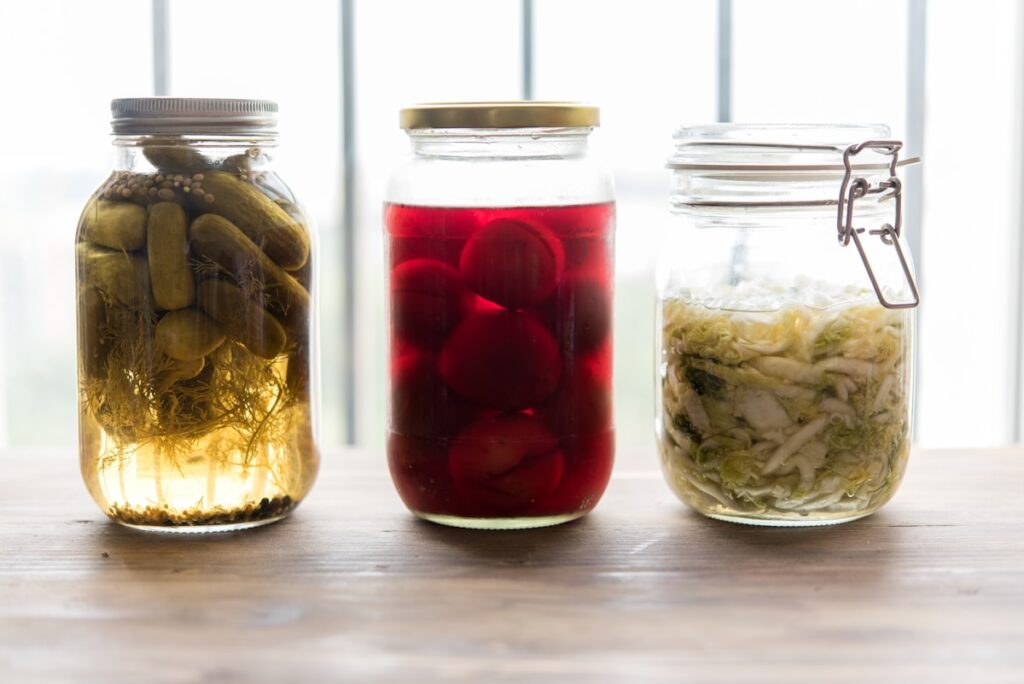
Fermented foods — Sauerkraut, kimchi, kefir, and miso all contain enzymes produced during the fermentation process, along with beneficial bacteria.
Ginger — Contains zingibain, a protease that supports protein digestion. Also well-known for settling nausea and digestive discomfort.
Raw honey — Contains small amounts of amylase, protease, and other enzymes. Best consumed raw, as heat destroys enzyme activity.
Building these into your diet alongside a protein formula that includes enzymes gives you the best of both worlds — natural food sources for everyday support and concentrated supplemental enzymes for the times your body needs more help.
The Bottom Line
The best digestive enzymes are the ones you actually take consistently — and the ones that work alongside probiotics and prebiotics rather than in isolation. Whether that’s a standalone supplement or a well-formulated protein powder with enzyme support built in, the goal is the same: help your body break down food properly, absorb more nutrients, and stop bloating from running your day.
Your gut does a remarkable job. Sometimes it just needs a bit of backup.
References
- Ianiro, G., Pecere, S., Giorgio, V., Gasbarrini, A., & Cammarota, G. (2016). Digestive enzyme supplementation in gastrointestinal diseases. Current Drug Metabolism, 17(2), 187–193. View source
- Roxas, M. (2008). The role of enzyme supplementation in digestive disorders. Alternative Medicine Review, 13(4), 307–314. View source
- Muss, C., Mosgoeller, W., & Endler, T. (2013). Bromelain enzyme complex benefits. Evidence-Based Complementary and Alternative Medicine. View source
- Haque, R., Sacker, A., & Dunn, M. J. (2021). Strain-specific and outcome-specific efficacy of probiotics for the treatment of irritable bowel syndrome: a systematic review and meta-analysis. eClinicalMedicine (The Lancet), 41, 101154. View source
- Bustamante, M., Oomah, B. D., Oliveira, W. P., Burgos-Díaz, C., Rubilar, M., & Shene, C. (2020). Probiotics and prebiotics potential for the care of skin, female urogenital tract and respiratory tract. Folia Microbiologica, 65(2), 245–264. View source
- Johns Hopkins Medicine. (2024). Digestive enzymes and digestive enzyme supplements. View source